
Florida Real Estate Tax Changes in November 2025: The Complete Investor Guide

Summary for Investors
The commercial lease sales tax is officially repealed, saving Florida businesses and landlords an estimated $450M+ per year statewide.
The 2025 property-tax cycle opened November 1, with a four percent early-payment discount available through month-end.
Legislators are evaluating major reforms like eliminating non-school property taxes and expanding the senior exemption.
Florida’s assessed values continue climbing. Statewide, residential values rose 8.4 percent in 2024, and many metros report similar momentum into 2025.
Investors should update underwriting models, plan cash flow with precision, and prepare for possible voter-driven changes in 2026.
Stay ahead of Florida’s evolving tax landscape with clean, real-time financials. Square Accounting helps you track income, expenses, rent collections, and tax-ready reporting across every property you own.
Take control of your numbers with Square Accounting today.
1. Why November 2025 Became a Turning Point
Florida began November with multiple tax updates that directly influence investor yield, operating costs, and long-term planning. The month delivered real, measurable changes—especially the commercial lease tax repeal—along with deep policy discussions that could reshape municipal revenue models.
It was not a quiet policy cycle. It was the kind of month that shifts how investors analyze Florida compared to Texas, Georgia, Tennessee, and other competitive Sun Belt markets.
2. How Florida Property Taxes Work—A Clear Investor Breakdown
Florida uses a county-driven property tax system. Each county determines property value and sets millage rates. Most counties depend heavily on these taxes:
In Florida, property taxes make up roughly 30 % of total local-government revenue — yet remain the largest single source of local tax revenue.
Save Our Homes caps homestead assessment increases at 3 percent annually.
A 10 percent cap applies to non-homestead properties, including rentals, retail centers, office buildings, and industrial facilities.
Millage rates vary widely. In 2025, large counties ranged from 14.5 to 22+ mills, depending on district add-ons.
For investors, property taxes are often one of the top three expenses influencing NOI.

3. What Officially Changed in November 2025
The 2025 Tax Cycle Opened Statewide
On November 1, every property owner in Florida entered a new tax cycle. For investors managing multiple assets or portfolios, this affects year-end cash flow and December capital deployment.
Early-Payment Discounts: Still a Cash-Saver
Florida continues to reward early payment:
3% in December
2% in January
1% in February
There is no discount for payments made in March
Large multifamily or commercial portfolios often save tens of thousands by timing payments strategically.
Commercial Lease Sales Tax Repeal: A Game-Changer
The most impactful update is the full repeal of the state sales tax on commercial leases. Previously:
Tenants paid 5.5 percent on commercial rent.
That tax generated over $400M annually for the state.
Now, tenants pay 0 percent state sales tax on lease payments.
Impact on Investor Cash Flow
Consider a 12,000 sq ft office at $32 PSF:
Old lease tax burden: $32 × 12,000 × 5.5% = $21,120 / year
New burden: $0
Landlords now have a clearer value proposition, easier lease-up conversations, and cleaner pro forma projections.
The commercial lease tax repeal changes your operating picture. Use Square Accounting to model the impact instantly, automate reporting, and tighten your financial oversight.
Upgrade your property financial tracking with Square Accounting.

4. Major Tax Reforms Under Consideration
Eliminating Non-School Property Taxes
Lawmakers are debating a phased elimination of non-school property taxes. If passed, some investors could see double-digit reductions in recurring tax obligations.
But this creates questions about revenue replacement, municipal stability, and long-range infrastructure budgets.
Expanded Senior Exemptions
A proposed exemption would remove non-school property taxes for Floridians aged 65+. The policy affects millions:
Florida has over 4.5 million residents aged 65+, one of the highest proportions in the country.
This creates political support—but also fiscal tension for counties already stretched by population growth.
Constitutional Amendment Roadmap
Any sweeping change must reach the statewide ballot and achieve:
60% voter approval
Realistically, the earliest voters might see the proposal is November 2026.
5. Market Examples: What Investors Can Expect
Case Study: Miami-Dade Office Building
20,000 sq ft class B office
Rent: $30 PSF
Previous Lease Tax: 5.5 percent
Annual tenant savings after repeal:
$30 × 20,000 × 0.055 = $33,000 per year
This cost reduction strengthens renewal probability and enhances the building’s competitive edge against neighboring counties.

Case Study: Tampa Multifamily
24-unit rental community
2024 value: $3.6M
2025 assessed value increase: approx. 7.8 percent
If non-school property taxes are removed (rough estimate 30 to 35 percent of the bill), NOI could increase by:
$11,000 to $14,000 annually, depending on millage
This could boost property resale value by $150K to $200K depending on cap rate.
Run Your Financial Scenarios with Precision
With Florida’s tax environment shifting, accuracy matters more than ever. Square Accounting offers clean dashboards, automated categorization, and property-specific reporting built for portfolio management.
Power your underwriting and cash-flow planning with Square Accounting.
6. Risks Investors Must Watch
Even with benefits, Florida’s evolving tax climate brings new risks.
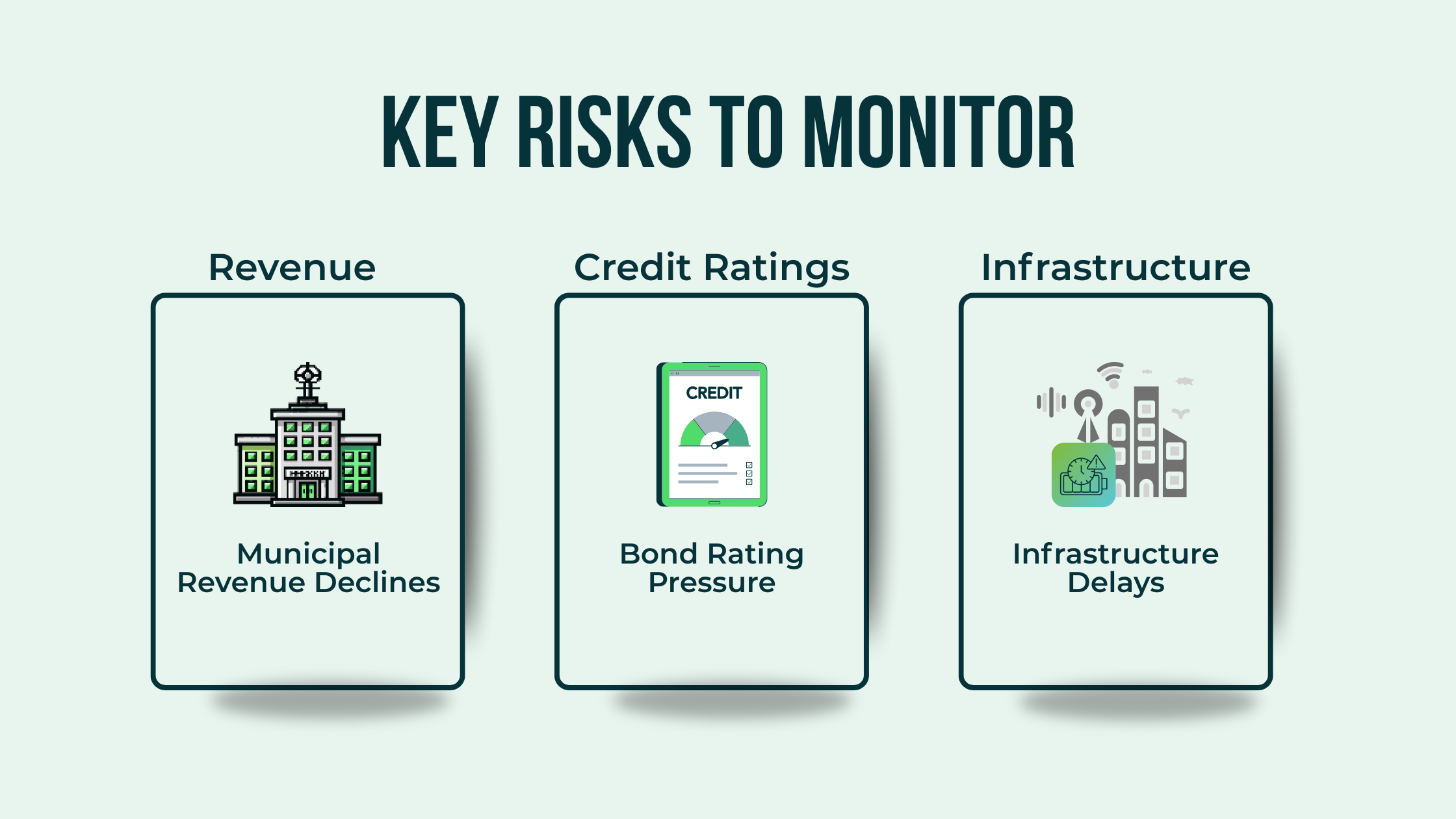
Municipal Revenue Declines
Florida’s population has grown over 18 percent in the past decade, which strains infrastructure. Removing significant tax revenue may slow expansions of:
Stormwater improvements
Road widening
Public-safety staffing
For investors, infrastructure delays affect neighborhood desirability and long-term rent potential.
Bond Rating Pressure
Counties with high debt loads rely on predictable tax streams. Any disruption may trigger rating reviews, raising borrowing costs for:
Transport projects
Water systems
Port expansions
This matters for investors evaluating long-hold assets in rapidly growing metros like Orlando and Tampa.
Political Uncertainty
Even if lawmakers agree, voters must approve reforms. A rejected ballot measure could create market whiplash—and stress underwriting assumptions.
7. What This Means for Commercial Investors
Stronger negotiation leverage following the lease tax repeal
Improved tenant demand across office, retail, and industrial
Cleaner underwriting and predictable effective rent calculations
Opportunity to structure longer-term leases while demand is high
Commercial investors should track whether counties introduce impact fees or targeted business taxes to offset lost revenue.
8. What This Means for Residential Investors
Residential markets remain strong:
Florida home prices grew 7.3 percent statewide in 2024, and momentum carried into 2025.
Rent growth is stabilizing but remains positive in markets like Tampa (+3.2%) and Orlando (+2.8%).
Investors must model tax outcomes conservatively and watch county-level millage discussions closely.
9. Strategic Actions for High-Net-Worth Investors in 2025–2026
Run multiple tax scenarios—status quo, moderate reform, full non-school tax elimination.
Review asset allocation for concentration risk in high-millage counties.
Refactor underwriting to integrate the lease tax repeal immediately.
Monitor late-2025 and early-2026 legislative sessions weekly.
Engage county tax advisors early, especially if holding assets across several metros.
Bonus Recommendation: Streamline Portfolio Financials with Square Accounting
Real estate investors managing multiple LLCs or mixed-asset portfolios often struggle with tax prep, categorization, and cash-flow tracking.
Square Accounting simplifies everything:
Tracks property-specific expenses
Automates rent and vendor payments
Provides clean tax-ready reports
Helps investors stay audit-ready
Offers seamless integration with real estate CRMs and rent-collection platforms
For investors preparing for tax volatility in Florida, a streamlined accounting system is no longer optional.
Start organizing your portfolio finances now with Square Accounting.
10. Resources for Investors
Florida Department of Revenue
Local County Property Appraisers (Miami-Dade, Broward, Hillsborough, Orange)
Florida Legislative Tracking Portal
Square Accounting (recommended for multi-property investor reporting)
Stay Organized. Stay Prepared. Stay Profitable.
Square Accounting delivers the clarity investors need in a changing tax landscape. Track every property, every expense, and every trend—all in one place.
Strengthen your financial foundation with Square Accounting.
Final Thoughts: Navigating a Transformative Tax Year
November 2025 didn’t just change rules—it changed expectations.
Florida real estate investors now operate in a landscape where:
Operating costs are falling in some areas
Long-term tax stability remains uncertain
County-level revenue pressure is intensifying
Voter-driven outcomes may alter 2026 projections
Success will belong to investors who remain informed, flexible, and proactive. Those who update models early, strengthen cash-flow forecasting, and stay connected to legislative developments will gain an advantage over less prepared peers.
And with Square Accounting, maintaining that clarity becomes much easier.

Frequently Asked Questions (FAQ)
1. Will my property tax bill actually decrease in 2025 or 2026?
Not immediately. The only change that directly reduces costs today is the repeal of the commercial lease sales tax. Any broader property-tax reductions—like eliminating non-school taxes—must first pass the Legislature and then win at least 60 percent voter approval on a statewide ballot, which is not expected before late 2026.
2. How much does the commercial lease tax repeal save the average business?
Savings depend on the lease rate and square footage. On average, Florida businesses are saving 5.5 percent on their commercial rent. Across the state, the repeal frees up $400 million to $450 million annually for tenants and landlords.
3. Will counties introduce new taxes or fees to make up for lost revenue?
It is possible. Property taxes account for 40 to 55 percent of county budgets in Florida’s larger metros. If non-school property taxes are eliminated, counties may consider:
Higher impact fees
Targeted business assessments
Stormwater or utility fee adjustments
Local sales-tax increases
Investors should monitor county budget hearings closely in 2026.
4. Are assessed property values still rising in Florida?
Yes. Statewide, assessed values rose approximately 8.4 percent in 2024 and showed similar upward pressure entering 2025. Fast-growth counties like Miami-Dade, Collier, Orange, and Hillsborough have experienced even higher increases driven by demand, construction costs, and population growth.
5. How will these tax changes affect NOI for commercial properties?
The lease-tax repeal improves NOI indirectly by reducing tenant expenses and strengthening retention. It also creates clearer long-term lease projections. If broader property-tax reforms pass later, NOI could grow further due to reduced recurring expenses.
6. Should investors adjust underwriting models now?
Yes. Investors should immediately update models to reflect the commercial lease tax repeal. For other reforms—like a potential non-school tax elimination—consider building multiple scenarios into underwriting until ballot outcomes become clearer.
7. Could these tax changes affect municipal credit ratings?
Potentially. Credit rating agencies watch municipal revenue stability closely. If counties lose a meaningful portion of recurring tax revenue without replacement mechanisms, bond ratings could face pressure. This may affect infrastructure timelines and long-term market desirability.
8. How do these changes affect residential investors?
For residential rental operators and build-to-rent portfolios:
Rising assessed values may offset potential tax reductions.
Some markets continue to show strong rent growth, especially Tampa and Orlando.
Investors should stress-test projections using higher and lower tax scenarios.
9. When will voters decide on major property-tax reforms?
The earliest possible vote is November 2026. Ballot placement depends on legislative approval, which is still underway.
10. Does Florida remain a tax-advantaged state for real estate?
Absolutely. Florida offers:
No state income tax
High population growth
Strong migration from higher-tax states
A favorable business environment
These fundamentals remain intact even as tax structures evolve.
11. Is now a good time to acquire new assets in Florida?
For many investors, yes. The commercial lease tax repeal strengthens leasing economics today. For other reforms, clarity will grow as 2026 approaches. Investors who underwrite conservatively and monitor legislative signals can capitalize on market inefficiencies.
12. How can I stay organized for tax reporting during these changes?
Use a streamlined accounting system. Square Accounting help investors:
Track property-specific income and expenses
Produce clean tax-ready reports
Automate rent payments and vendor transactions
Prepare for audits or lender documentation
Keep multi-property portfolios organized
Given the shifting tax landscape, precise financial tracking is essential.
