
Blog

2026 Year-End Tax Planning Checklist for Florida Business Owners
A decision-focused guide for high-income Florida business owners evaluating 2026 tax deadlines, estimated payments, compensation, retirement contributions, depreciation, investment activity, liquidity, and the effect of current-year choices on a directional 2027 plan.
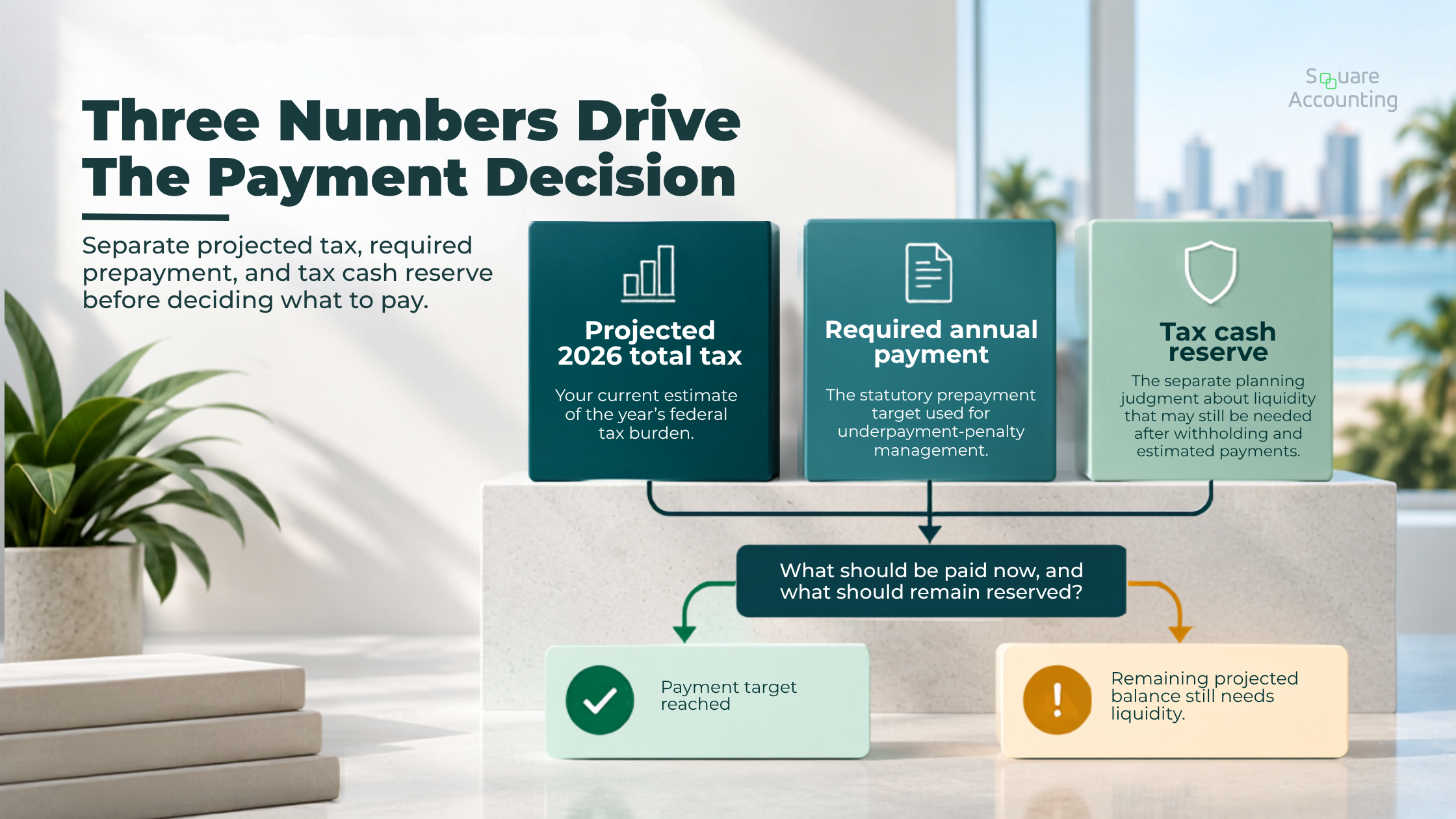
2026 Quarterly Estimated Tax Payments for Florida Business Owners: Deadlines, Safe Harbors, and How Much to Pay
Florida service-business owners can use this guide to separate safe-harbor requirements from projected 2026 tax, understand when entity type or uneven income changes the calculation, and plan the next estimated payment with current-year facts

How to Legally Reduce Capital Gains Tax Before Selling a Florida Home
A pre-sale framework for calculating gain, supporting adjusted basis, testing Section 121 eligibility, classifying rental or business use, and evaluating the taxable remainder alongside timing and closing liquidity.

Selling a Florida Business? Model Capital Gains Before the Deal Is Signed
A business sale can produce several types of income across different years. This guide explains how structure, entity classification, basis, allocation, NIIT, and payment terms shape after-tax cash before the agreement is signed.

Capital Gains Tax for Florida Residents in 2026: Rates, Brackets, and Pre-Sale Planning
A Florida resident’s sale can involve more than one capital-gain rate. This guide shows how basis, gain character, income stacking, NIIT, transaction structure, and payment planning work together before terms become difficult to change.

Florida Business Entity Structure: Questions to Ask Before Year-End
A year-end review should test more than next year’s tax result. This guide connects legal entity, federal tax classification, ownership economics, compensation, basis, real estate, multistate exposure, and exit planning across four decision horizons.

What Tax Exposure Means for Florida Business Owners
Tax exposure extends beyond the balance due on a return. For Florida business owners, it can develop across entity reporting, owner-level limitations, payroll, multistate activity, real estate, liquidity, and future transactions.
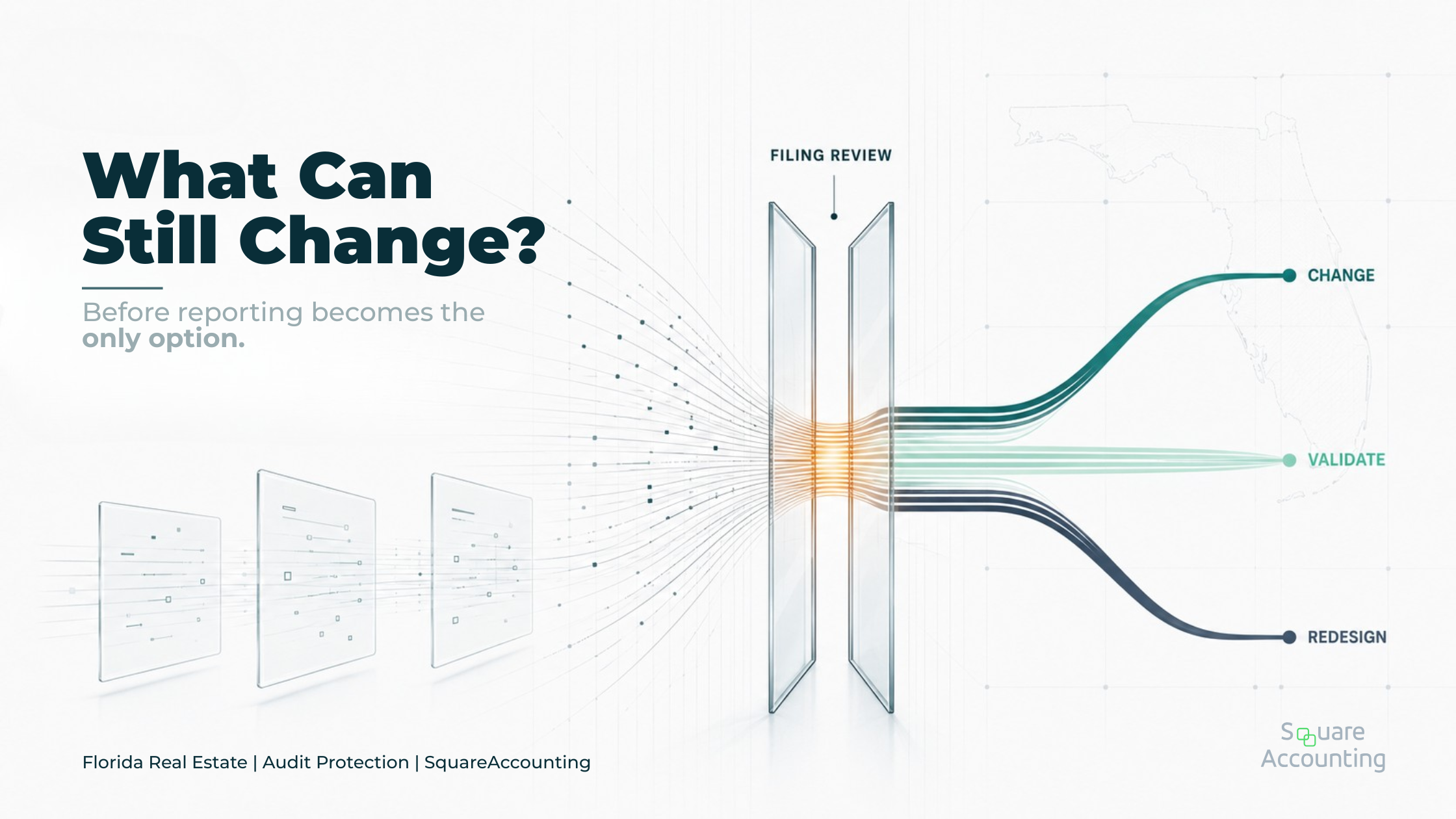
Florida Tax Exposure Scorecard: What Business Owners Should Review Before Filing Season
Filing readiness is not the same as exposure review. This 10-area scorecard helps Florida business owners identify material issues, closing decision windows, and current-year planning priorities.
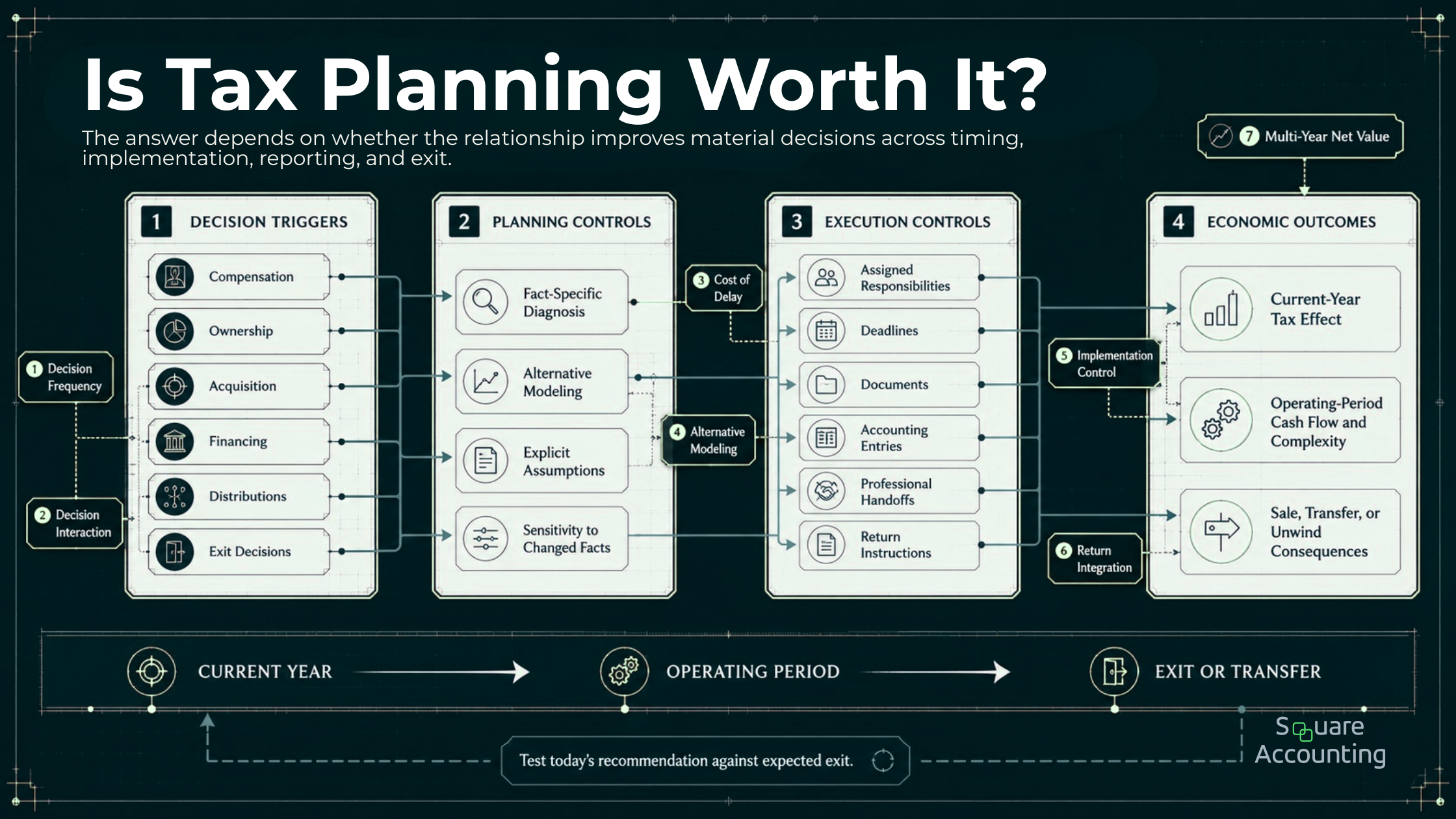
How to Know Whether a Tax Planning Relationship Is Worth It
A tax planning relationship should improve material decisions before they become fixed. This framework evaluates advisor value through timing, net economics, implementation, return integration, and exit consequences.
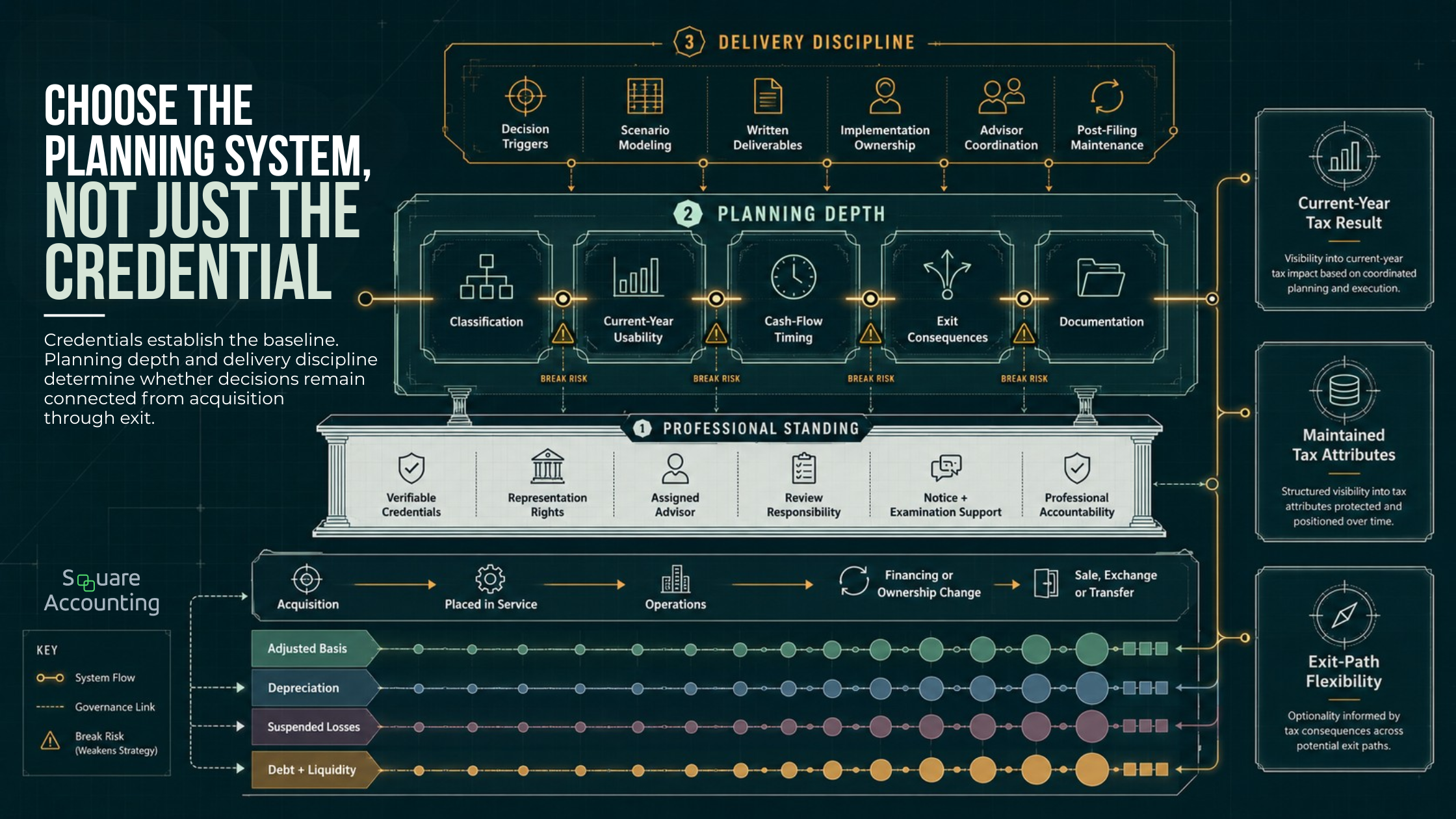
What Should I Look for in a Tax Advisor for My Real Estate Business?
Choosing a real estate tax advisor requires more than verifying credentials. This guide explains how to evaluate decision-window coverage, tax-attribute maintenance, implementation discipline, Florida exposure, and exit planning.
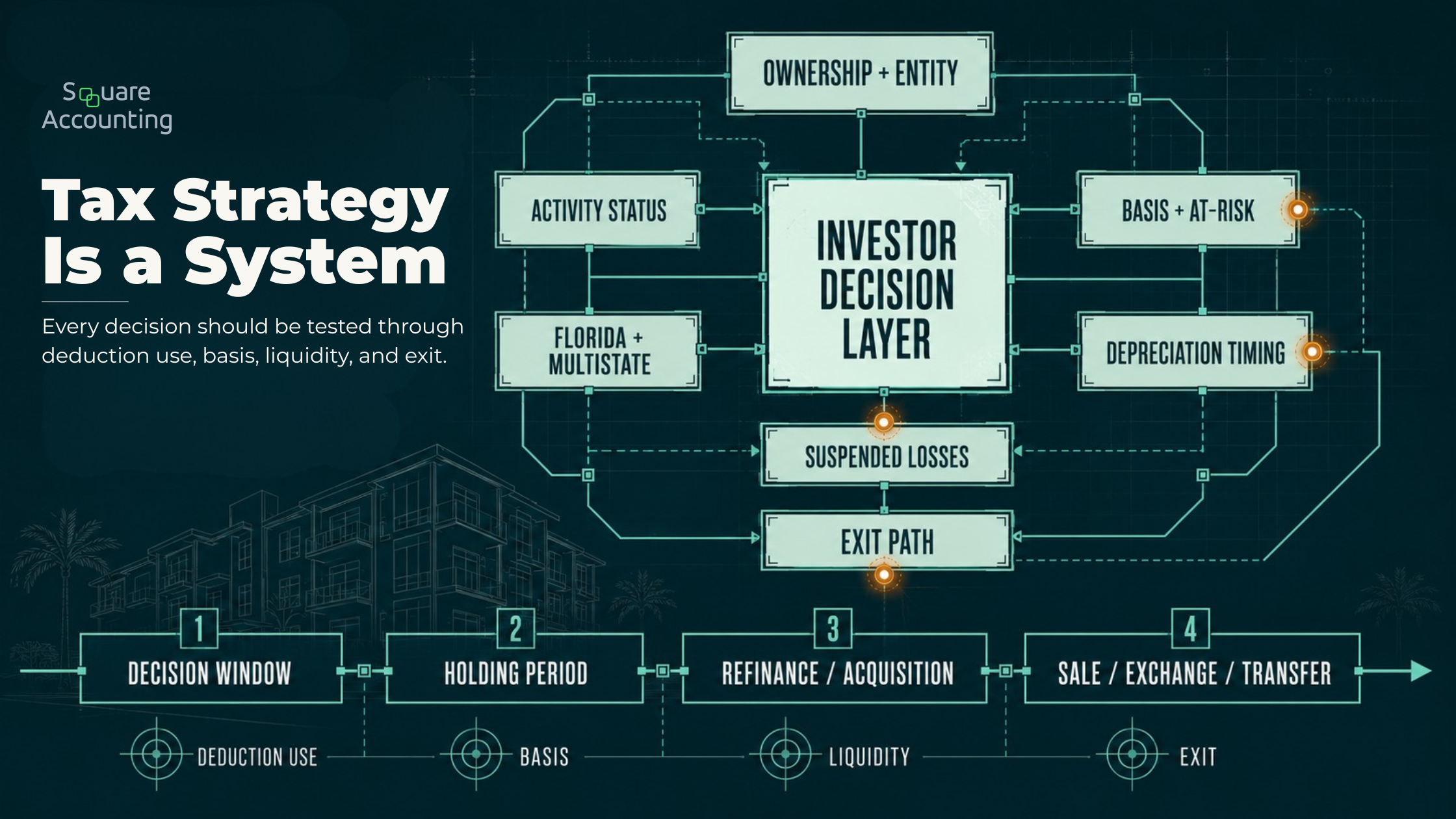
How to Choose a Proactive CPA Firm for Landlords
Choosing a CPA firm for rental properties requires more than year-end preparation. This article shows how proactive planning connects ownership, rental losses, depreciation, liquidity, and exit decisions for Florida landlords.
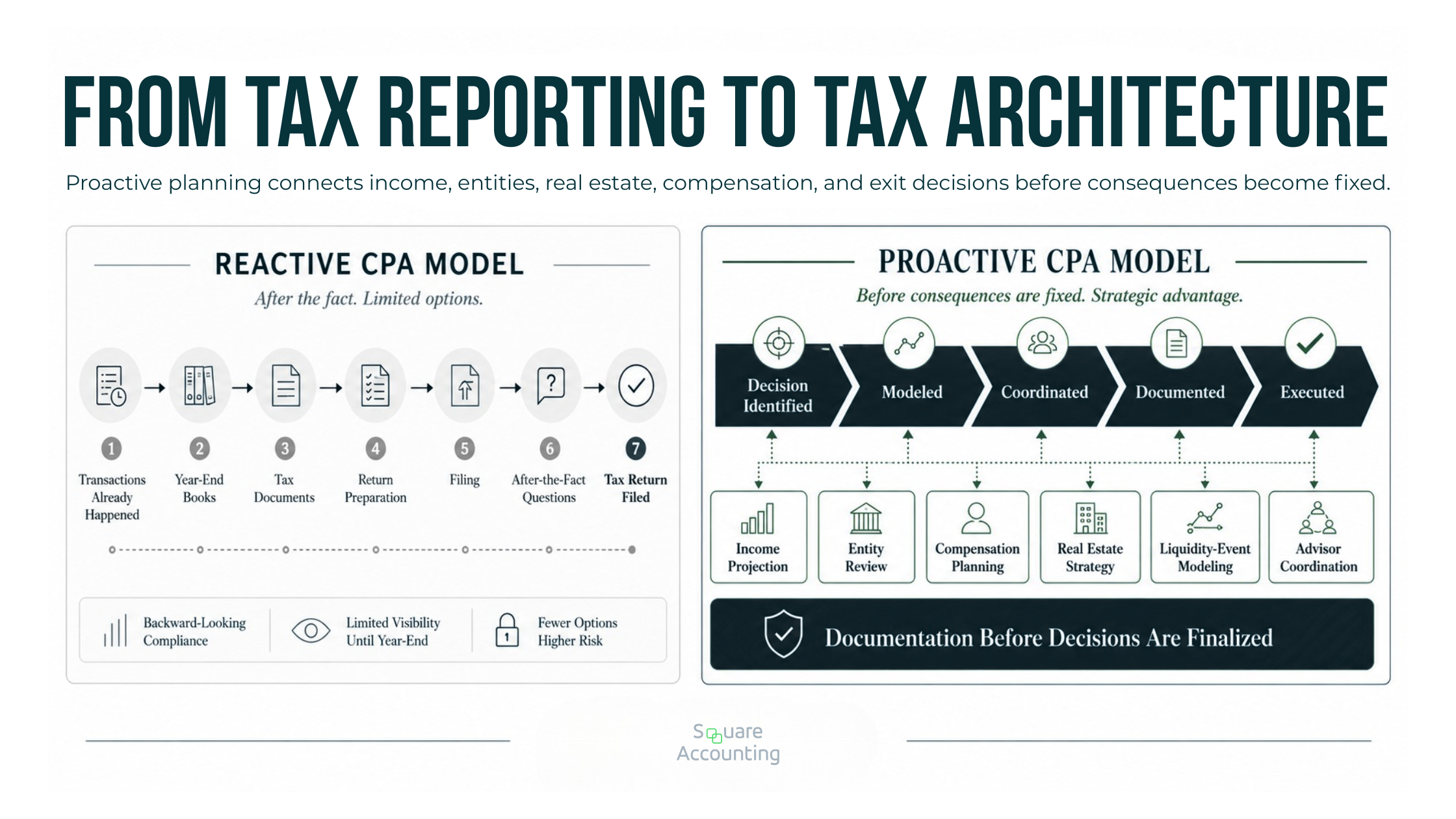
Proactive CPA vs Reactive CPA: What Florida Business Owners Should Know
A proactive CPA helps shape tax-sensitive decisions before they become difficult to unwind. Learn how Florida business owners and investors can evaluate whether their current tax relationship supports multi-year planning.

What Are the Benefits of Strategic Tax Planning for Real Estate Investors?
Strategic tax planning helps real estate investors coordinate depreciation, passive losses, entity structure, and exit timing. For Florida HNW investors, the real value is connecting current-year decisions to long-term after-tax outcomes.
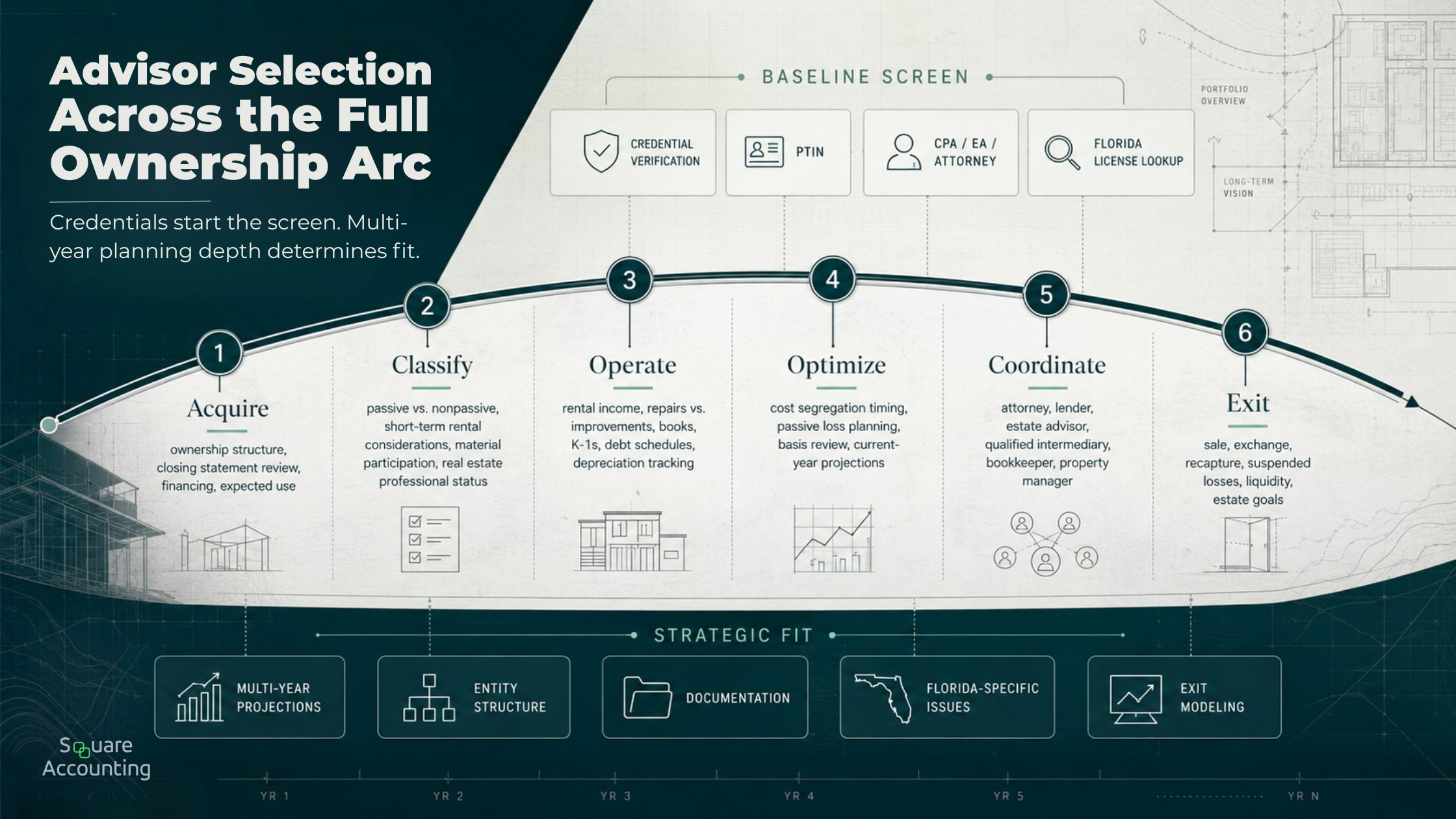
How to Find a Tax Advisor Specializing in Real Estate Investments in Florida
Learn how to evaluate a Florida real estate tax advisor by credentials, planning depth, Florida-specific exposure, and multi-year exit logic. Built for investors who need more than annual filing support.
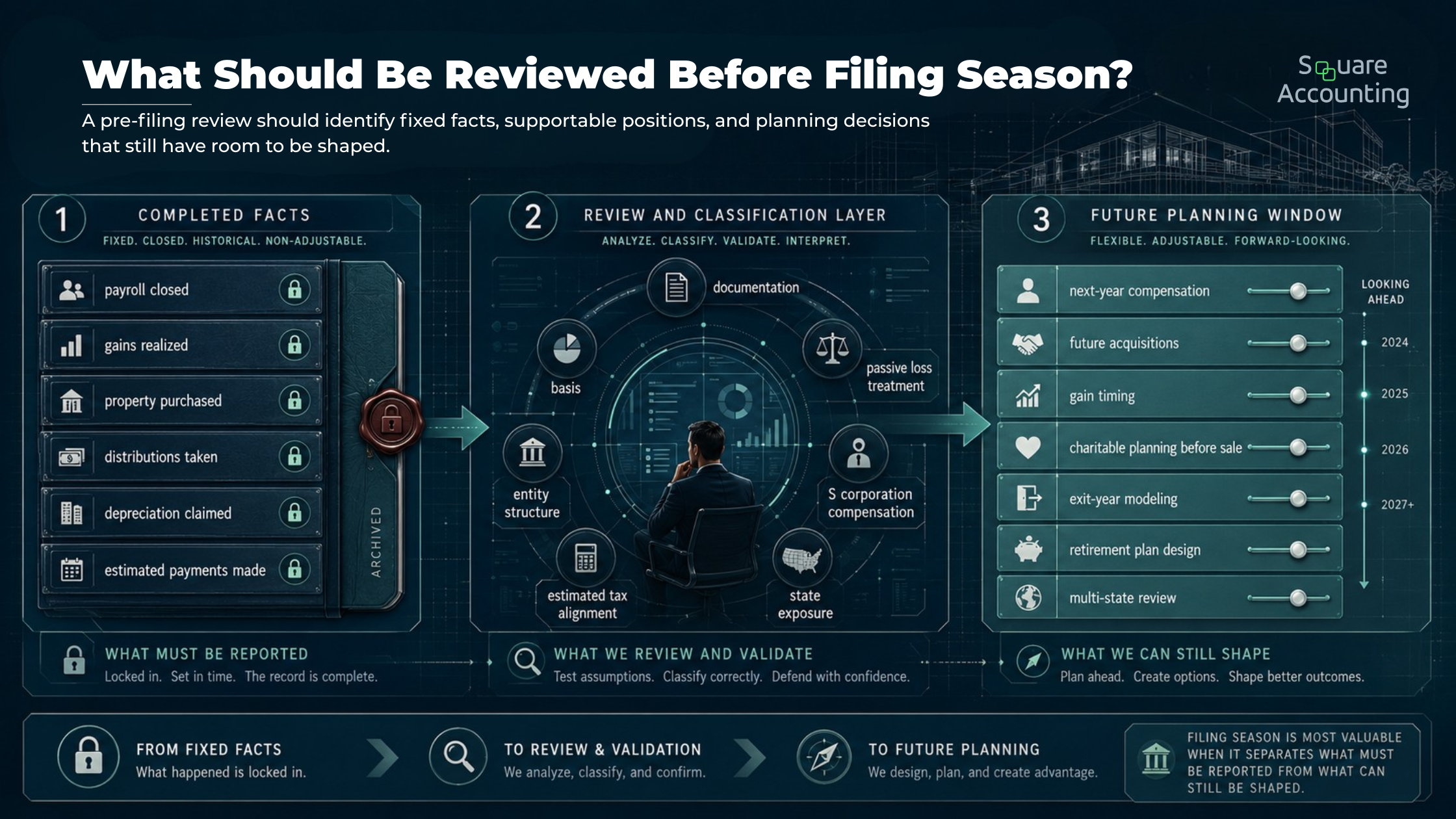
What Should Be Reviewed Before Filing Season?
A pre-filing review should do more than organize documents. For high-income Florida taxpayers, it should identify fixed facts, planning gaps, and decisions that still have room to be shaped.
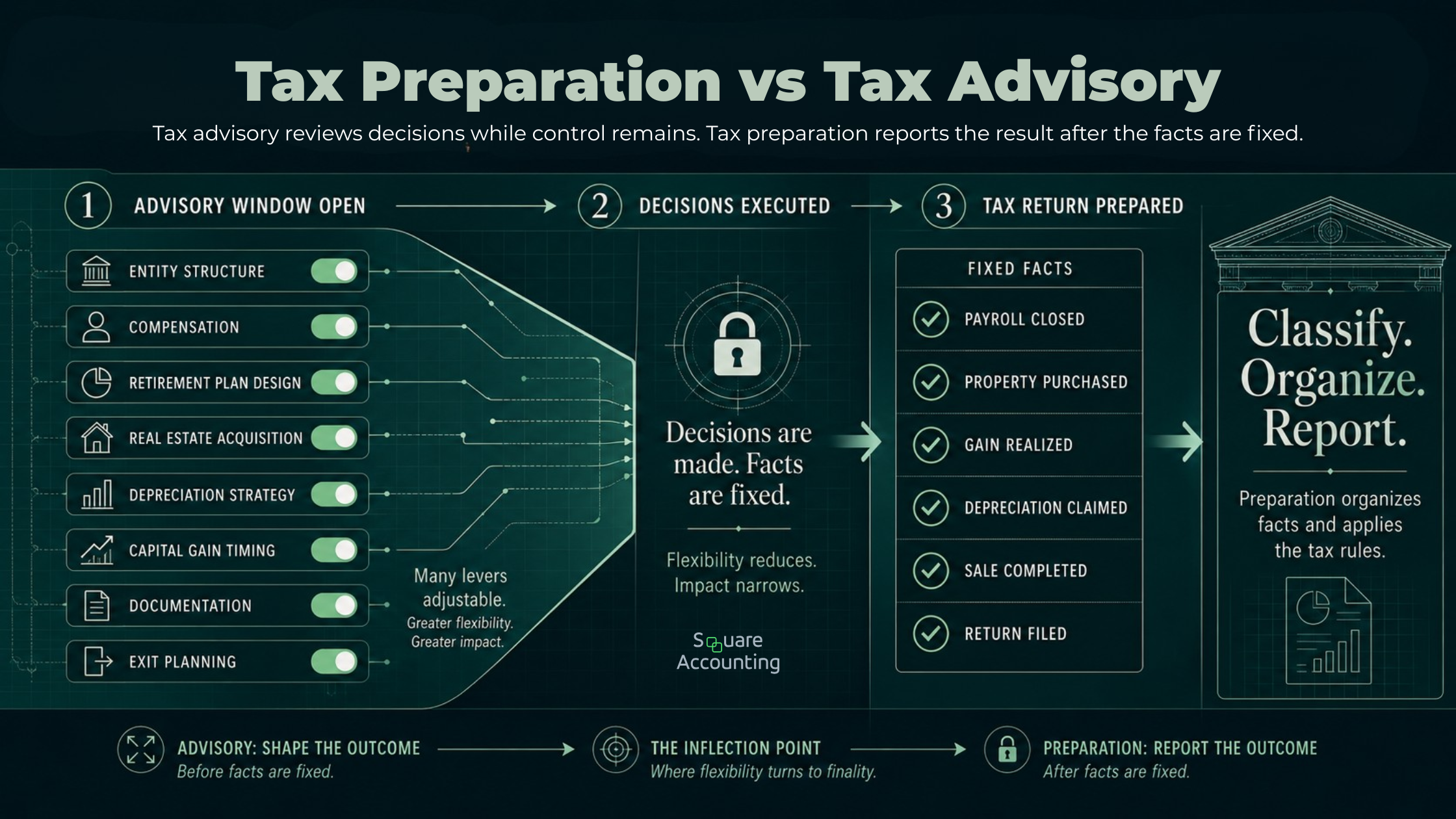
Tax Preparation vs Tax Advisory: Why the Difference Matters
Tax preparation reports completed decisions. Tax advisory helps Florida business owners, real estate investors, and high-income taxpayers review planning issues before the return simply reports the result.
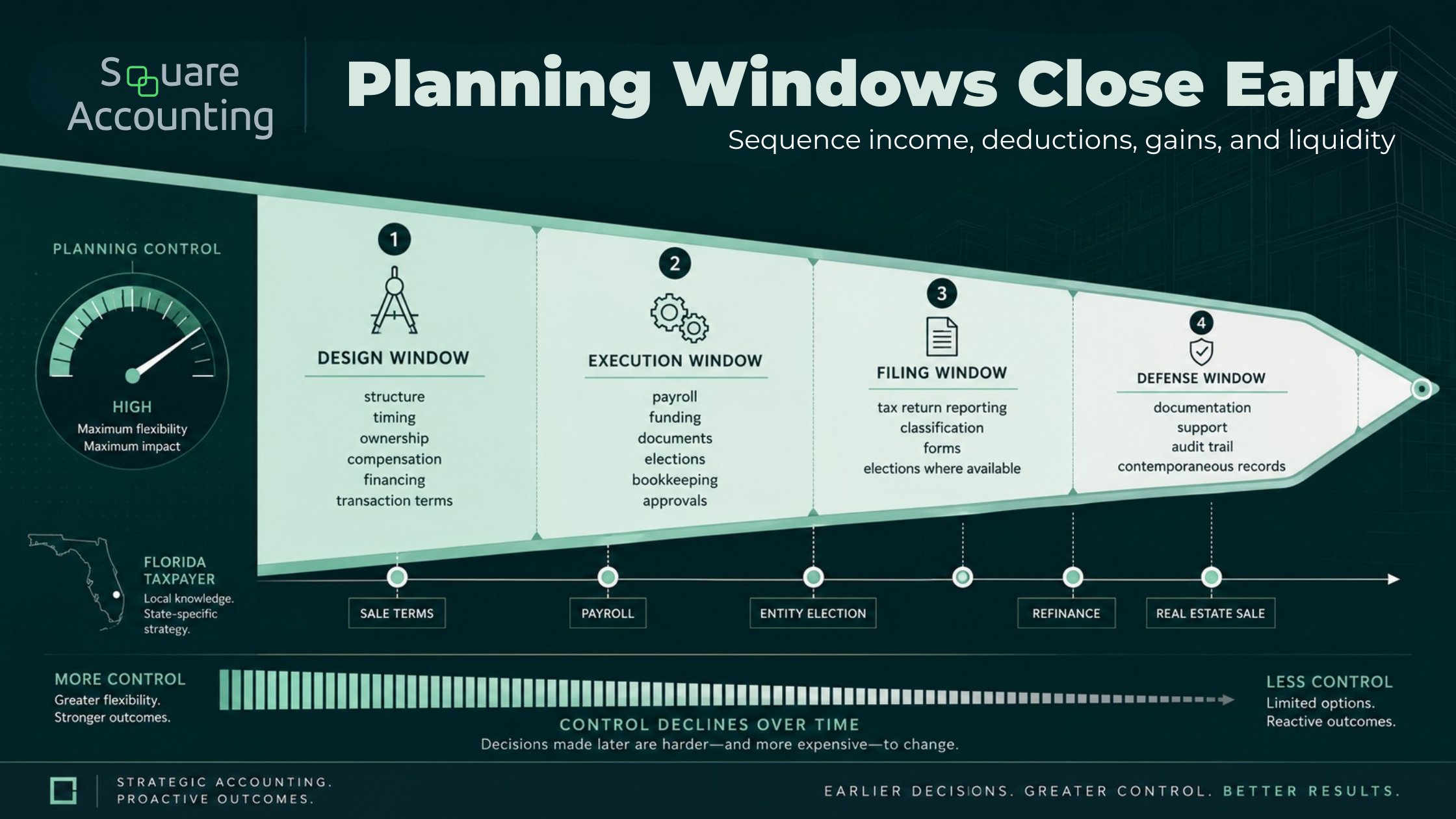
Signs Your Accountant Is Reacting Too Late
A reactive accountant may file accurately but miss the earlier planning windows that shape tax outcomes. Learn how Florida business owners and investors can evaluate whether their tax planning is happening early enough.
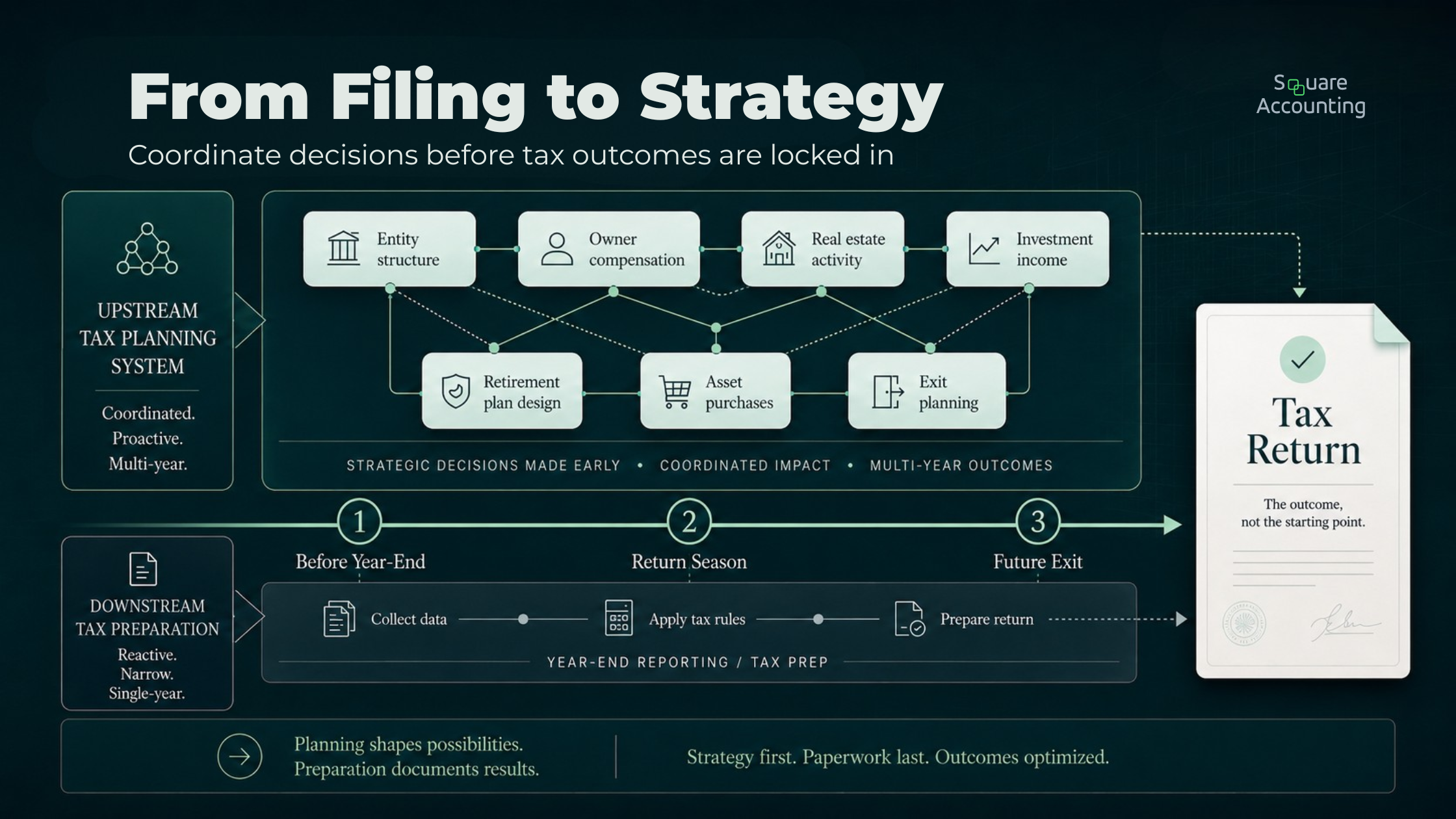
When Florida Business Owners Should Upgrade From Tax Prep to Tax Planning
A strategic guide for Florida business owners who have outgrown reactive annual filing. Learn when income, entities, real estate, and exit decisions call for multi-year tax planning.
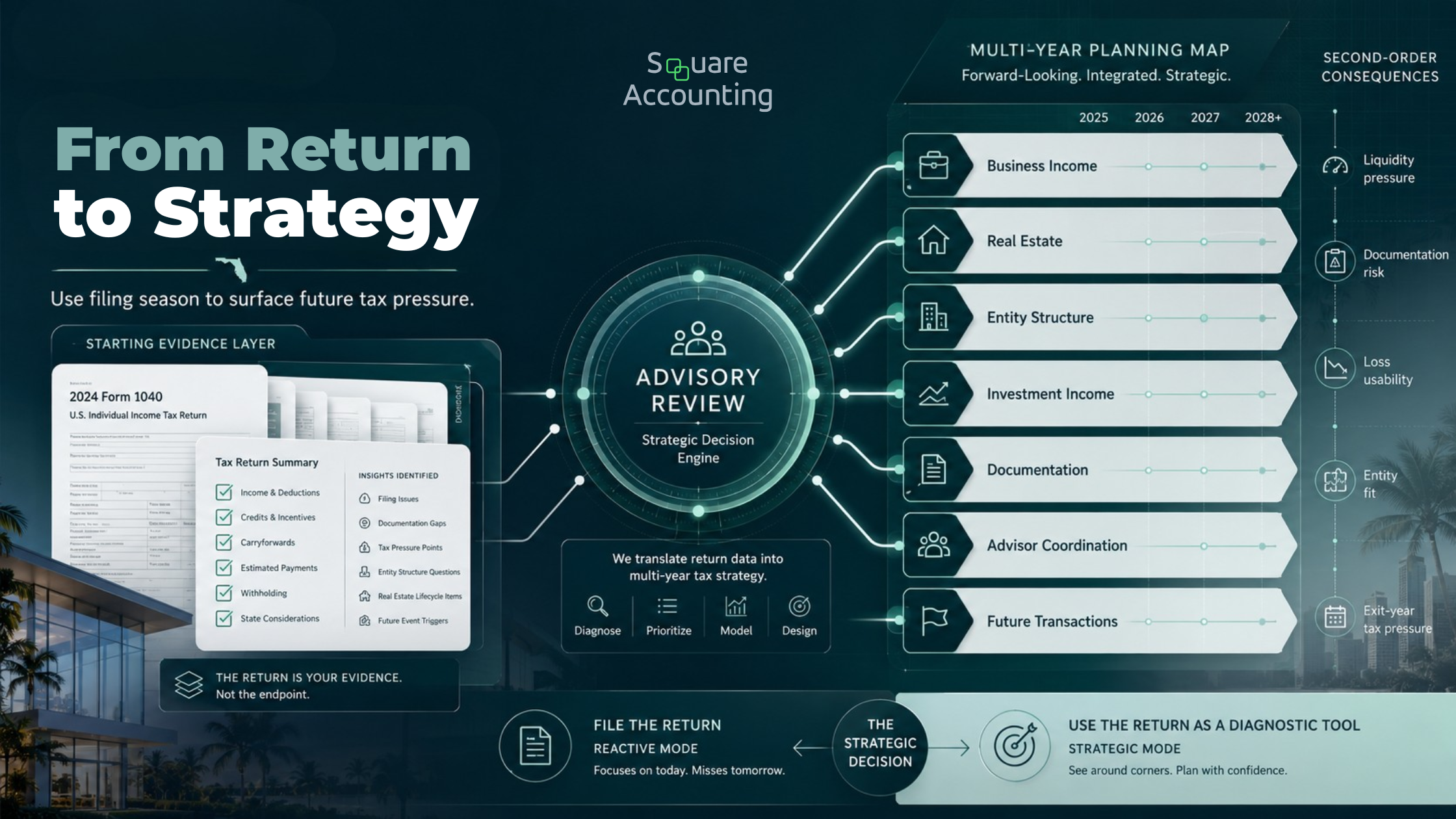
What Happens During a Tax Prep + Advisory Review?
A tax prep + advisory review should do more than finalize a return. It should reveal planning pressure, documentation needs, entity questions, and future tax decisions.
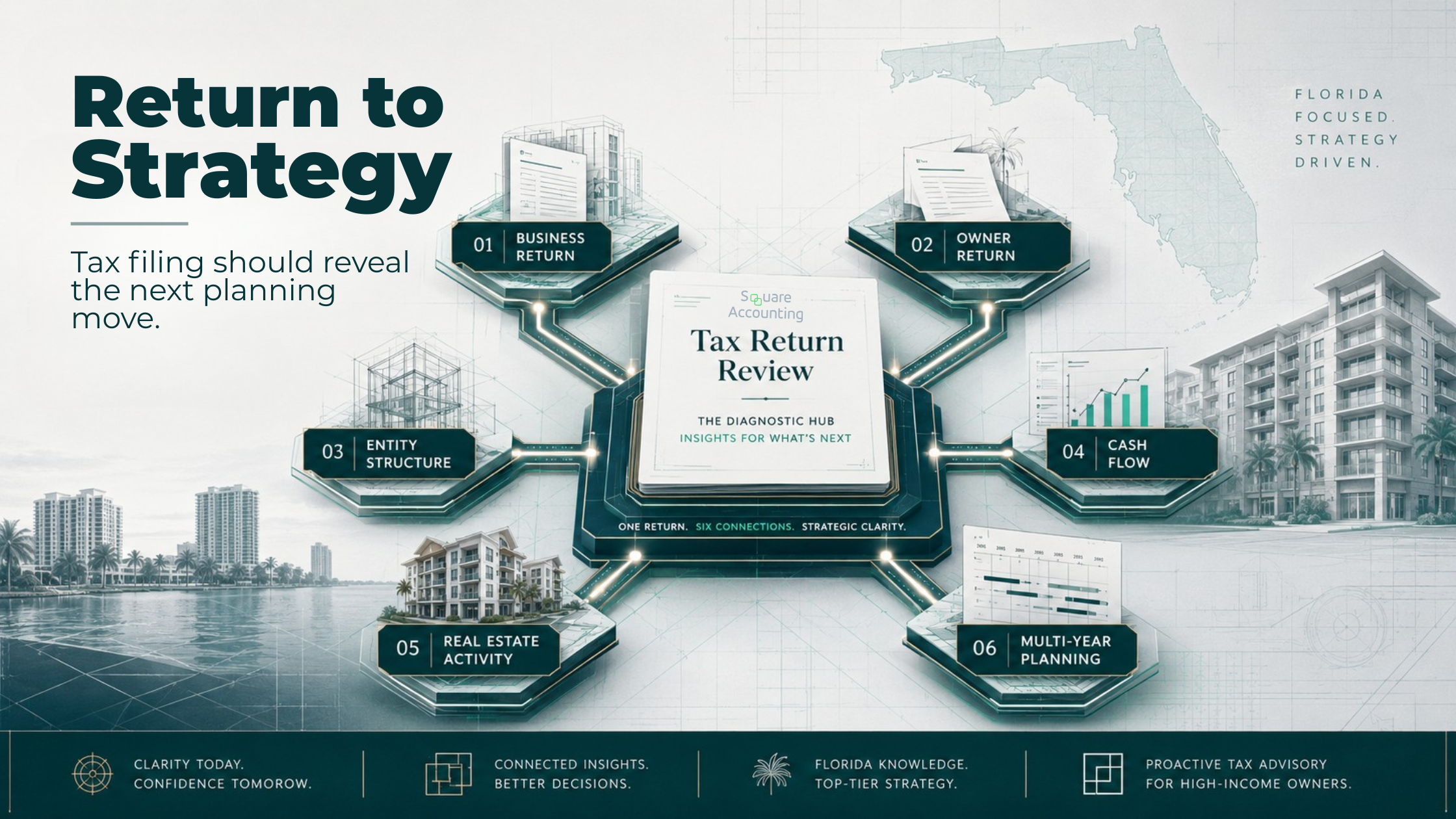
Tax Preparation and Advisory Review for Florida Business Owners: What It Includes
A tax preparation and advisory review should do more than file the return. For Florida business owners, it should connect filing with entity structure, estimates, cash flow, real estate activity, and multi-year planning priorities.

Contact us
Talk to our Tax Advisor
Running your operations is demanding—your taxes shouldn’t add to the stress. Whether you need strategic tax planning or ongoing support, we’re here to help.