
How Purchasing Appreciating Assets Can Reduce Taxes Without Chasing Short-Term Deductions
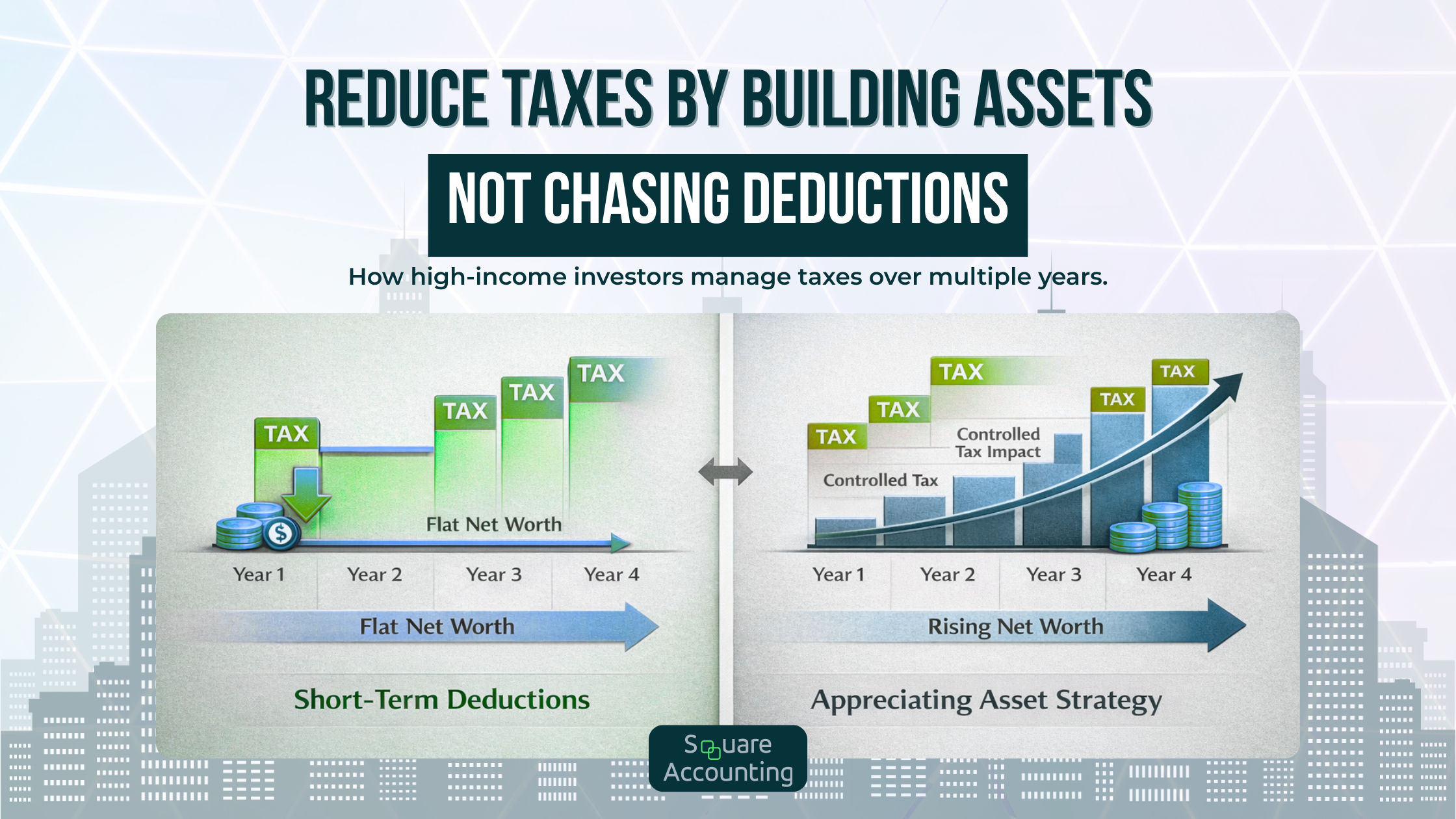
High-income Florida taxpayers rarely suffer from a lack of deductions. The real problem is that most deductions are transactional, short-lived, and disconnected from long-term wealth outcomes. A bonus depreciation election, a one-time write-off, or an aggressive expense strategy might lower this year’s tax bill, but it often does nothing to improve your balance sheet five or ten years from now.
For sophisticated investors and business owners, tax planning works best when it aligns with capital allocation. That is where an appreciating assets tax strategy becomes relevant. The goal is not to chase deductions, but to deploy capital into assets that can both compound in value and support multi-year tax efficiency.
This article explains how purchasing appreciating assets can reduce taxes over time, where the strategy works well, and where it requires discipline, sequencing, and restraint.
Key Takeaways
Tax efficiency improves when asset growth, depreciation, and exit planning are coordinated across multiple years, not isolated to a single filing.
Appreciating assets can create tax benefits through timing, classification, and deferral rather than permanent deductions.
Real estate remains the most common vehicle, but results depend heavily on ownership structure, activity level, and exit strategy.
Cost segregation and accelerated depreciation only add value when they align with long-term cash flow and recapture planning.
Florida’s no state income tax environment shifts the emphasis from income offsetting to federal optimization and balance sheet growth.
The strategy fails when investors prioritize deductions over asset quality, liquidity, or operational reality.
Asset-based tax planning only works when timing, structure, and exit are coordinated. See how this approach fits into your broader tax picture.
Asset-Based Tax Planning vs Traditional Deduction Chasing
Most high earners are trained to think about taxes through expenses. Spend more, deduct more, save tax. That mindset works at lower income levels but becomes inefficient as income and capital scale.
Asset-based tax planning flips the sequence. Instead of asking what can be deducted this year, the better question is how capital should be deployed to achieve:
Sustainable after-tax cash flow
Controlled taxable income over time
Optionality at exit
Appreciating assets matter because they introduce timing flexibility. Depreciation, amortization, and financing costs can reduce taxable income in early years, while appreciation accrues off the tax return until a sale, refinance, or restructuring event.
This is not about turning income into “tax-free” income. It is about smoothing taxation across years while building net worth.
Why Appreciating Assets Create Strategic Tax Leverage
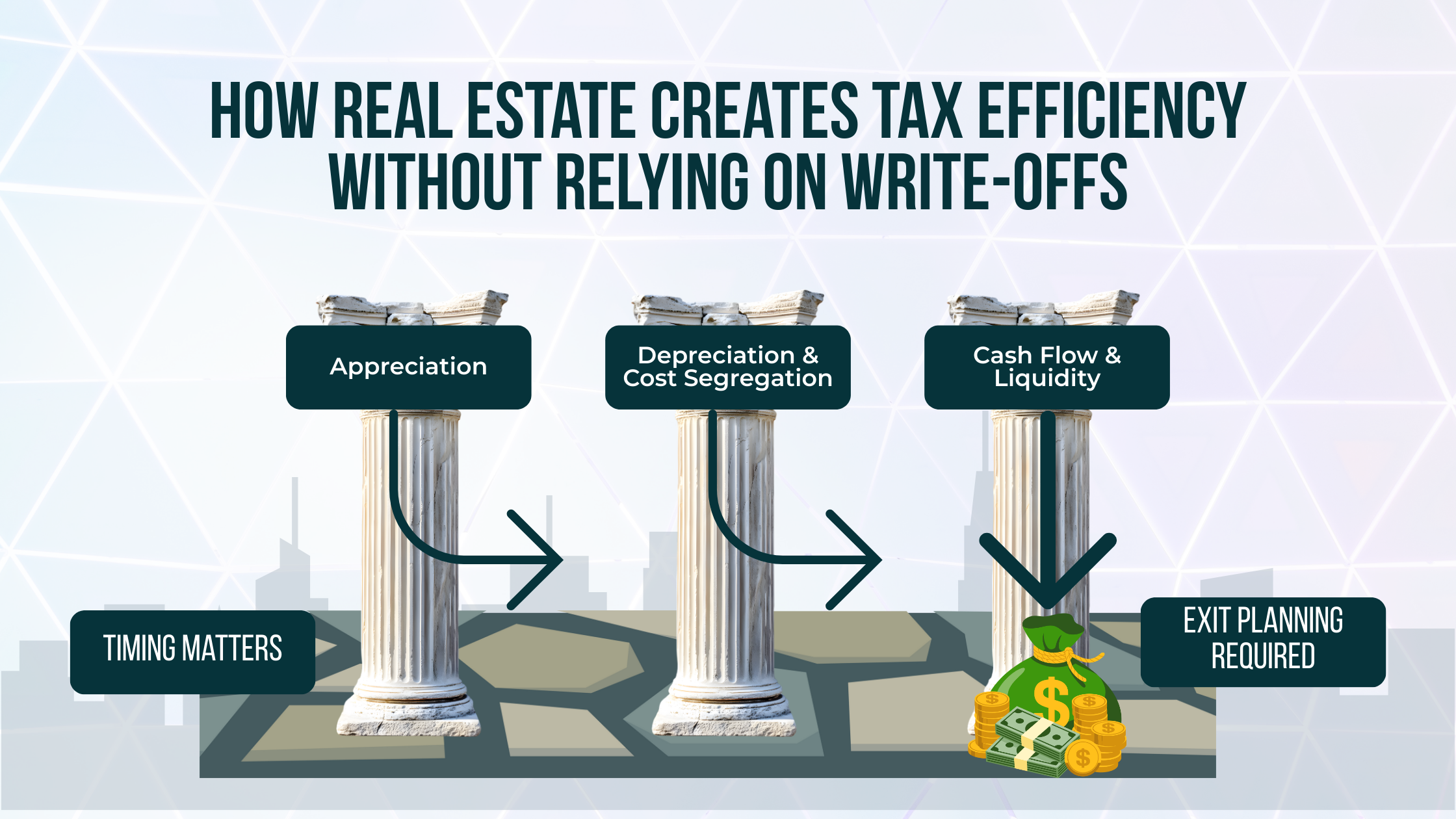
An appreciating asset does three things simultaneously:
It absorbs capital that might otherwise generate fully taxable income.
It produces deductions that are front-loaded relative to cash flow.
It defers recognition of economic gain.
Real estate illustrates this best. A well-structured acquisition can produce positive cash flow, significant depreciation, and appreciation that is not taxed annually. The tax benefit comes from the mismatch between economic reality and tax accounting timing.
That timing advantage is where planning lives. Without it, you are simply buying an asset and hoping the deductions justify the purchase. That is not strategy.
Real Estate as the Primary Vehicle, With Important Caveats
For Florida-based investors, real estate dominates asset-based tax planning for structural reasons:
High in-migration supports long-term demand.
Short-term and mixed-use rentals are common.
State income tax is not part of the equation.
However, not all real estate creates the same tax outcome.
Active vs Passive Treatment
Material participation determines whether depreciation can offset active income. Short-term rentals, properly structured and operated, often qualify for non-passive treatment even when the owner is not a real estate professional. Long-term rentals typically do not.
This distinction affects whether depreciation reduces business income, portfolio income, or simply carries forward.
Cost Segregation as a Planning Tool, Not a Default Election
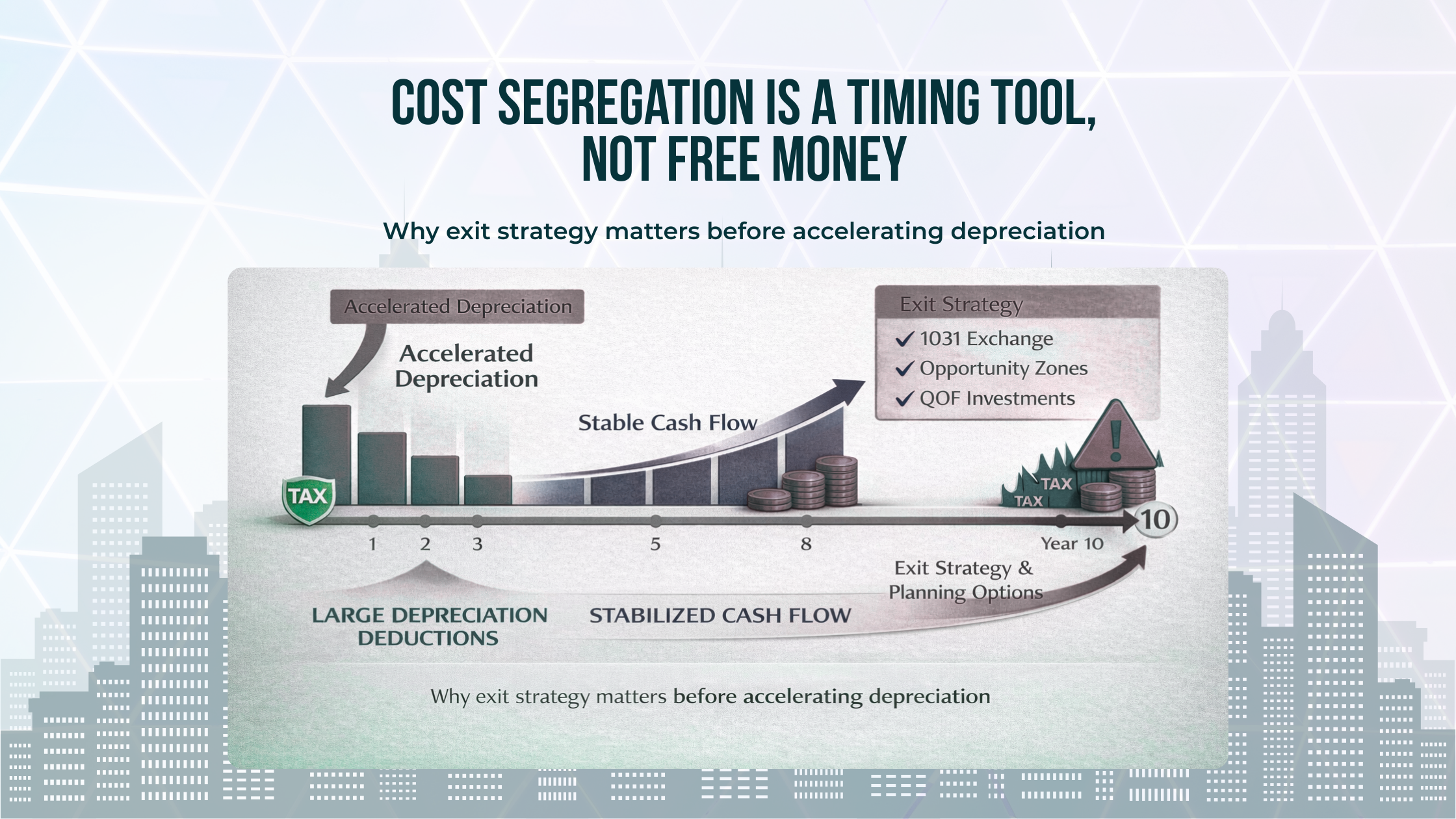
Cost segregation and accelerated depreciation are frequently oversold. When used thoughtfully, they can accelerate deductions into higher-income years. When used indiscriminately, they create future recapture with no liquidity plan.
The decision should account for:
Expected hold period
Anticipated income trajectory
Refinance versus sale likelihood
In multi-year planning, depreciation timing matters more than depreciation volume.
Cash Flow vs Tax Savings: The Trade-Off That Gets Ignored
A recurring mistake among high earners is accepting poor cash flow in exchange for tax savings. A deduction that costs a dollar to save forty cents is not efficient capital deployment.
Appreciating assets must stand on their own economically. Tax benefits should improve the return, not justify the purchase.
This is especially important in Florida, where insurance costs, property taxes on non-homestead properties, and weather-related reserves materially affect net operating income. Ignoring those realities turns a tax strategy into a cash drain.
Entity and Ownership Structure Implications
How an asset is owned often matters more than the asset itself.
Key considerations include:
Individual ownership versus partnerships or LLCs
Use of S corporations for operating income, not asset holding
Allocation of depreciation and income among partners
For business owners earning $250k or more, integrating asset ownership with operating entities requires care. Misalignment can trap depreciation where it provides little benefit or complicate exits later.
Structure should be designed with both acquisition and disposition in mind.
Exit, Recapture, and Long-Term Consequences
Appreciation does not eliminate tax. It delays it.
Upon sale, depreciation recapture and capital gains come due unless another strategy intervenes. That does not make depreciation a bad idea, but it does make exit planning mandatory.
Options may include:
Refinancing instead of selling
Staggered dispositions over multiple years
Strategic use of exchanges or restructuring
The mistake is treating depreciation as permanent savings instead of temporary deferral tied to future decisions.
What Most Articles Get Wrong or Leave Out
Many articles reduce this strategy to a slogan: “Buy assets, get write-offs.” That framing omits the hard parts.
Common issues we see:
Overweighting depreciation without modeling recapture
Buying assets primarily for tax reasons
Ignoring activity classification until after acquisition
Failing to coordinate asset purchases with income timing
Assuming appreciation solves poor fundamentals
There are also situations where this strategy is inappropriate. Investors with short time horizons, unstable cash flow, or low risk tolerance may be better served by simpler income management approaches.
Many tax strategies fail not because of the asset, but because of how it’s owned, timed, or exited. A second look now can prevent long-term issues later.
Florida-Specific Planning Considerations
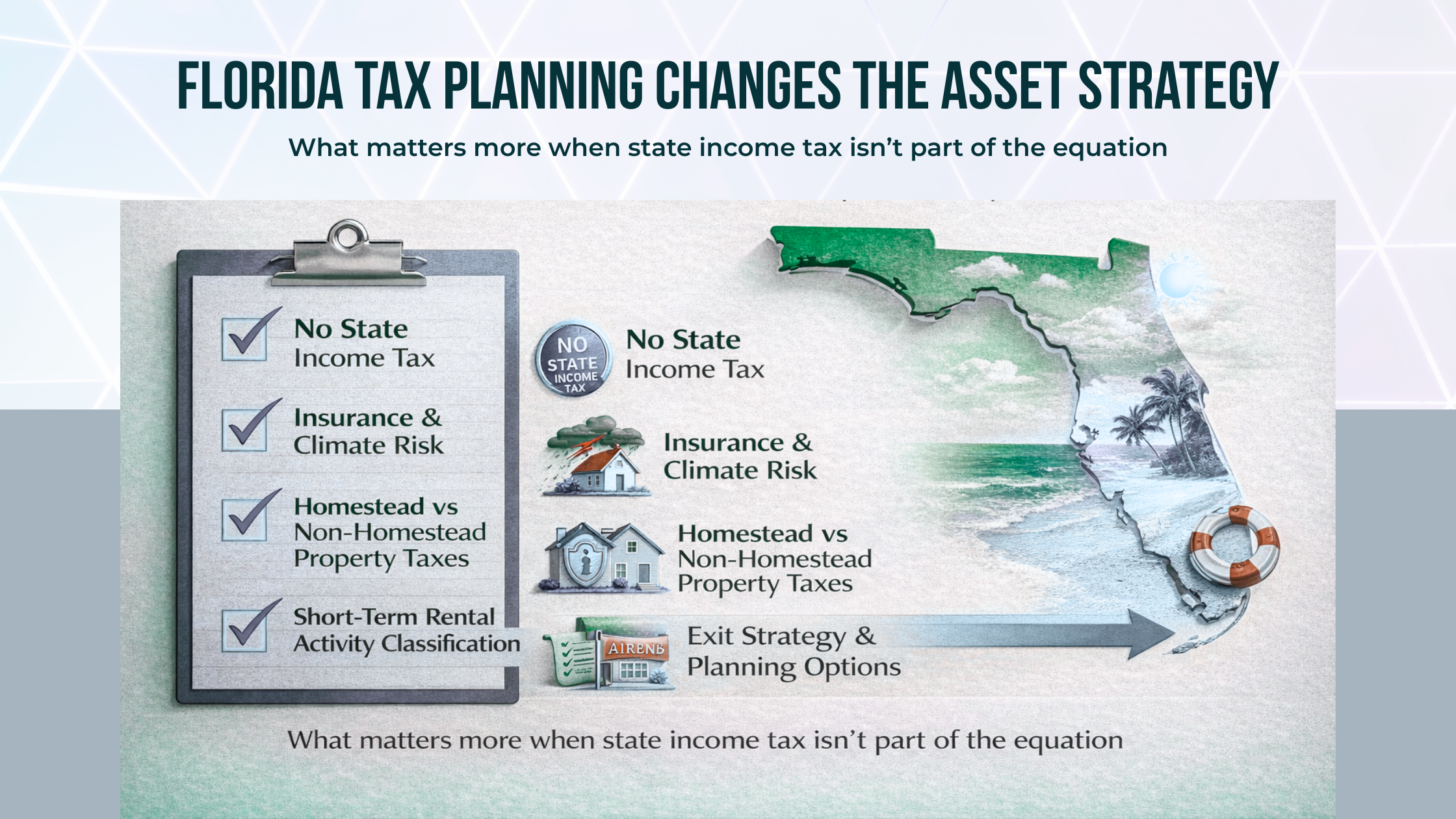
Florida’s lack of state income tax changes the math. The federal benefit must justify the strategy on its own.
Additional nuances include:
Property tax differences between homestead and non-homestead assets
Insurance volatility that affects underwriting assumptions
Concentration risk from overexposure to a single geography or asset type
Because Florida does not penalize ordinary income at the state level, strategies that rely solely on income offsetting are less compelling than those that build durable, appreciating balance sheet assets.
Conclusion
Purchasing appreciating assets can reduce taxes, but only when integrated into a broader, multi-year plan. The real advantage is not the deduction itself. It is the ability to control when income is recognized, how cash flow is taxed, and what options exist at exit.
For high-income Florida taxpayers, this approach works best when sequencing, structure, and sustainability are addressed upfront. Tax planning should follow capital strategy, not the other way around.
We view asset-based tax planning as part of long-term financial architecture. The assets you buy today shape the taxes you pay tomorrow, but only if the plan is built to last.
Frequently Asked Questions About Appreciating Assets and Tax Planning
How do appreciating assets reduce taxes?
Appreciating assets reduce taxes primarily through timing and deferral, not permanent elimination. Assets like real estate generate depreciation, interest expense, and operating deductions that can offset taxable income today, while appreciation occurs outside the tax return until a sale, refinance, or restructuring. The benefit comes from managing when income is recognized versus when deductions are realized as part of a multi-year tax strategy.
Are appreciating assets better than traditional tax deductions?
They serve a different purpose. Traditional deductions reduce taxable income for a single year and usually have no lasting economic value. Appreciating assets, when purchased for sound business reasons, can provide both ongoing tax efficiency and long-term wealth creation. For high-income taxpayers, this alignment often produces better after-tax outcomes than one-time deductions alone.
Does buying real estate always lower your tax bill?
No. Real estate only lowers taxes when the ownership structure, activity level, and income profile support it. Passive losses may be limited, depreciation may not offset the right type of income, and poor cash flow can negate tax savings. Real estate should be evaluated as an investment first, with tax benefits modeled realistically.
How does depreciation work with appreciating assets?
Depreciation allows owners to deduct a portion of an asset’s cost over time, even if the asset is increasing in market value. This creates a disconnect between tax reporting and economic performance. However, depreciation is generally recaptured upon sale, which means it should be planned as a deferral strategy, not assumed to be permanent tax savings.
Is cost segregation worth it for high-income earners?
Cost segregation can be valuable, but only when it fits into a longer-term plan. Accelerating depreciation may reduce current taxes, but it can increase future recapture and distort cash flow if the asset is sold sooner than expected. The decision should be based on hold period, income trajectory, and exit strategy, not just current-year tax savings.
How does Florida’s no state income tax affect this strategy?
Florida’s lack of state income tax makes federal optimization more important. Strategies that rely heavily on state-level income offsets are less impactful, while asset-based planning focused on federal timing, depreciation, and appreciation becomes more relevant. Florida-specific factors like insurance costs, property taxes on non-homestead properties, and rental activity classification also play a larger role in the analysis.
Are there risks to buying assets mainly for tax reasons?
Yes. Buying assets primarily for tax benefits often leads to poor investment decisions, liquidity issues, and unexpected tax consequences at exit. The most effective appreciating assets tax strategies start with asset quality and cash flow, then layer tax planning on top. When the tax tail wags the investment dog, the strategy usually fails.
