
Blog

Capital Gains Tax for Florida Residents in 2026: Rates, Brackets, and Pre-Sale Planning
A Florida resident’s sale can involve more than one capital-gain rate. This guide shows how basis, gain character, income stacking, NIIT, transaction structure, and payment planning work together before terms become difficult to change.

What Tax Exposure Means for Florida Business Owners
Tax exposure extends beyond the balance due on a return. For Florida business owners, it can develop across entity reporting, owner-level limitations, payroll, multistate activity, real estate, liquidity, and future transactions.
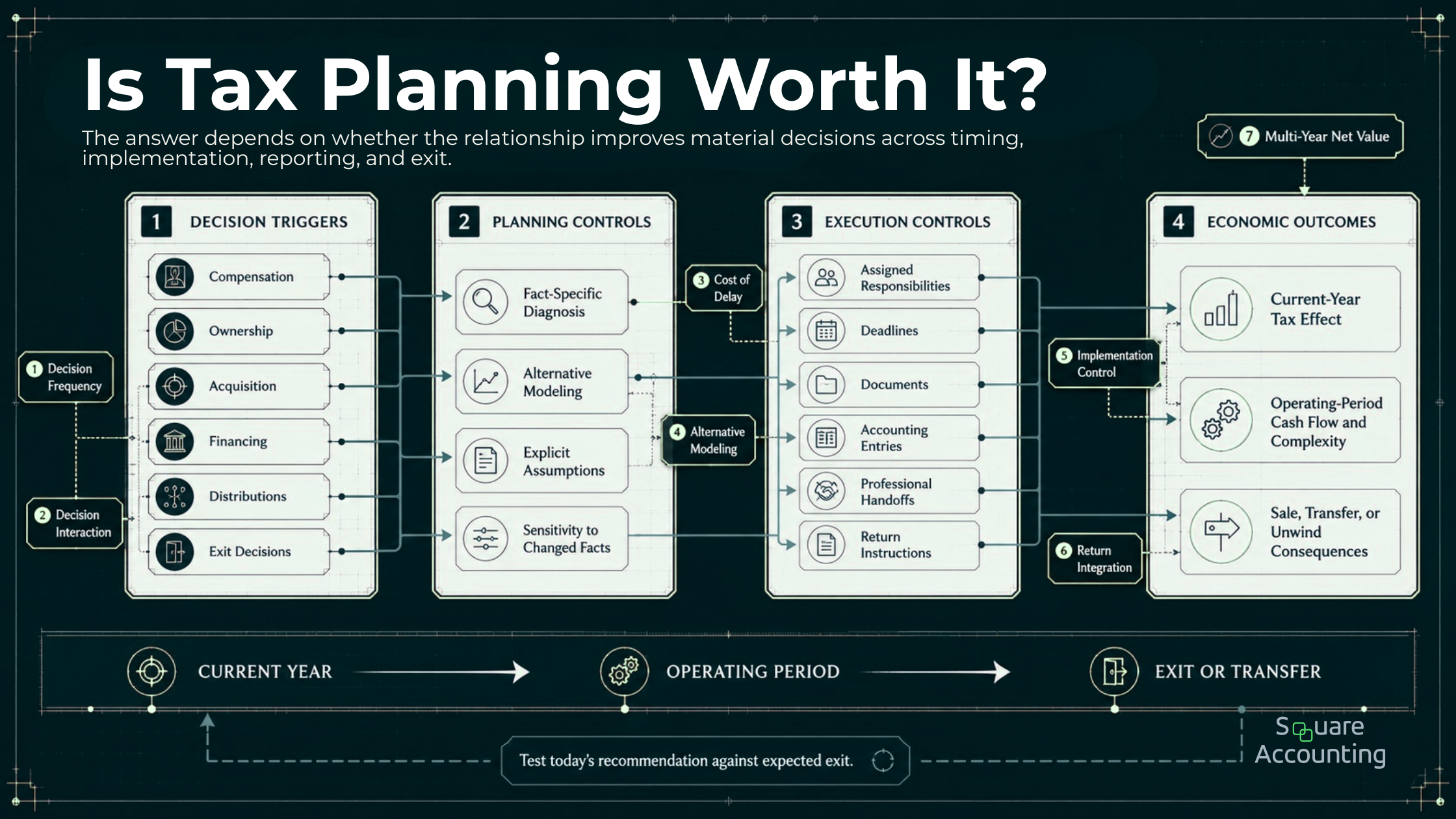
How to Know Whether a Tax Planning Relationship Is Worth It
A tax planning relationship should improve material decisions before they become fixed. This framework evaluates advisor value through timing, net economics, implementation, return integration, and exit consequences.
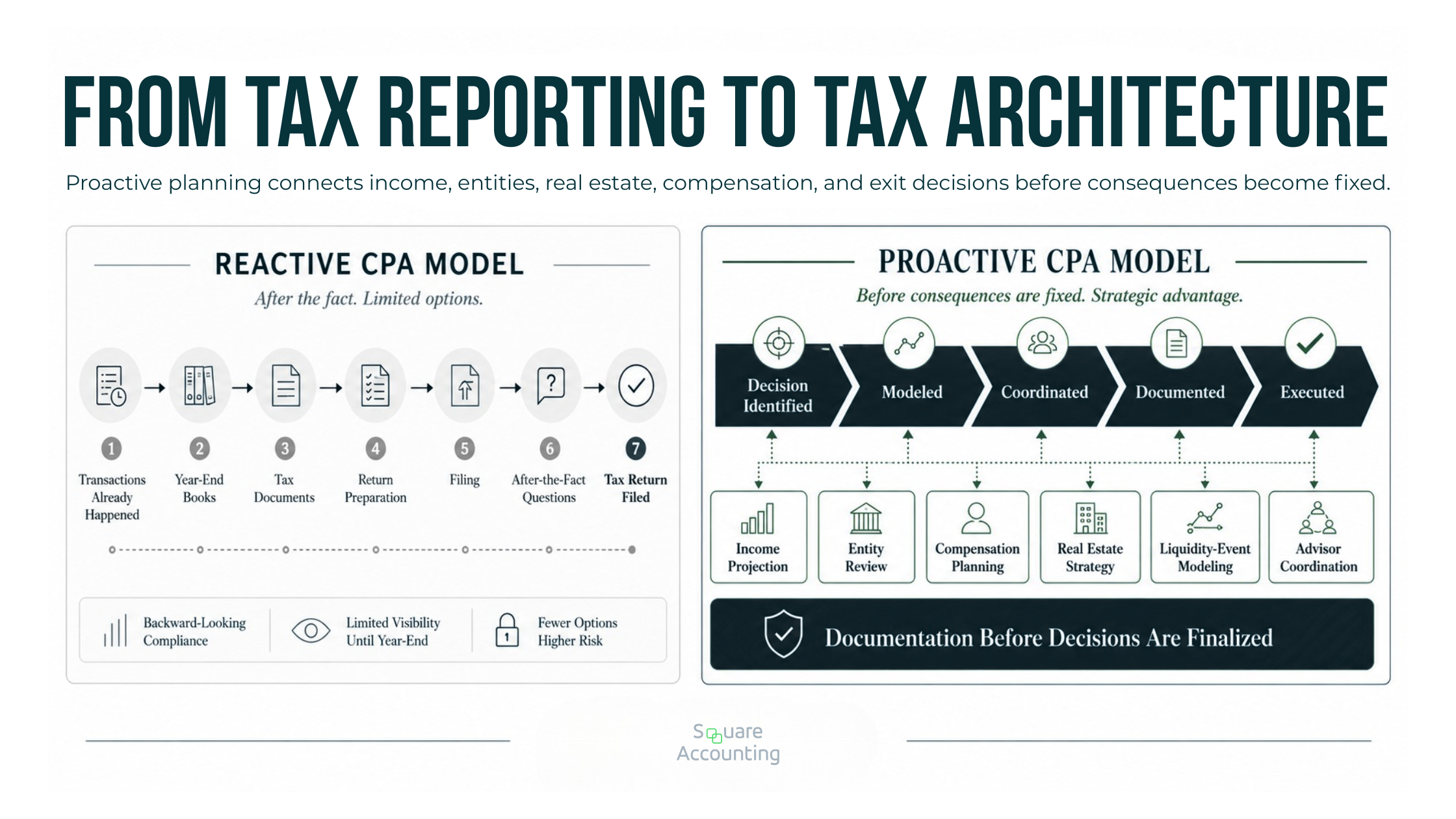
Proactive CPA vs Reactive CPA: What Florida Business Owners Should Know
A proactive CPA helps shape tax-sensitive decisions before they become difficult to unwind. Learn how Florida business owners and investors can evaluate whether their current tax relationship supports multi-year planning.
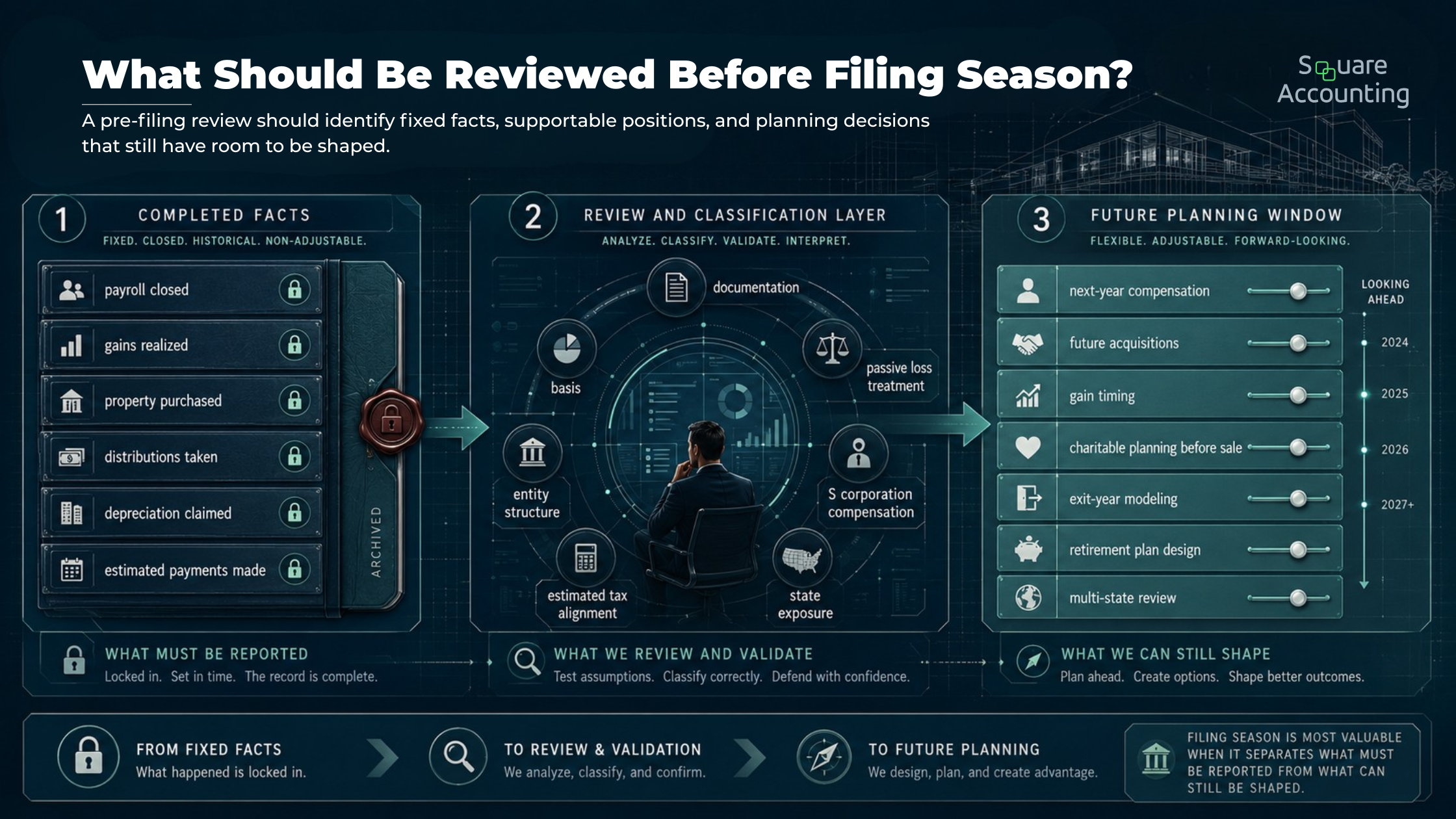
What Should Be Reviewed Before Filing Season?
A pre-filing review should do more than organize documents. For high-income Florida taxpayers, it should identify fixed facts, planning gaps, and decisions that still have room to be shaped.
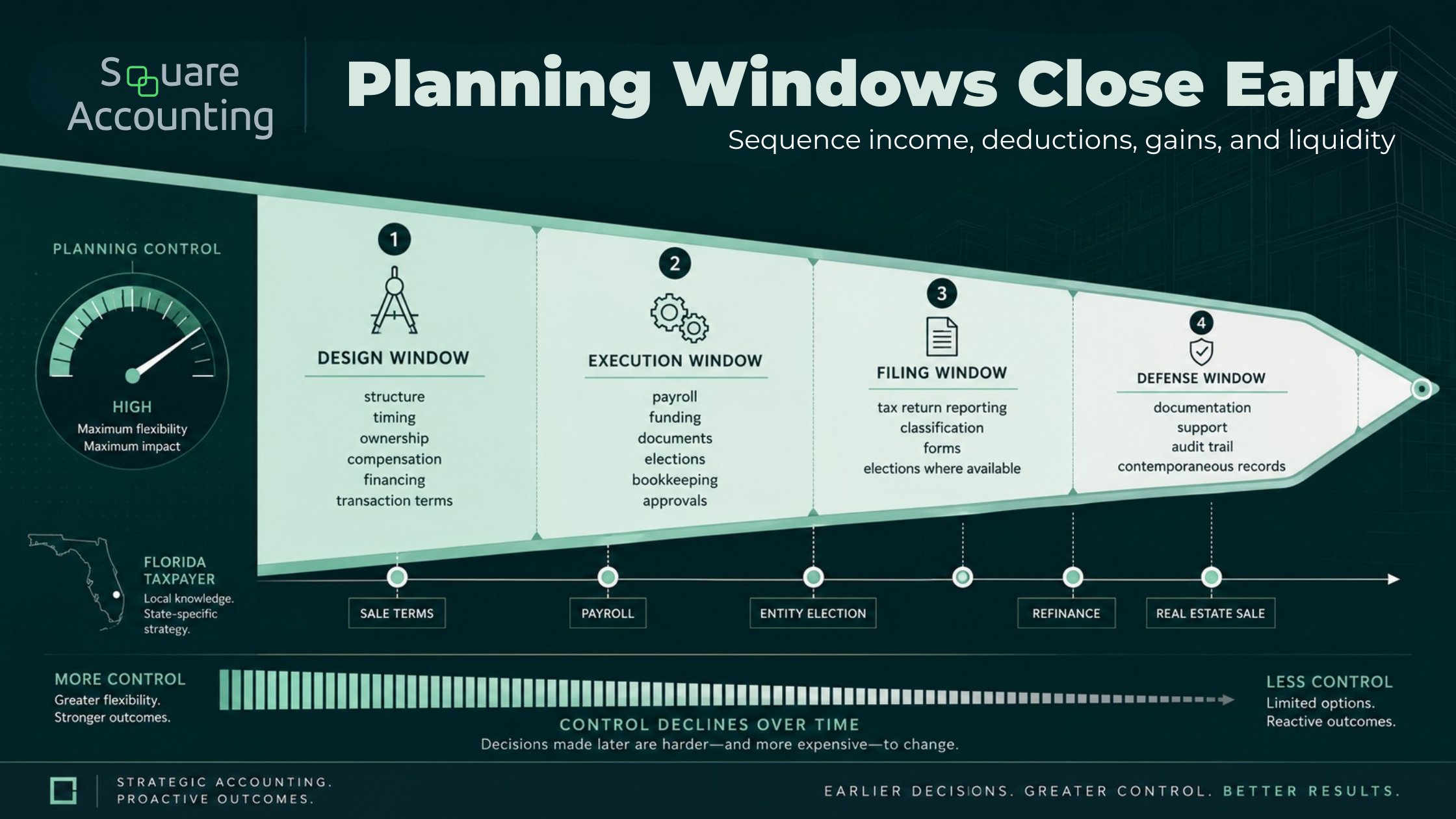
Signs Your Accountant Is Reacting Too Late
A reactive accountant may file accurately but miss the earlier planning windows that shape tax outcomes. Learn how Florida business owners and investors can evaluate whether their tax planning is happening early enough.
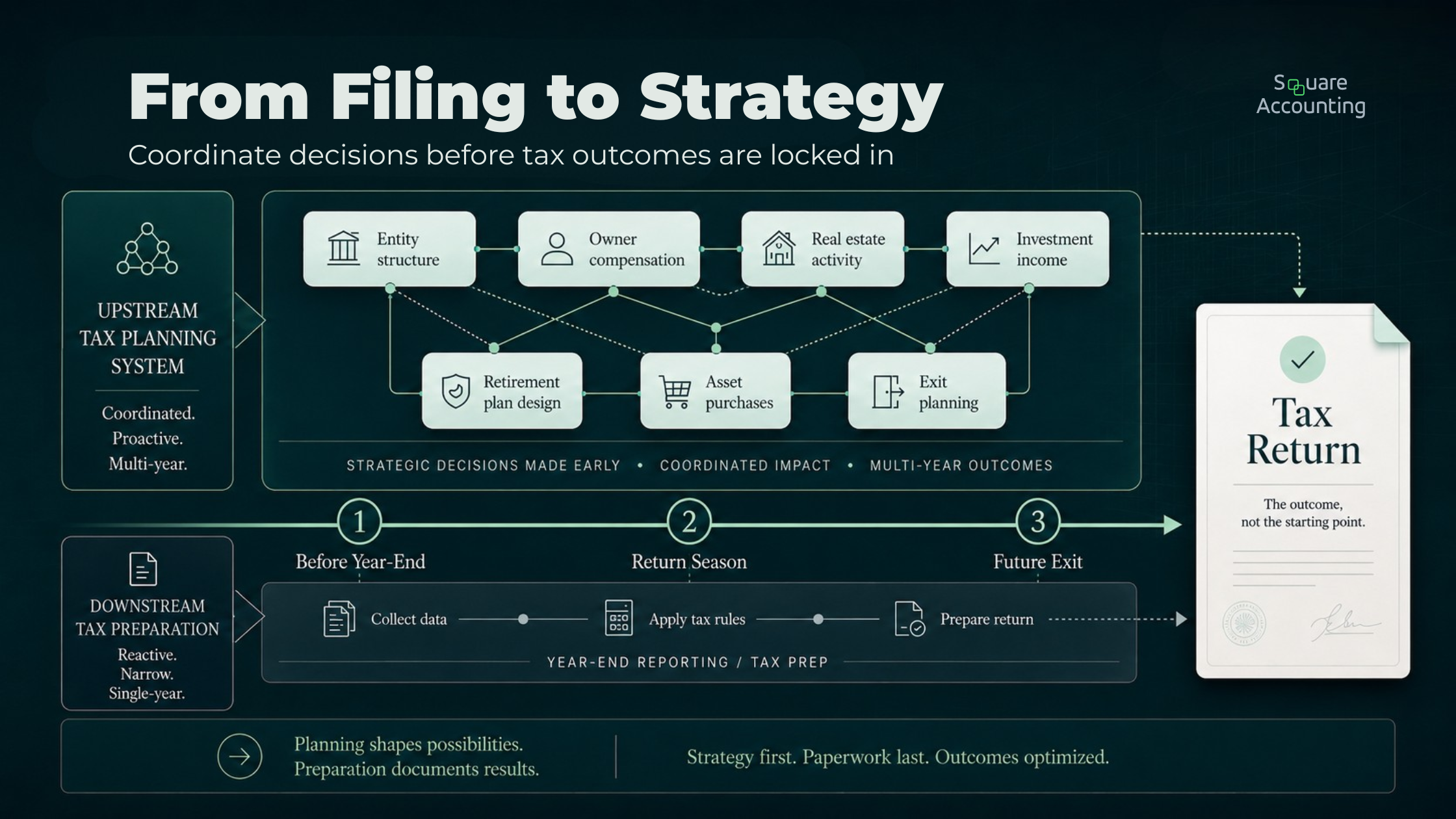
When Florida Business Owners Should Upgrade From Tax Prep to Tax Planning
A strategic guide for Florida business owners who have outgrown reactive annual filing. Learn when income, entities, real estate, and exit decisions call for multi-year tax planning.
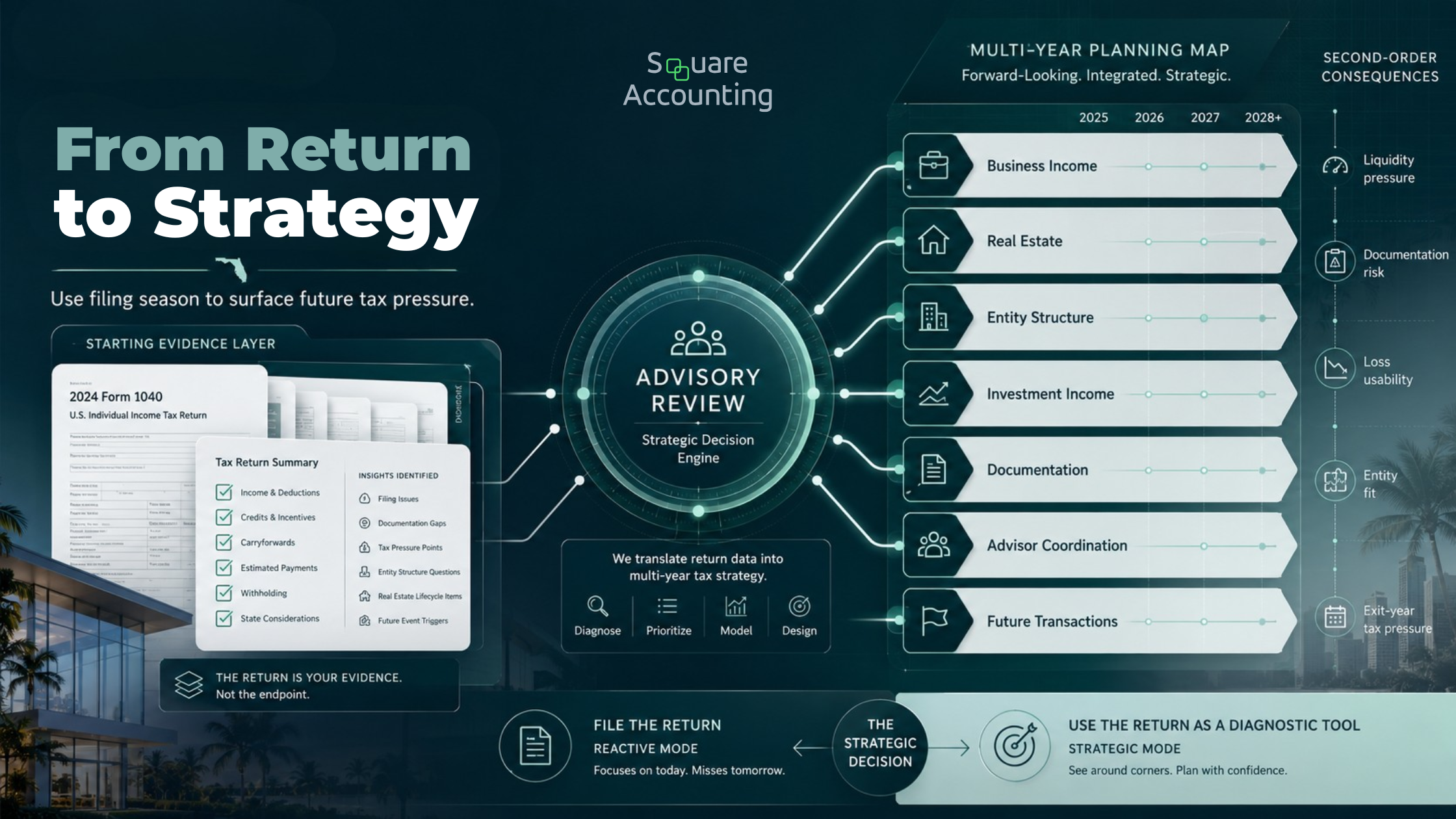
What Happens During a Tax Prep + Advisory Review?
A tax prep + advisory review should do more than finalize a return. It should reveal planning pressure, documentation needs, entity questions, and future tax decisions.
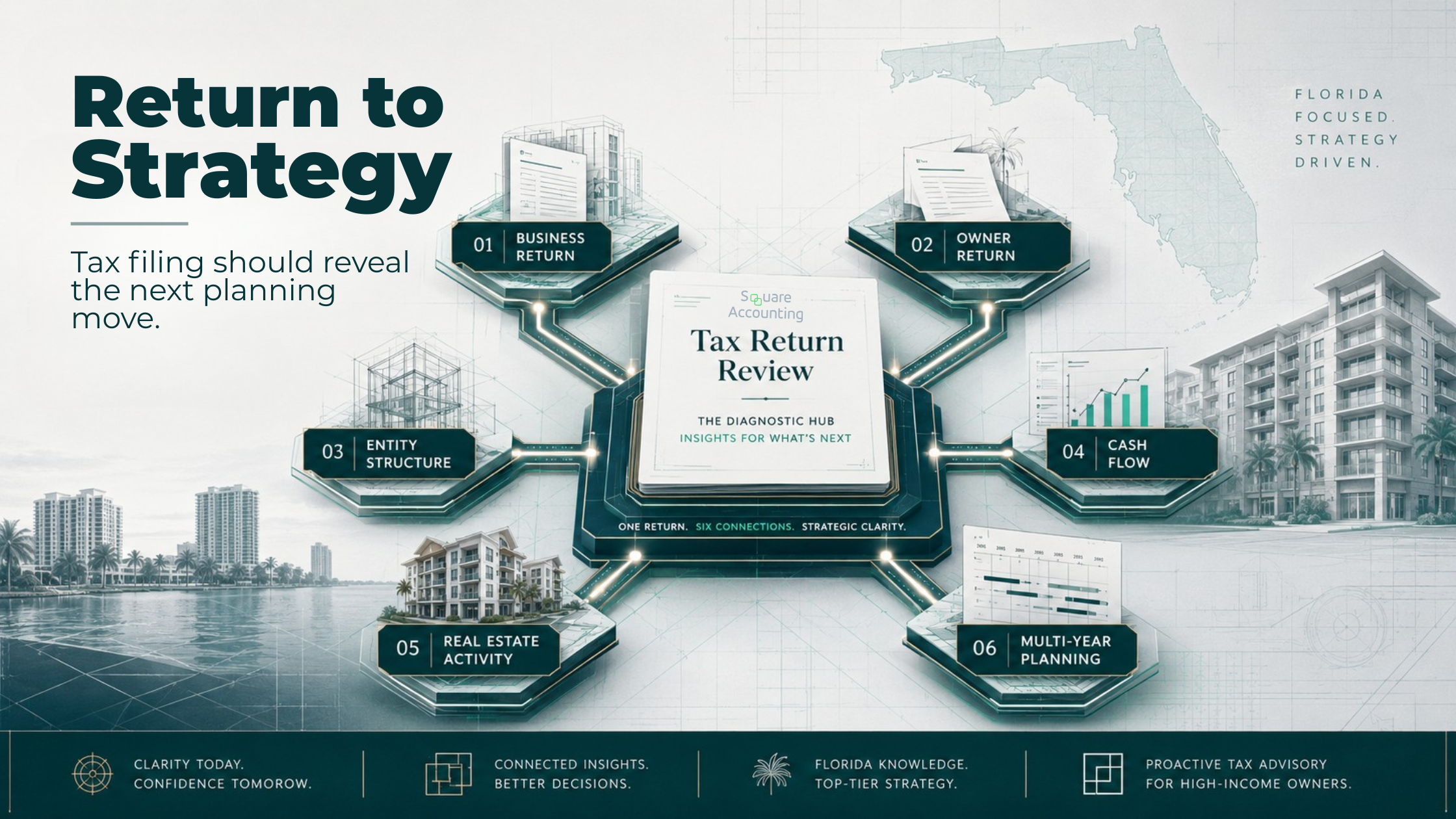
Tax Preparation and Advisory Review for Florida Business Owners: What It Includes
A tax preparation and advisory review should do more than file the return. For Florida business owners, it should connect filing with entity structure, estimates, cash flow, real estate activity, and multi-year planning priorities.
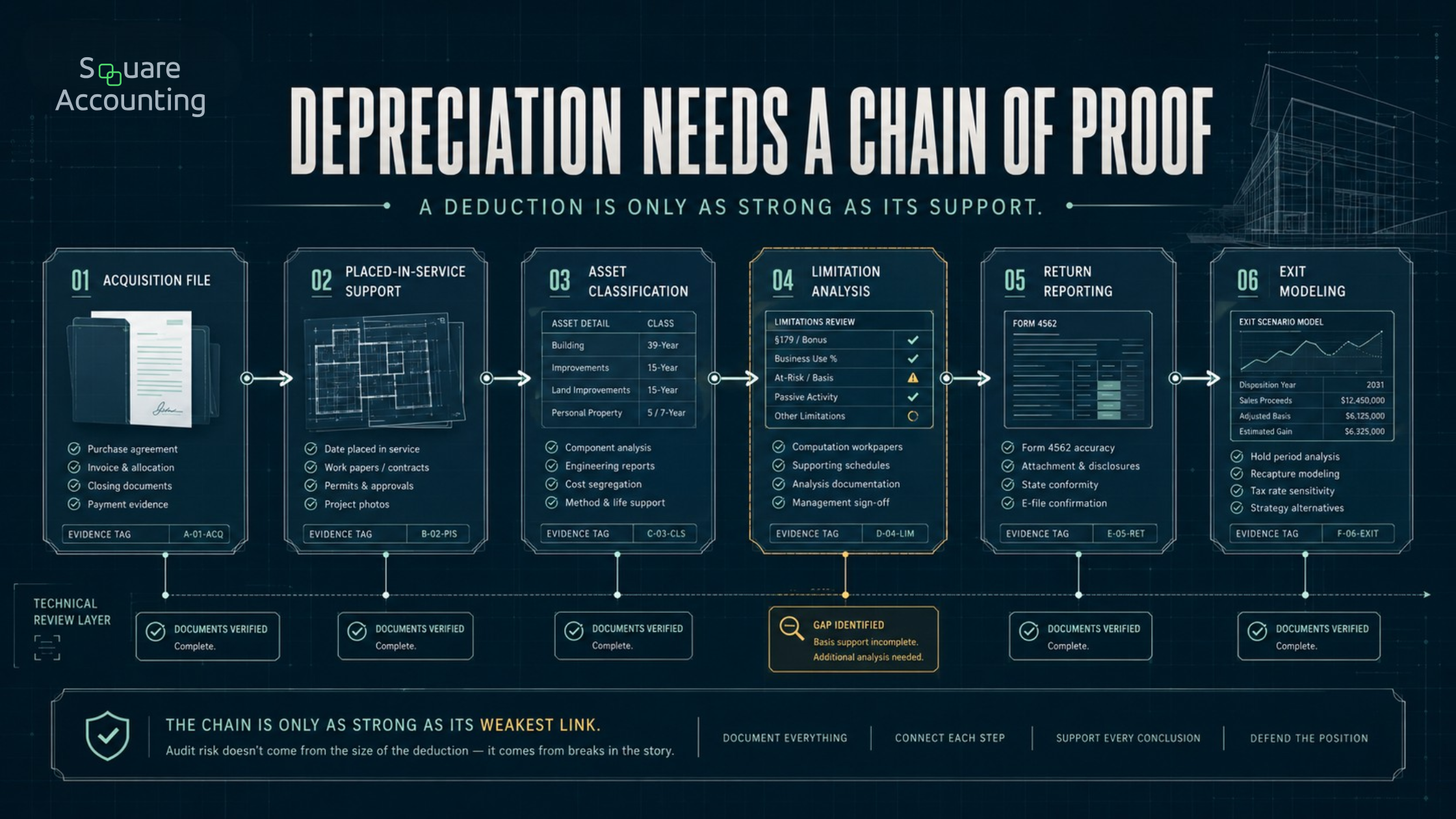
Audit Risk and Documentation Standards for Advanced Depreciation Strategies
Advanced depreciation can reduce current tax exposure, but weak documentation can create audit, limitation, and recapture issues. This article explains how sophisticated Florida investors can evaluate the support behind the strategy before filing.

Self-Directed Retirement Accounts and Asset Selection Risk: A Tax Planning Framework for Investors
Self-directed retirement accounts can expand investment options, but asset selection can create tax, liquidity, valuation, and exit-year risk. For Florida HNW investors, the real question is whether the asset belongs inside the retirement wrapper.

Aligning Ownership Structure With Succession, Gifting, and Estate Planning Goals
Ownership structure should be tested before a gift, death transfer, refinance, sale, or leadership transition forces the issue. For Florida HNW families, control, basis, liquidity, and governance often matter as much as the entity itself.
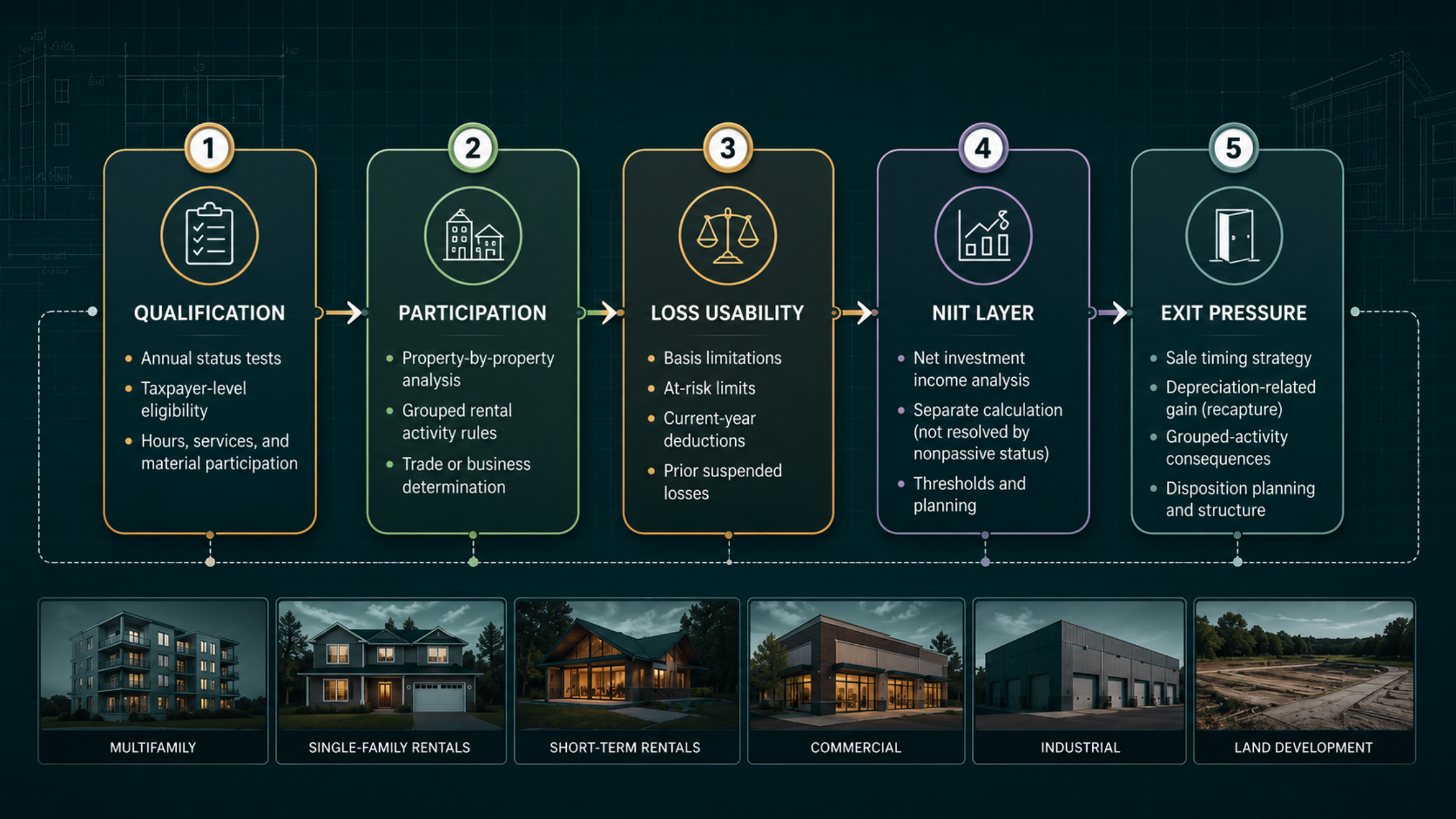
Real Estate Professional Status: When It Works, Where It Breaks, and How to Plan Around It
Real Estate Professional Status can improve tax outcomes, but only when qualification, material participation, loss usability, and exit planning work together. For Florida investors, the strongest analysis is multi-year, not deduction-driven.
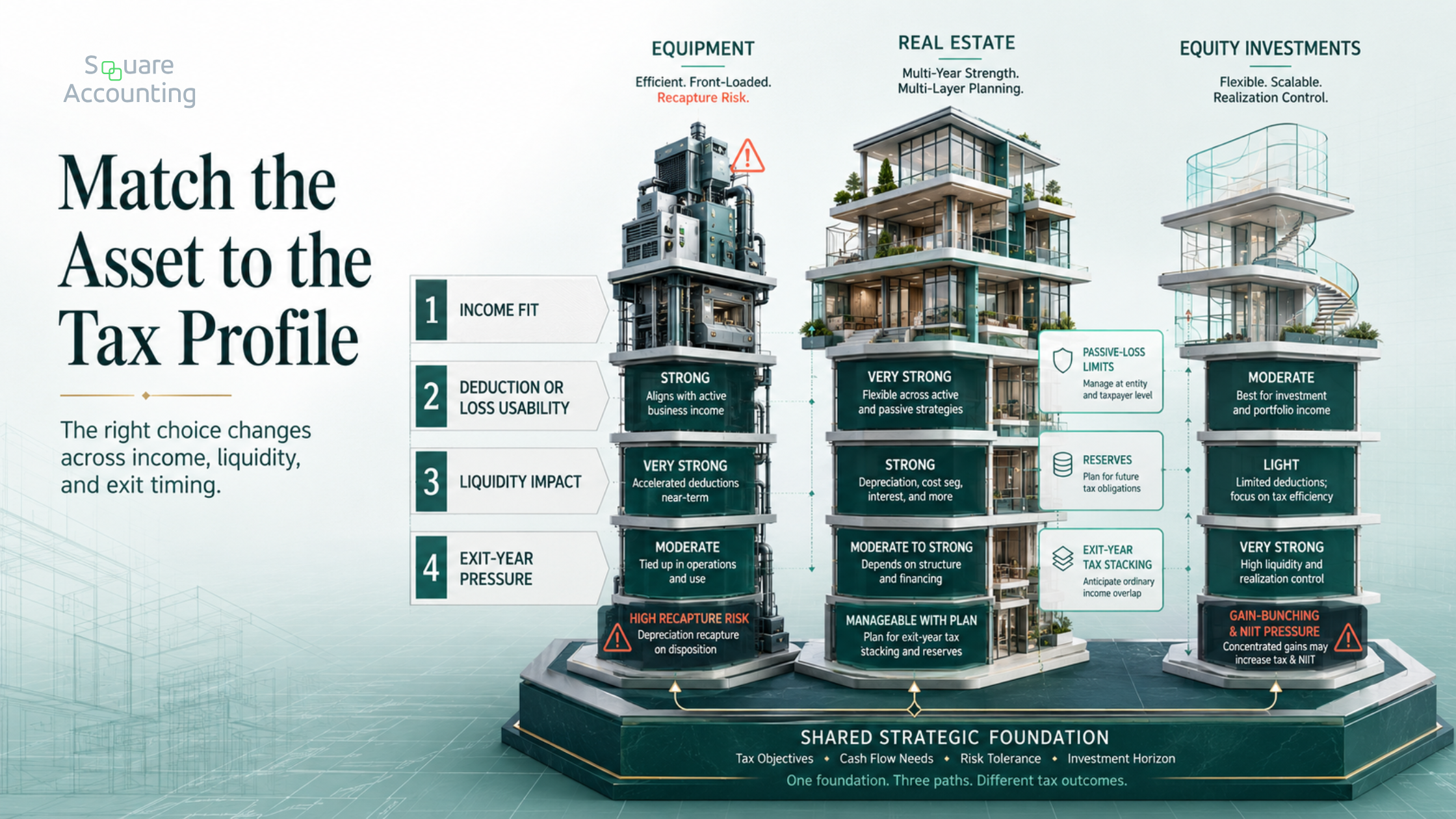
Equipment, Real Estate, or Equity Investments: Choosing the Right Asset for Your Tax Profile
Equipment, real estate, and equity investments solve different tax problems. The stronger choice depends on multi-year timing, deduction usability, liquidity, ownership structure, and exit-year pressure.
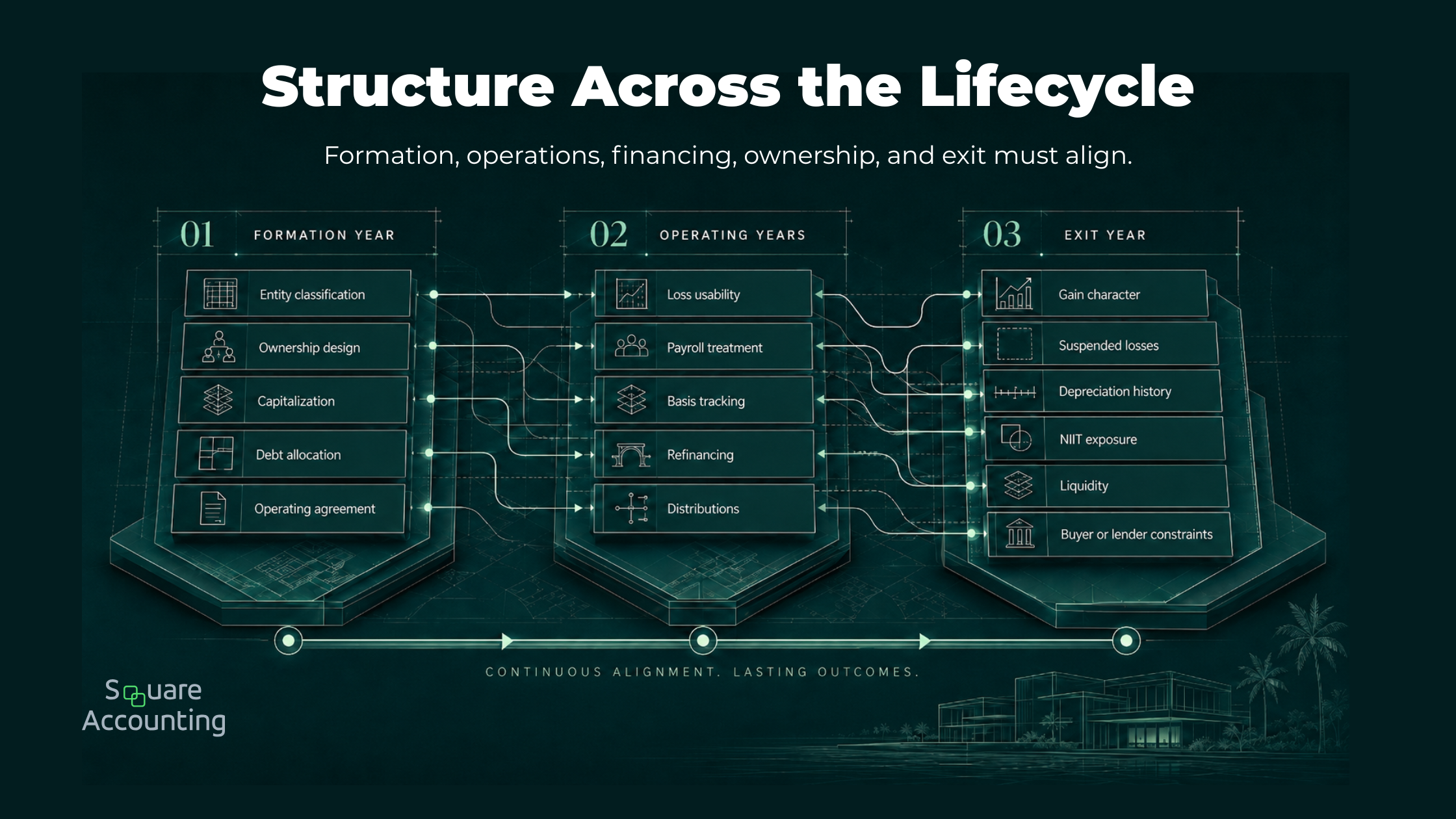
Common Entity Structuring Mistakes That Undermine Otherwise Sound Tax Plans
Entity structure can weaken an otherwise strong tax plan when basis, passive losses, financing, ownership changes, and exit timing are not coordinated. This article shows where the structure can fail across formation, operating years, and exit.

Aligning Asset Acquisition With Income Spikes, Liquidity Events, and Business Cycles
A strategic guide for high-income Florida taxpayers aligning acquisitions with income spikes, liquidity events, business cycles, and exit-year tax pressure.
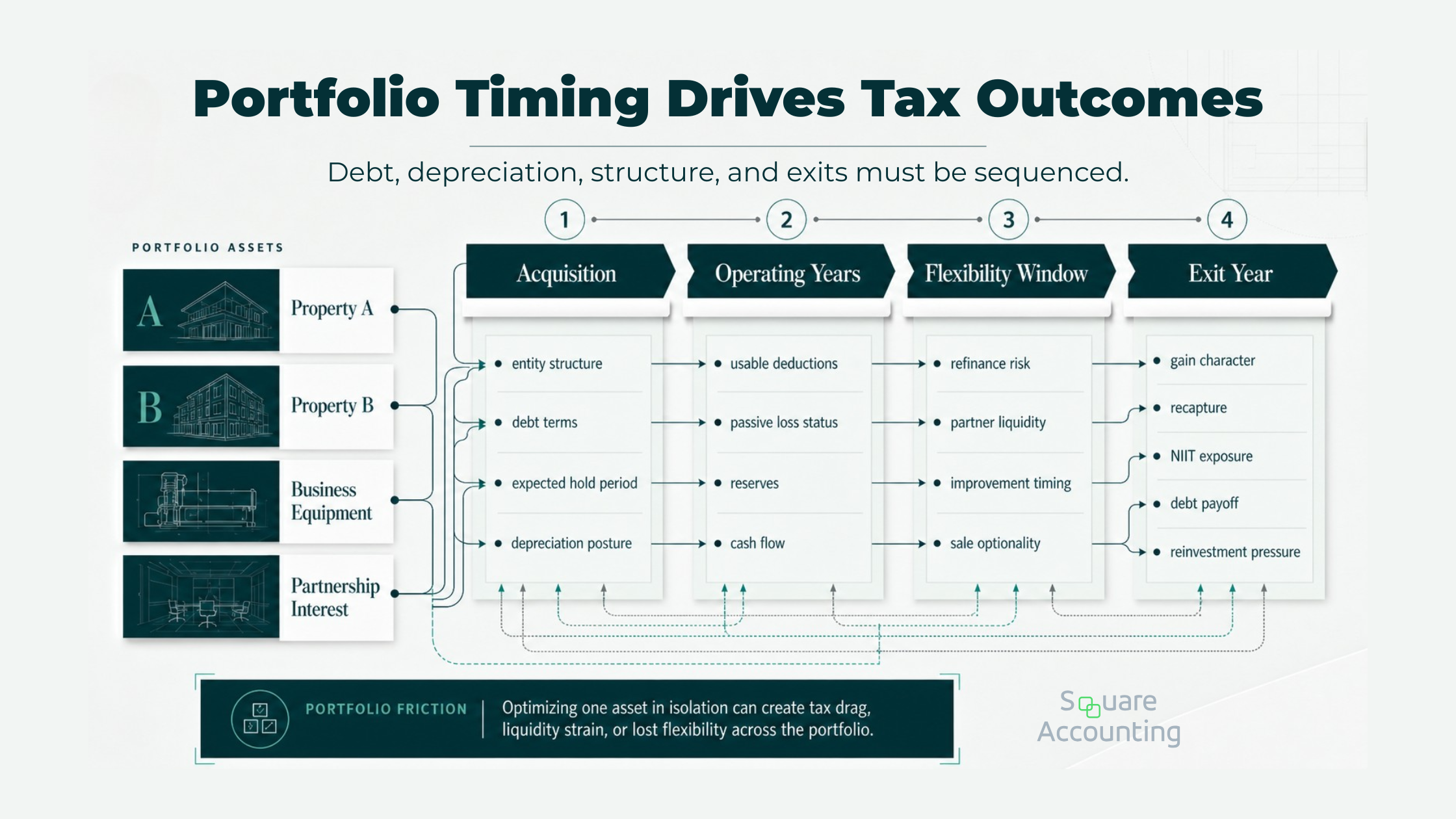
Coordinating Debt, Depreciation, and Exit Timing Across Multiple Assets
A portfolio-level look at how debt, depreciation, ownership structure, and exit timing interact across multiple assets. Written for Florida investors who want multi-year tax coordination, not isolated deductions.
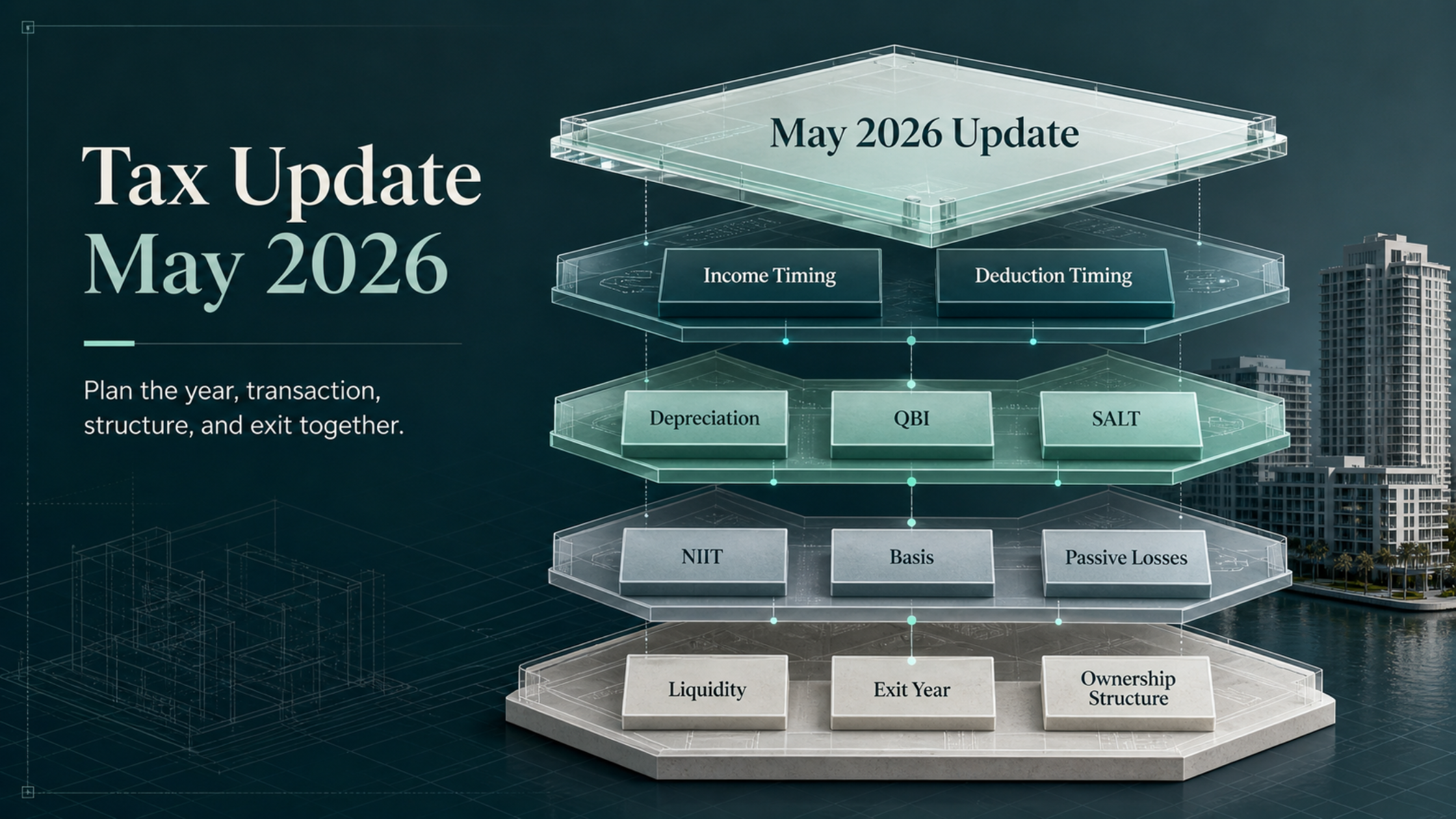
Tax Update May 2026: Planning Moves for Florida High-Income Taxpayers
A strategic May 2026 tax update for Florida high-income taxpayers focused on timing, depreciation, NIIT, QBI, liquidity, and exit-year planning.
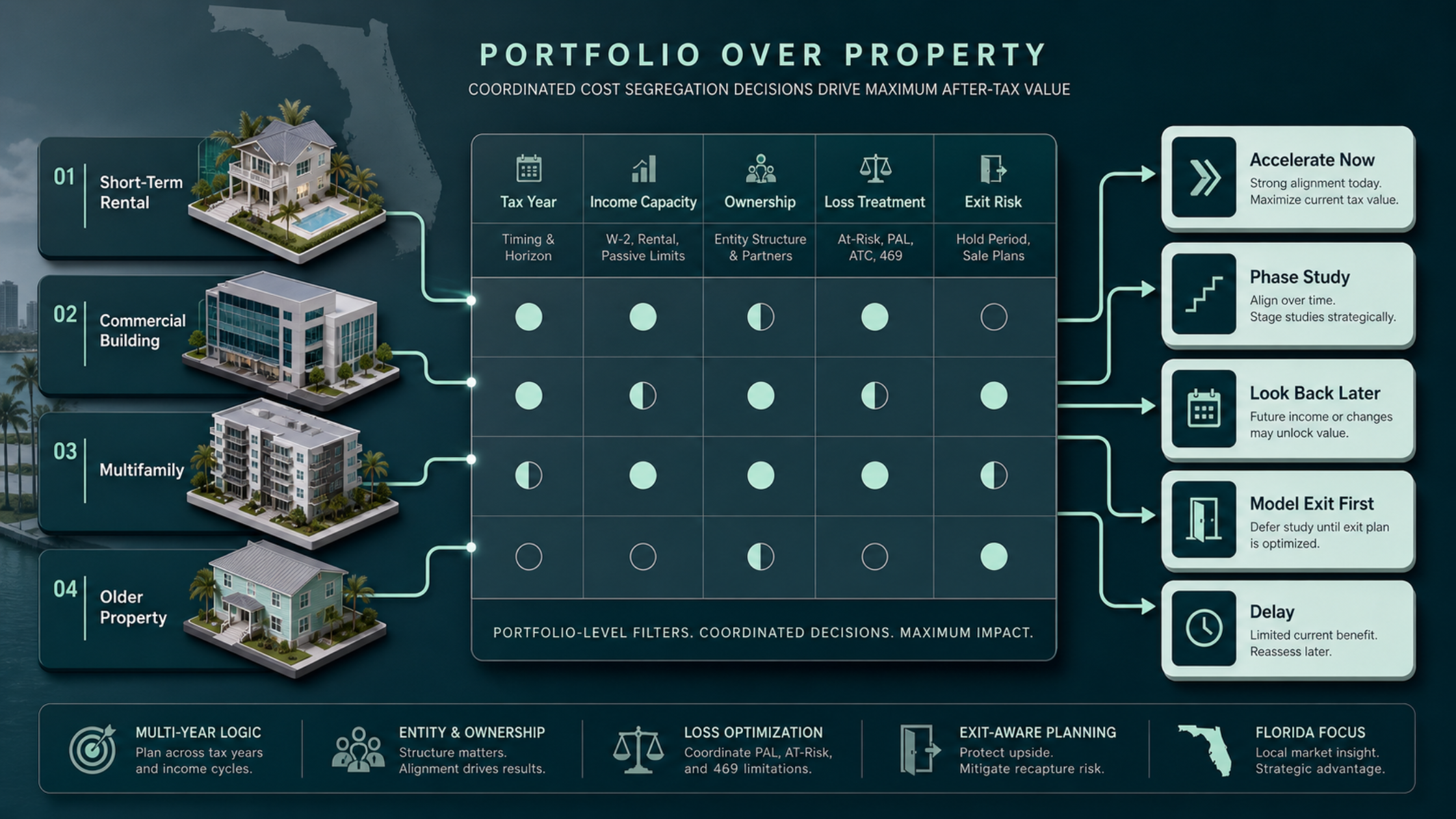
Coordinating Cost Segregation Across Multiple Properties and Tax Years
Cost segregation becomes more strategic when multiple properties, tax years, entities, and exits are coordinated together. This article explains how high-income Florida investors can evaluate depreciation timing with a portfolio-level view.
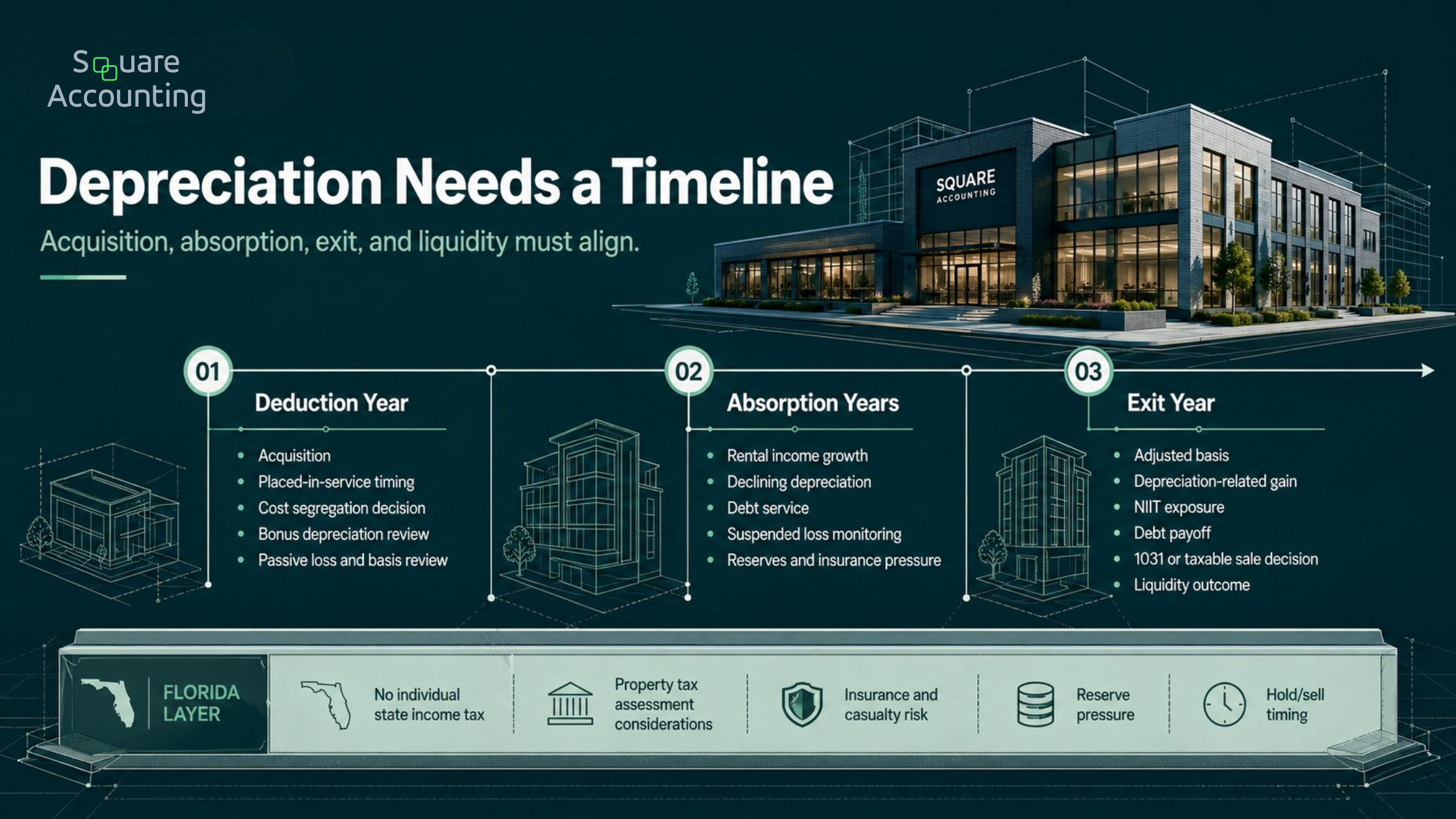
Using Commercial Real Estate to Smooth Income and Depreciation Across Multiple Years
Commercial real estate can help smooth taxable income when depreciation, loss usage, entity structure, and exit timing are planned together. For Florida HNW investors, the strategy should connect federal tax planning with property-level durability.

Contact us
Talk to our Tax Advisor
Running your operations is demanding—your taxes shouldn’t add to the stress. Whether you need strategic tax planning or ongoing support, we’re here to help.