
Defined Benefit and Cash Balance Plans as Long-Term Tax Deferral Vehicles
For high-income Florida taxpayers, the tax problem is rarely about finding another deduction. It’s about structure.
Many business owners and real estate investors earning $250,000 or more are already using the usual tools. Retirement plans are in place. Depreciation is being taken. Entity structures exist. Yet federal tax bills still land well into six figures each year, and the planning feels reactive. Each year becomes a scramble to “do something” before December 31.
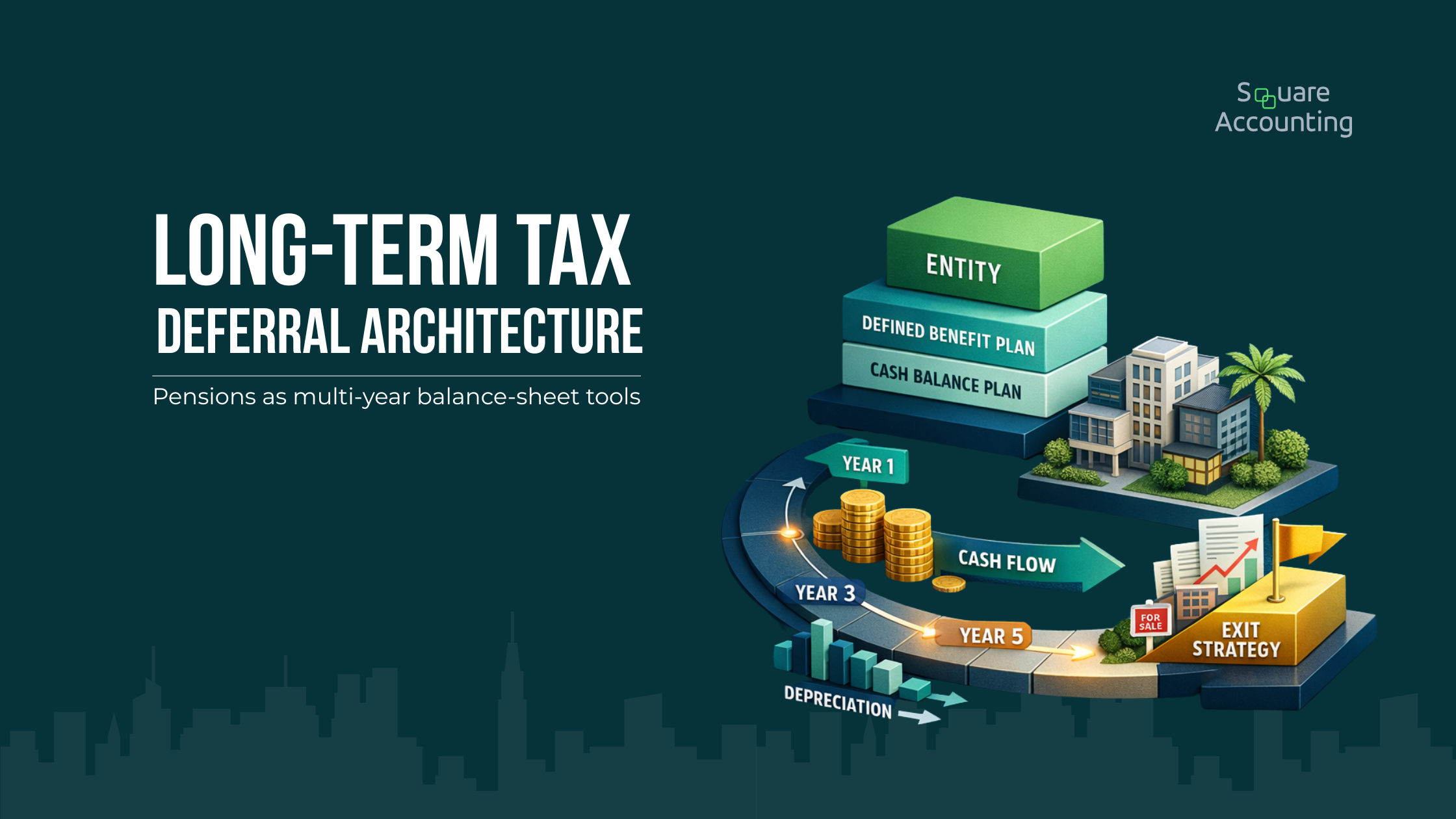
Defined benefit and cash balance plans sit in a different category. They are not year-by-year tactics. When used correctly, they are multi-year tax deferral vehicles that reshape how income, assets, and retirement capital are coordinated over time.
For Florida taxpayers, where there is no state income tax to soften federal exposure, these plans often carry more weight than they do elsewhere. But they also come with sequencing, sustainability, and exit considerations that are frequently misunderstood or ignored.
This article addresses how defined benefit and cash balance plans function as long-term planning tools, where they fit in sophisticated tax architecture, and where they break when used incorrectly.
Key Takeaways
Defined benefit and cash balance plans are balance-sheet strategies, not income-year tactics, and must be designed with multi-year cash flow and exit planning in mind.
Their real value comes from sustained deferral and controlled recognition, not from a single large contribution year.
For real estate-heavy taxpayers, these plans interact directly with depreciation timing, passive loss limitations, and asset liquidity.
Entity structure and ownership design determine whether contributions remain flexible or become a long-term constraint.
Florida’s lack of state income tax amplifies both the upside and the risk of large federal deferrals.
Poor sequencing often leads to forced plan freezes, accelerated income recognition, or inefficient unwind at retirement or business exit.
We help evaluate whether defined benefit or cash balance plans align with your entity structure and multi-year income trajectory, not just this year’s tax result.
Why High-Income Florida Taxpayers Hit a Planning Ceiling
Most sophisticated earners reach a familiar plateau. Income continues to grow, but marginal tax rates stop improving. Standard retirement plans cap out early. Bonus depreciation and cost segregation create spikes, not stability. Charitable strategies shift timing but not lifetime tax liability.
In Florida, this ceiling appears sooner. Without a state income tax, federal planning does all the heavy lifting. A $400,000 to $800,000 earner may already be paying an effective federal rate that feels immovable, even with aggressive depreciation or entity planning.
Defined benefit and cash balance plans enter at this point, not as deductions, but as mechanisms to move income across time in a controlled way.
Defined Benefit vs. Cash Balance Plans: Structural Differences That Matter
Both plans fall under the defined benefit umbrella, but their mechanics create very different planning dynamics.
Traditional defined benefit plans promise a future pension based on age, compensation, and service years. Contributions are actuarially calculated to fund that obligation.
Cash balance plans, by contrast, credit a hypothetical account balance with annual “pay credits” and interest credits. They feel more like a 401(k) on the surface, but legally they remain defined benefit plans.
From a planning perspective, the key differences are not cosmetic:
Contribution volatility: Traditional defined benefit plans tend to have steeper required contributions as participants age. Cash balance plans offer more predictable ranges.
Participant optics: Cash balance plans are often easier to integrate with staff without creating cultural friction or perceived inequity.
Exit flexibility: Cash balance plans generally unwind more cleanly at retirement or business sale.
For most closely held Florida businesses, cash balance plans are the dominant vehicle, though hybrid designs are common.
Why These Plans Are Asset-Based, Not Income-Based Strategies
A common misunderstanding is treating these plans as “income reducers.” In reality, they are asset allocation decisions made through the tax code.
Every dollar contributed becomes a future liability. The tax benefit is not permanent. It is deferred recognition paired with asset accumulation inside a pension structure.
This distinction matters because:
The plan competes with other capital uses, including real estate acquisitions, debt paydown, and liquidity reserves.
Investment performance inside the plan affects future required contributions.
The plan’s balance sheet footprint grows every year it remains open.
For real estate investors, this means pension contributions should be evaluated alongside cap rates, financing terms, and liquidity timelines, not just tax brackets.
Timing and Sequencing: When These Plans Actually Make Sense
The strongest candidates for defined benefit and cash balance plans share several characteristics:
Stable, recurring income with visibility at least three to five years out
A desire to defer, not eliminate, tax across high-earning years
Sufficient liquidity to absorb required contributions in down cycles
An identifiable exit window, whether retirement, sale, or restructuring
Starting too early creates unnecessary rigidity. Starting too late often leads to overfunding followed by forced freezes.
Sequencing also matters relative to other strategies. Cost segregation, bonus depreciation, and loss harvesting should generally be optimized first, as they preserve flexibility. Pension plans then layer on sustained deferral once income stability is proven.
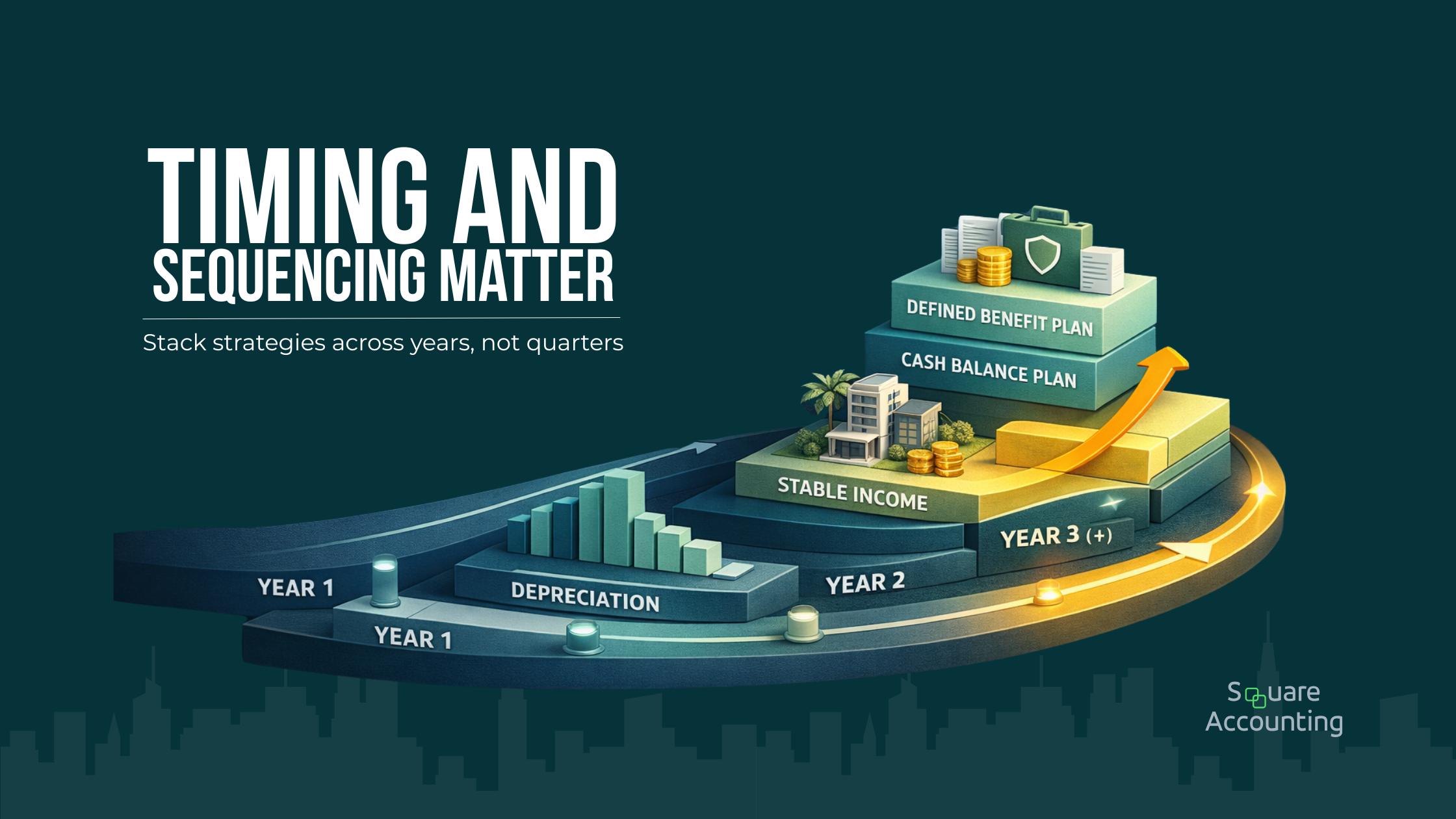
We review how pension contributions should be sequenced with depreciation, cash flow, and passive versus active income to avoid future unwind issues.
Cash Flow vs. Tax Savings: The Trade-Off Most Advisors Undersell
Large deductible contributions feel attractive in April. They feel very different in August when capital is tied up inside a pension trust.
Unlike discretionary deductions, these plans create funding obligations. Even in a down year, minimum contributions often remain.
For Florida businesses tied to real estate cycles, insurance volatility, or seasonal revenue, this can introduce risk. The tax savings must be weighed against:
Reduced operating liquidity
Increased dependence on stable cash flow
Less flexibility during acquisitions or market dislocations
Sophisticated planning does not maximize deductions. It optimizes after-tax liquidity across cycles.
We model required contributions against real-world cash flow volatility, insurance risk, and multi-year funding sustainability.
Entity and Ownership Structure: Where Most Designs Break
Entity structure determines who can participate, how much can be contributed, and how flexible the plan remains.
Key considerations include:
S corporation vs. partnership treatment: Guaranteed payments, W-2 wages, and profit allocations drive contribution ceilings differently.
Multiple entities: Controlled group rules can unintentionally pull unrelated businesses into the plan.
Spousal and family employment: While legitimate, these arrangements must be structured carefully to avoid compliance and funding distortions.
In real estate groups with layered ownership and multiple LLCs, poor coordination often results in overcomplicated plans that limit future restructuring options.
We identify where entity structure, compensation design, or real estate concentration could limit contribution flexibility or create exit friction later.
Active vs. Passive Income: Pension Contributions Do Not Bypass This Divide
Defined benefit and cash balance plans require earned income. Passive rental income alone does not qualify.
This creates a planning tension for real estate investors whose taxable income is high but largely passive on paper. Strategies often involve:
Management entities paying reasonable compensation
Aggregation elections under real estate professional rules
Careful alignment of wages with contribution objectives
Overreliance on wage manipulation to fund large pension contributions is a red flag. Sustainable designs respect economic reality, not just tax outcomes.
Interaction With Depreciation and Cost Segregation
Pension plans and depreciation strategies often work best when sequenced, not stacked.
Heavy depreciation years can suppress taxable income below optimal pension contribution thresholds. Conversely, pension contributions can smooth income in years where depreciation tapers off.
A coordinated approach might involve:
Front-loading depreciation early in an asset’s life
Phasing in pension contributions as depreciation declines
Avoiding overlapping strategies that create artificial losses with no planning benefit
The goal is not to zero out income every year, but to manage recognition across decades.
Exit Planning, Unwinding, and Long-Term Consequences
Every defined benefit or cash balance plan ends. How it ends determines whether the strategy succeeds.
Common exit paths include:
Plan termination at retirement with rollover to IRAs
Gradual freeze with amortized funding
Integration into a business sale or succession plan
Poorly designed plans often create:
Accelerated taxable income at termination
Excess assets subject to excise taxes
Liquidity strain during wind-down years
Exit planning should be addressed at plan inception, not when the owner is ready to retire or sell.
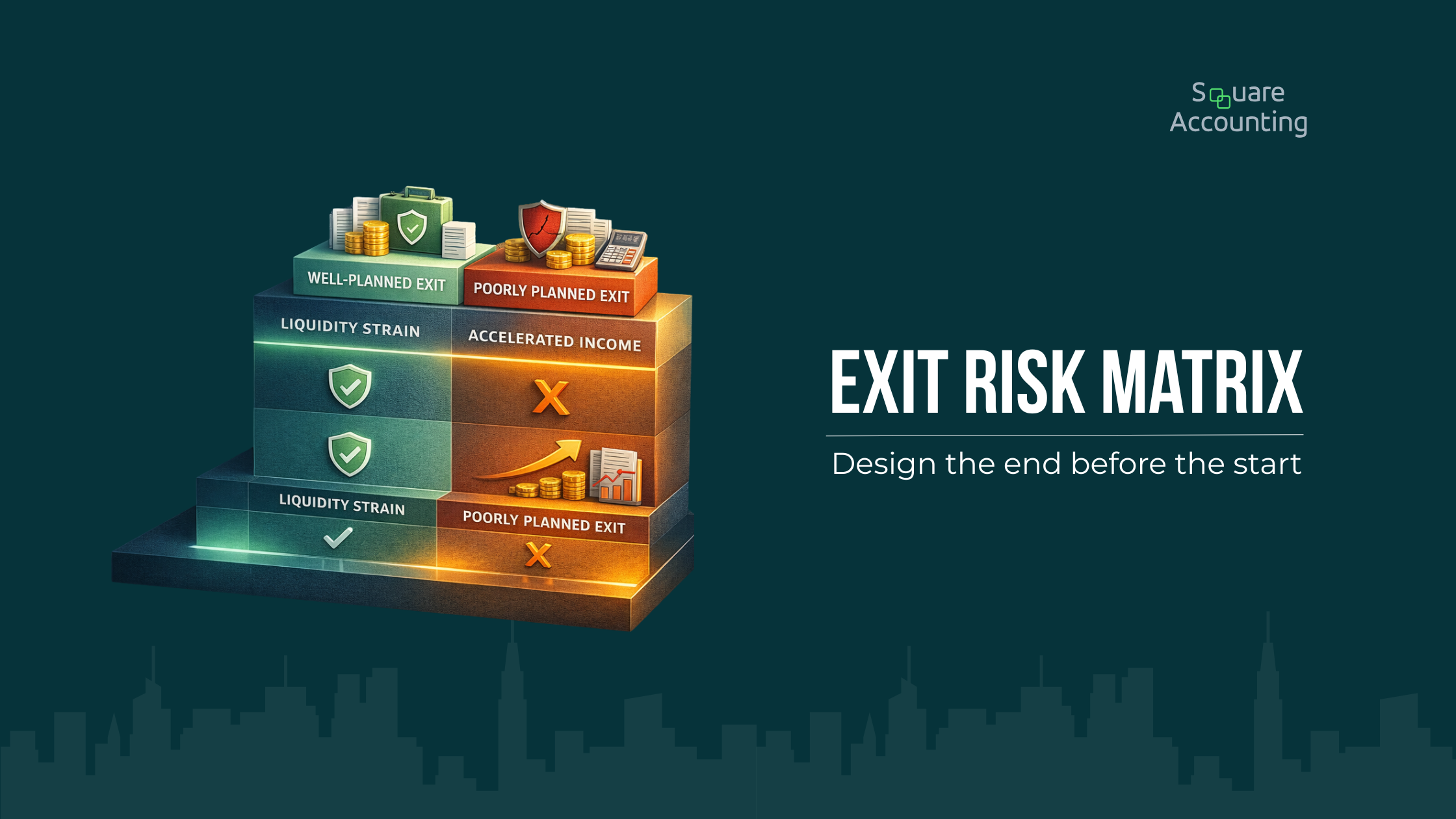
We design pension strategies with clear termination, rollover, and recognition outcomes to avoid forced income or inefficient recapture at exit.
Correcting Common Misuse and Oversights
Several recurring mistakes appear in high-income planning:
Using the plan as a one-year tax shelter: Large initial contributions followed by early freezes undermine both tax efficiency and credibility.
Ignoring investment risk inside the plan: Overly aggressive allocations can increase future required contributions during market downturns.
Overfunding relative to exit timeline: Plans designed without a clear endgame often create taxable inefficiencies later.
Treating actuaries and advisors as siloed: Fragmented advice leads to plans that conflict with entity structure, compensation strategy, or real estate objectives.
These are not technical errors. They are planning failures.
Florida-Specific Planning Considerations
Florida’s tax environment reshapes the analysis in subtle but important ways.
With no state income tax, federal deferral carries outsized value. At the same time, there is no state deduction to offset future recognition, making exit planning more critical.
Real estate concentration adds another layer. High exposure to coastal assets, insurance volatility, and casualty risk argues for liquidity discipline. Pension contributions reduce flexibility when unexpected capital needs arise.
Property tax structures, homestead considerations, and short-term rental activity also influence cash flow predictability, which should be stress-tested before committing to long-term pension funding.
In Florida, these plans work best when paired with conservative liquidity modeling and realistic exit assumptions.

Conclusion
Defined benefit and cash balance plans are not tax tricks. They are long-term capital allocation decisions implemented through the tax code.
For high-income Florida business owners and real estate investors, they can provide meaningful, sustained federal tax deferral when layered into a coordinated, multi-year plan. When bolted on late or designed in isolation, they often create rigidity, liquidity strain, and disappointing outcomes.
The real value lies in sequencing, sustainability, and alignment with broader goals, including asset growth, risk management, and eventual exit. Tax efficiency is not achieved in a single year. It is built over time, by design.
We integrate defined benefit and cash balance planning with entity structure, real estate income, and long-term tax deferral objectives as one coordinated plan.
Frequently Asked Questions
How early should defined benefit or cash balance planning be introduced into a broader tax strategy?
These plans are most effective once income stability is visible over several years, not during a temporary earnings spike. Introducing them too early can lock in funding obligations before cash flow patterns, entity compensation, or real estate income streams are fully formed. In practice, sequencing works best when depreciation-driven strategies and entity structure are already optimized, allowing pension contributions to smooth income as other deductions taper. The decision is less about age or income level and more about predictability and control over future earnings.
How do pension plans interact with future depreciation and income smoothing decisions?
Defined benefit and cash balance plans are often layered in after accelerated depreciation has done its heaviest lifting. When depreciation suppresses taxable income too aggressively, pension contributions may be underutilized or misaligned. Conversely, as depreciation declines, pension plans can help stabilize taxable income across years rather than allowing sharp increases. Thoughtful sequencing avoids stacking strategies that create losses without long-term benefit and instead spreads recognition in a way that supports sustained deferral.
What happens tax-wise when a defined benefit or cash balance plan is terminated?
Termination converts deferred obligations into recognized outcomes. Assets are typically rolled into IRAs or distributed, shifting the focus from contribution deductions to future taxable distributions. Poorly planned terminations can result in accelerated income or excess asset issues that undermine earlier deferral benefits. Planning for termination at inception allows contribution levels, investment risk, and funding timelines to align with the intended exit, whether that is retirement, a business sale, or gradual wind-down.
Can these plans create problems during a business sale or succession?
They can if not coordinated early. A pension plan represents a long-term liability that may complicate valuation, buyer negotiations, or succession timing. Required contributions do not disappear simply because ownership changes. In some cases, plans must be frozen or terminated ahead of a transaction, which can shift taxable income into an already complex year. Aligning pension design with expected ownership transitions reduces friction and preserves flexibility.
How does entity and ownership structure affect contribution flexibility over time?
Entity structure governs who can participate, how compensation is defined, and how contributions scale as ownership evolves. Changes in partners, shifts from operating income to investment income, or consolidation of entities can unintentionally trigger compliance or funding issues. In multi-entity real estate groups, controlled group rules and compensation design often matter more over time than initial contribution levels. Flexibility is built through structure, not actuarial math alone.
Why does Florida’s lack of state income tax change the long-term analysis?
Without a state income tax, federal deferral carries more weight, but so does eventual federal recognition. There is no state deduction today to offset federal income later. This makes exit timing, distribution planning, and coordination with other income sources more important. Florida’s environment rewards sustained deferral but penalizes poorly timed recognition, particularly in retirement or transition years when other income sources may converge.
How do Florida-specific real estate and insurance risks factor into pension planning?
Florida investors often face higher insurance costs, casualty exposure, and revenue volatility, particularly with coastal or short-term rental properties. Pension contributions reduce available liquidity during periods when unexpected capital needs may arise. Stress-testing funding obligations against these risks helps avoid situations where tax deferral compromises operational resilience. The strongest designs account for real-world volatility, not just projected returns.
