
Blog
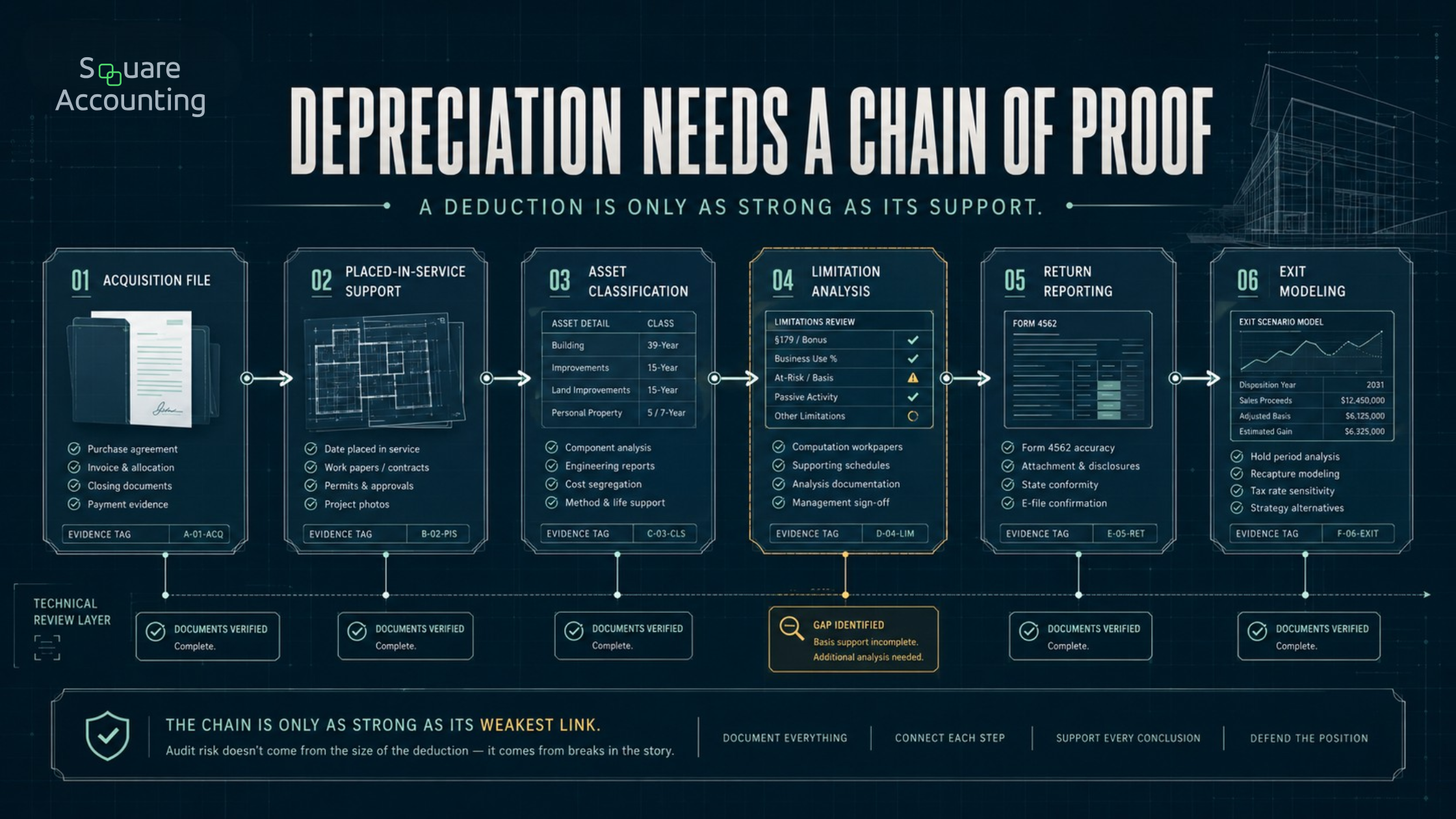
Audit Risk and Documentation Standards for Advanced Depreciation Strategies
Advanced depreciation can reduce current tax exposure, but weak documentation can create audit, limitation, and recapture issues. This article explains how sophisticated Florida investors can evaluate the support behind the strategy before filing.
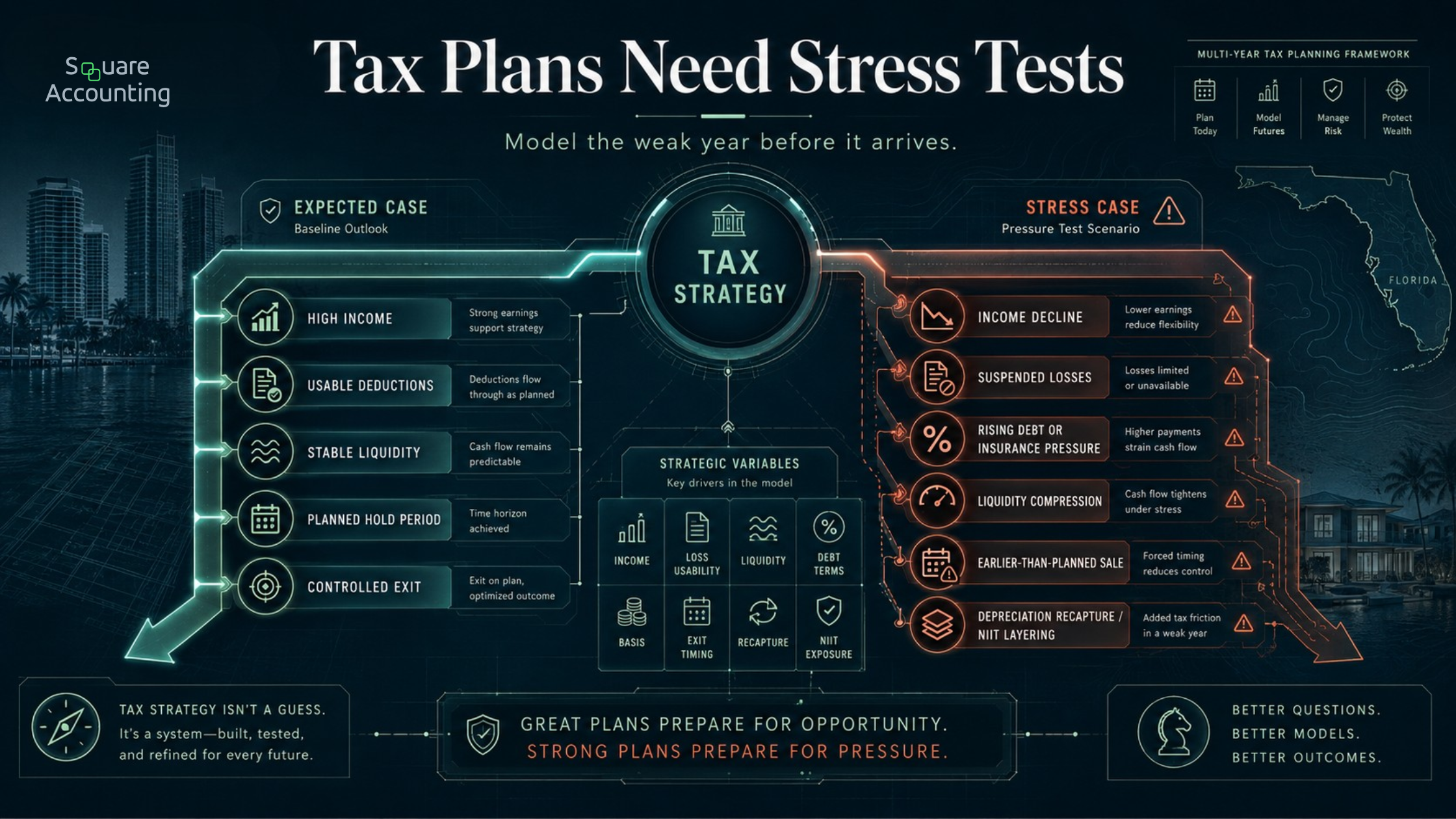
Stress-Testing Tax Strategies Against Market Downturns and Income Declines
A strong tax strategy should work across more than one version of the future. This article explains how Florida HNW taxpayers can pressure-test planning for income declines, liquidity strain, loss limitations, and exit-year tax exposure.

Self-Directed Retirement Accounts and Asset Selection Risk: A Tax Planning Framework for Investors
Self-directed retirement accounts can expand investment options, but asset selection can create tax, liquidity, valuation, and exit-year risk. For Florida HNW investors, the real question is whether the asset belongs inside the retirement wrapper.

Aligning Ownership Structure With Succession, Gifting, and Estate Planning Goals
Ownership structure should be tested before a gift, death transfer, refinance, sale, or leadership transition forces the issue. For Florida HNW families, control, basis, liquidity, and governance often matter as much as the entity itself.
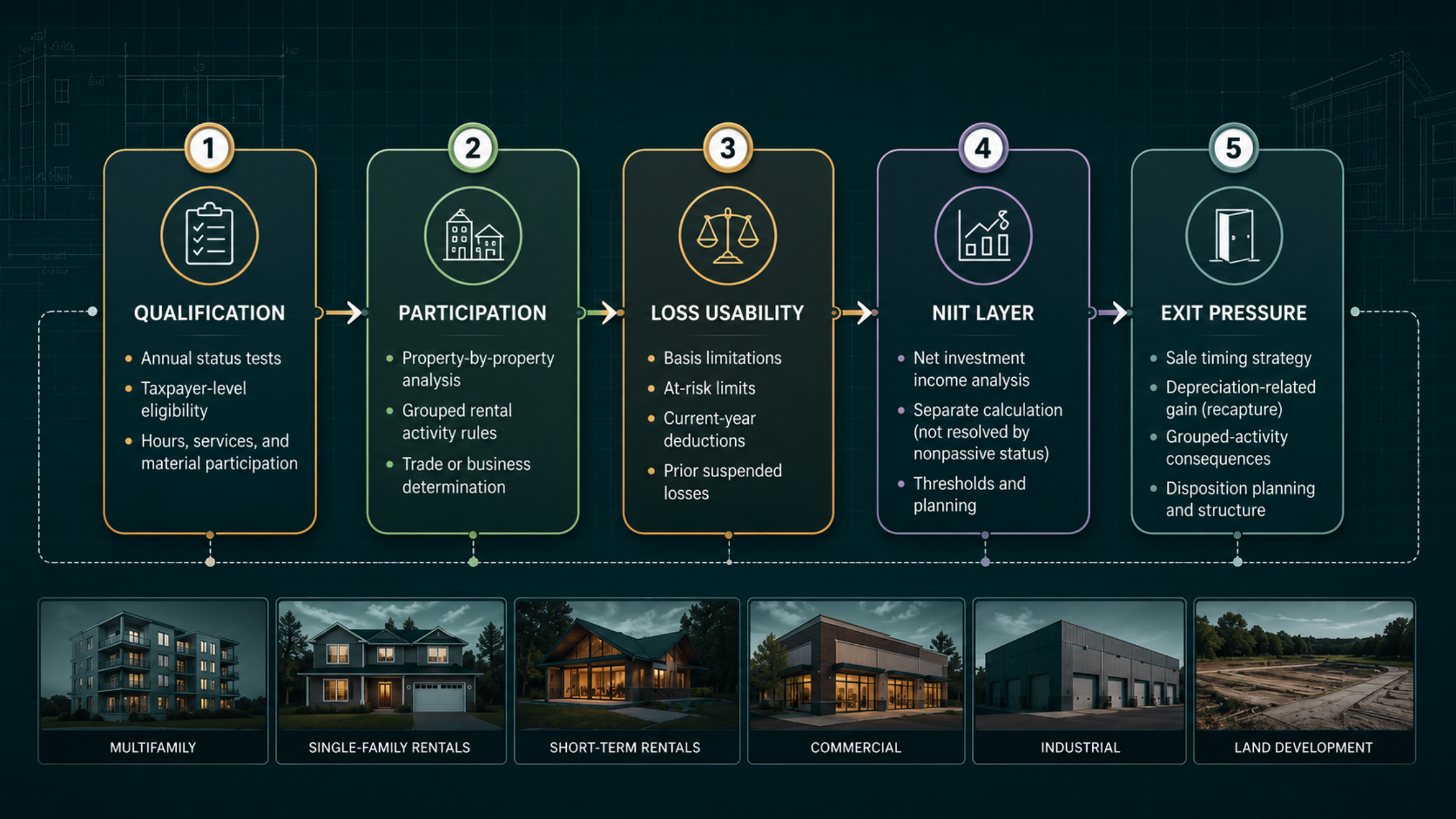
Real Estate Professional Status: When It Works, Where It Breaks, and How to Plan Around It
Real Estate Professional Status can improve tax outcomes, but only when qualification, material participation, loss usability, and exit planning work together. For Florida investors, the strongest analysis is multi-year, not deduction-driven.
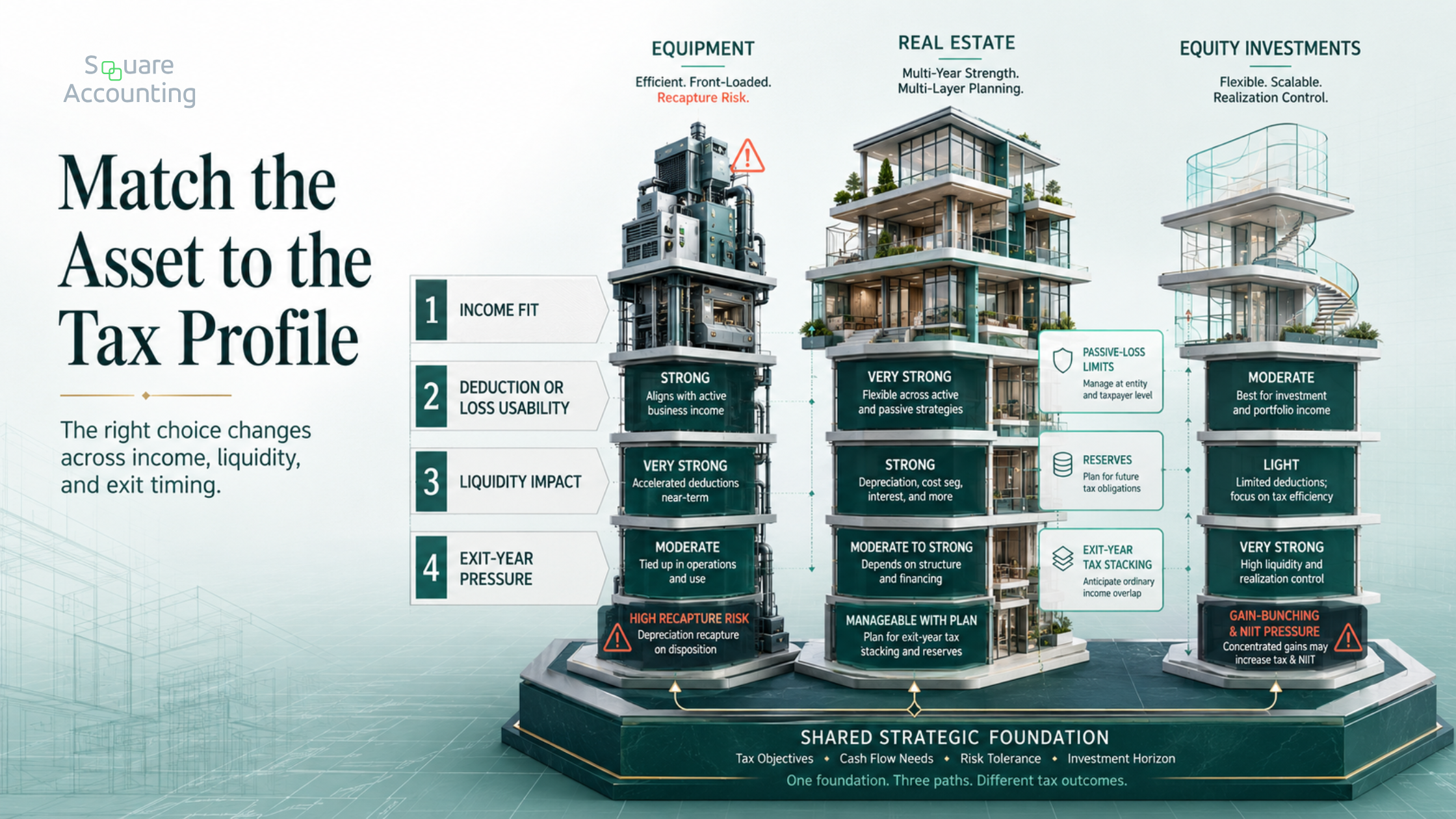
Equipment, Real Estate, or Equity Investments: Choosing the Right Asset for Your Tax Profile
Equipment, real estate, and equity investments solve different tax problems. The stronger choice depends on multi-year timing, deduction usability, liquidity, ownership structure, and exit-year pressure.
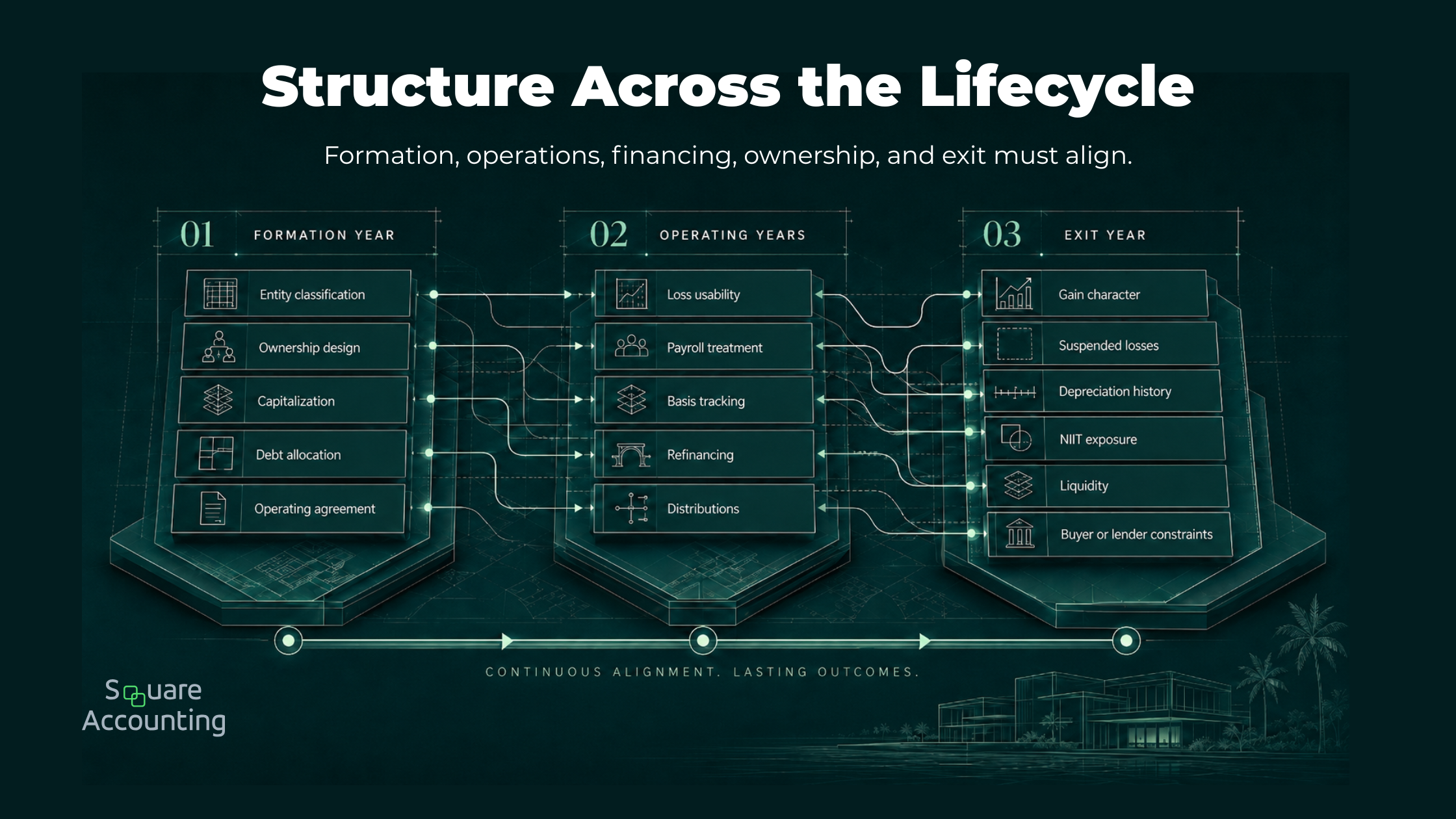
Common Entity Structuring Mistakes That Undermine Otherwise Sound Tax Plans
Entity structure can weaken an otherwise strong tax plan when basis, passive losses, financing, ownership changes, and exit timing are not coordinated. This article shows where the structure can fail across formation, operating years, and exit.

Aligning Asset Acquisition With Income Spikes, Liquidity Events, and Business Cycles
A strategic guide for high-income Florida taxpayers aligning acquisitions with income spikes, liquidity events, business cycles, and exit-year tax pressure.
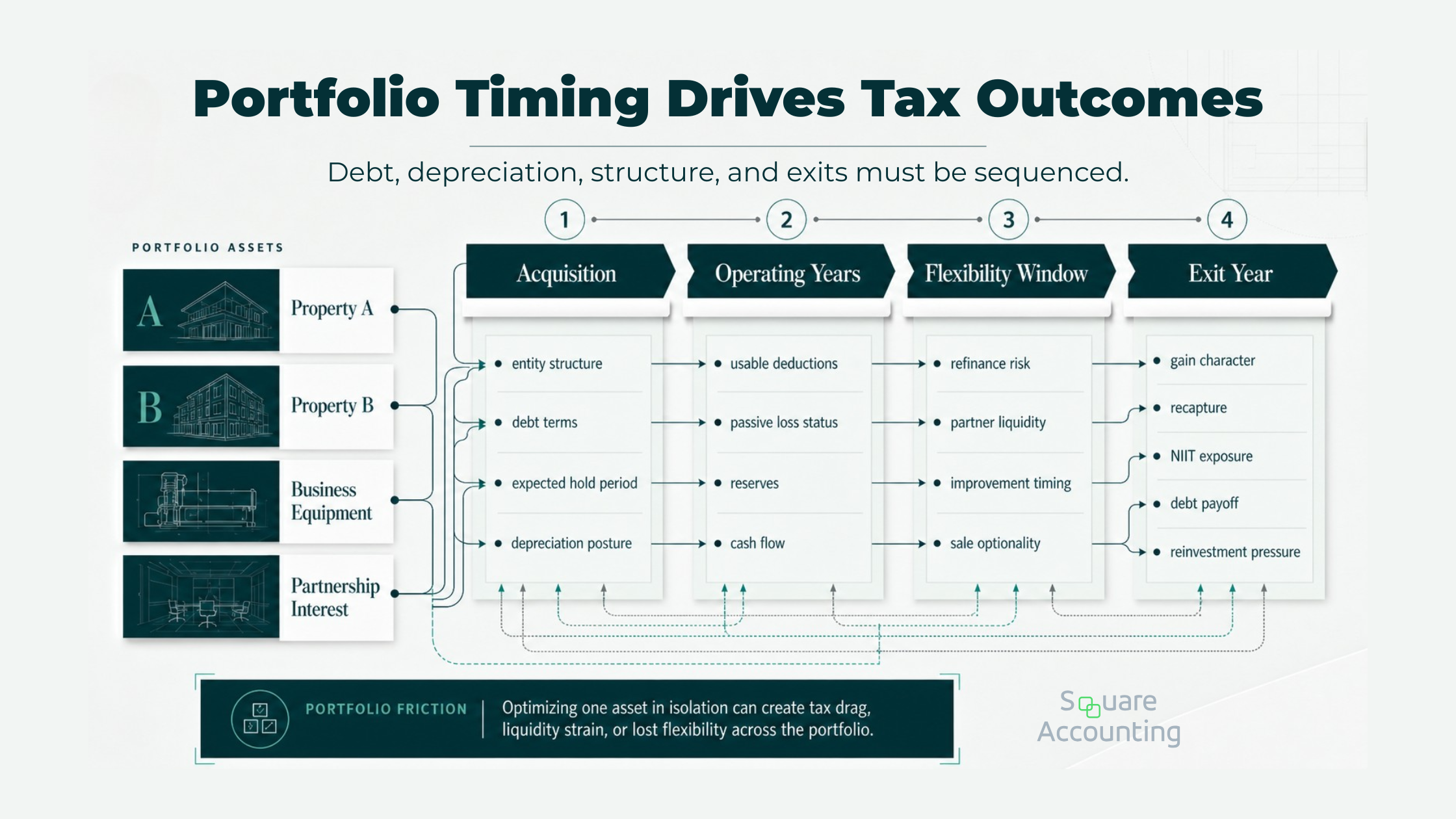
Coordinating Debt, Depreciation, and Exit Timing Across Multiple Assets
A portfolio-level look at how debt, depreciation, ownership structure, and exit timing interact across multiple assets. Written for Florida investors who want multi-year tax coordination, not isolated deductions.
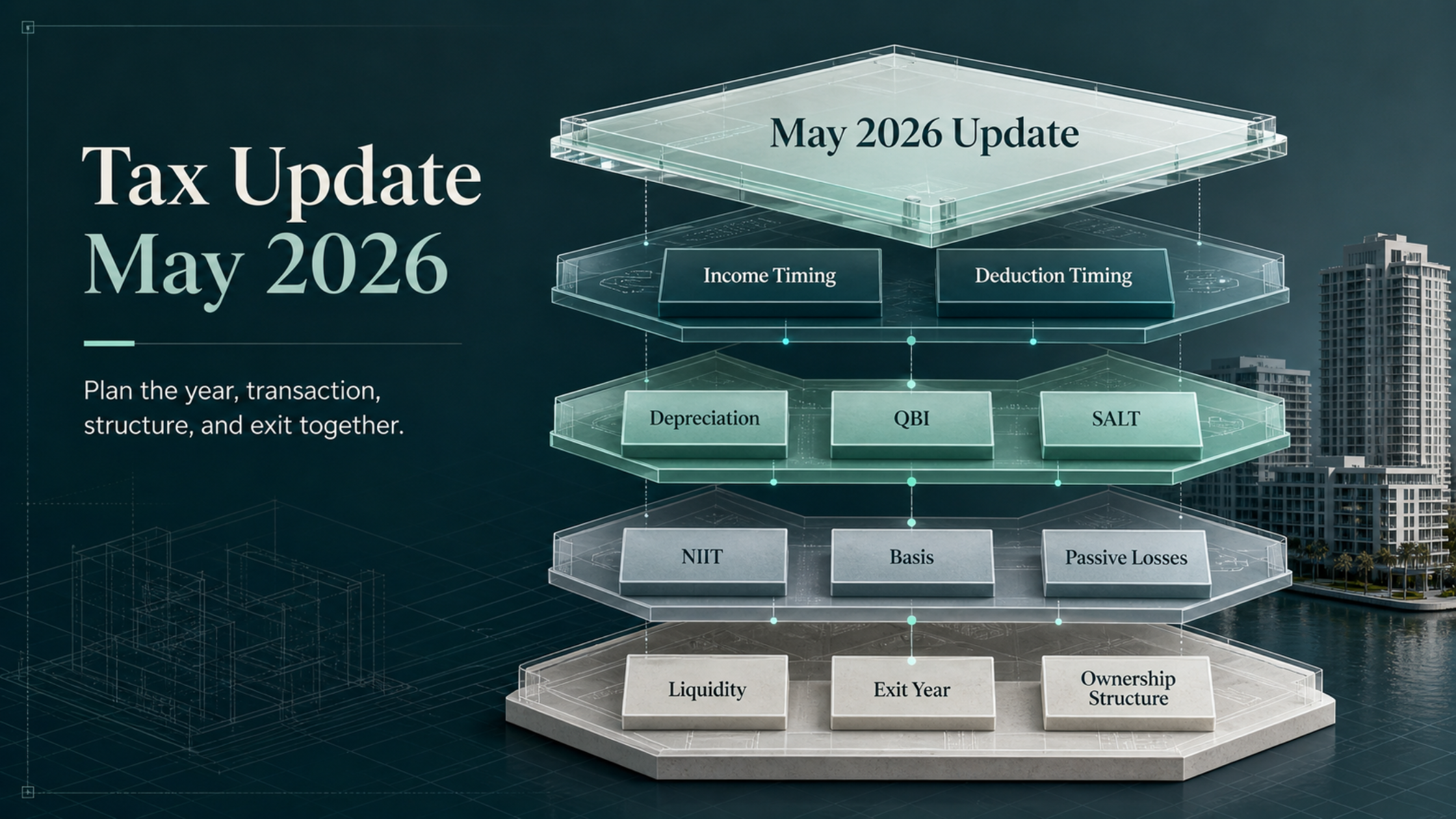
Tax Update May 2026: Planning Moves for Florida High-Income Taxpayers
A strategic May 2026 tax update for Florida high-income taxpayers focused on timing, depreciation, NIIT, QBI, liquidity, and exit-year planning.
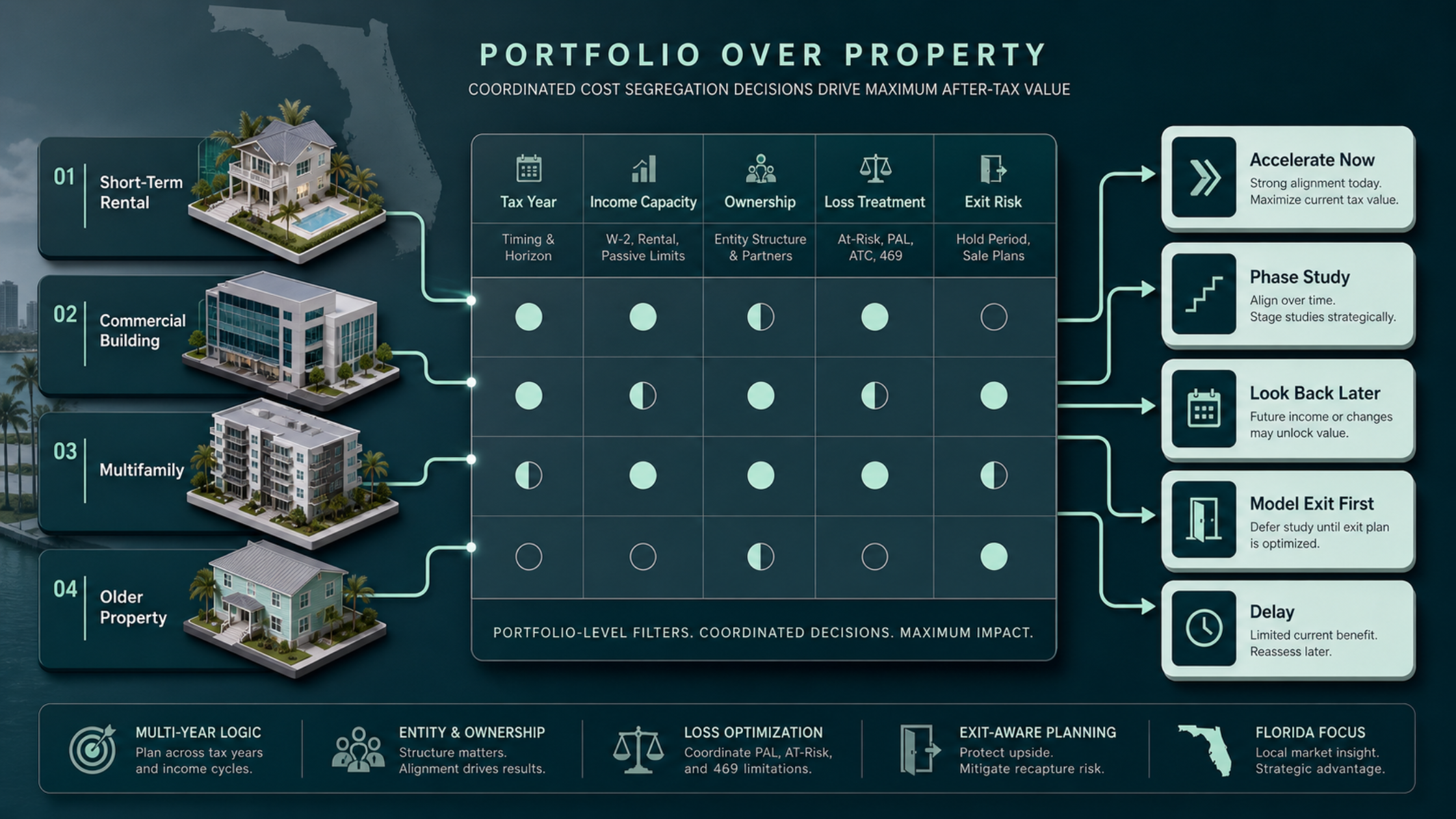
Coordinating Cost Segregation Across Multiple Properties and Tax Years
Cost segregation becomes more strategic when multiple properties, tax years, entities, and exits are coordinated together. This article explains how high-income Florida investors can evaluate depreciation timing with a portfolio-level view.
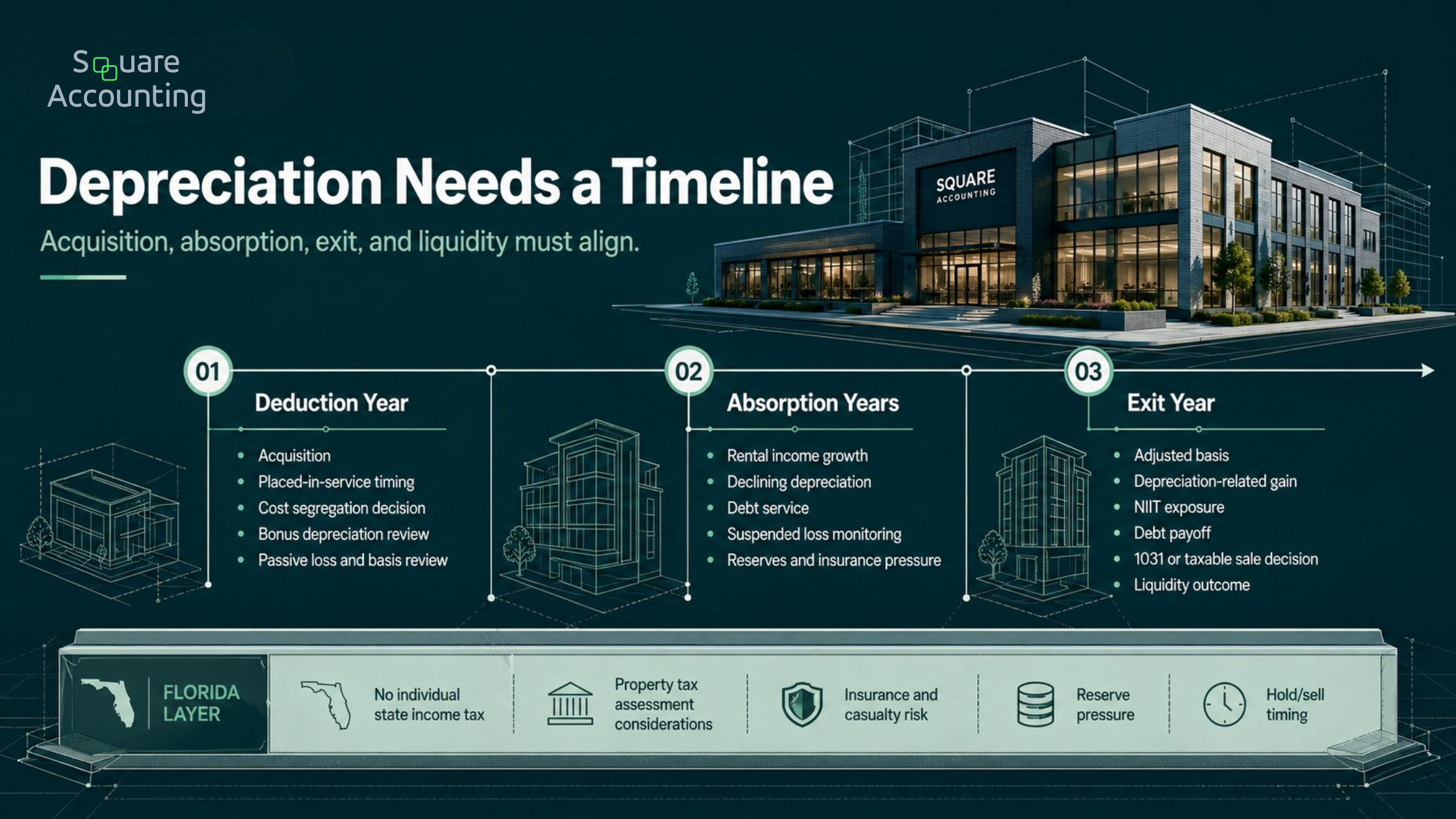
Using Commercial Real Estate to Smooth Income and Depreciation Across Multiple Years
Commercial real estate can help smooth taxable income when depreciation, loss usage, entity structure, and exit timing are planned together. For Florida HNW investors, the strategy should connect federal tax planning with property-level durability.
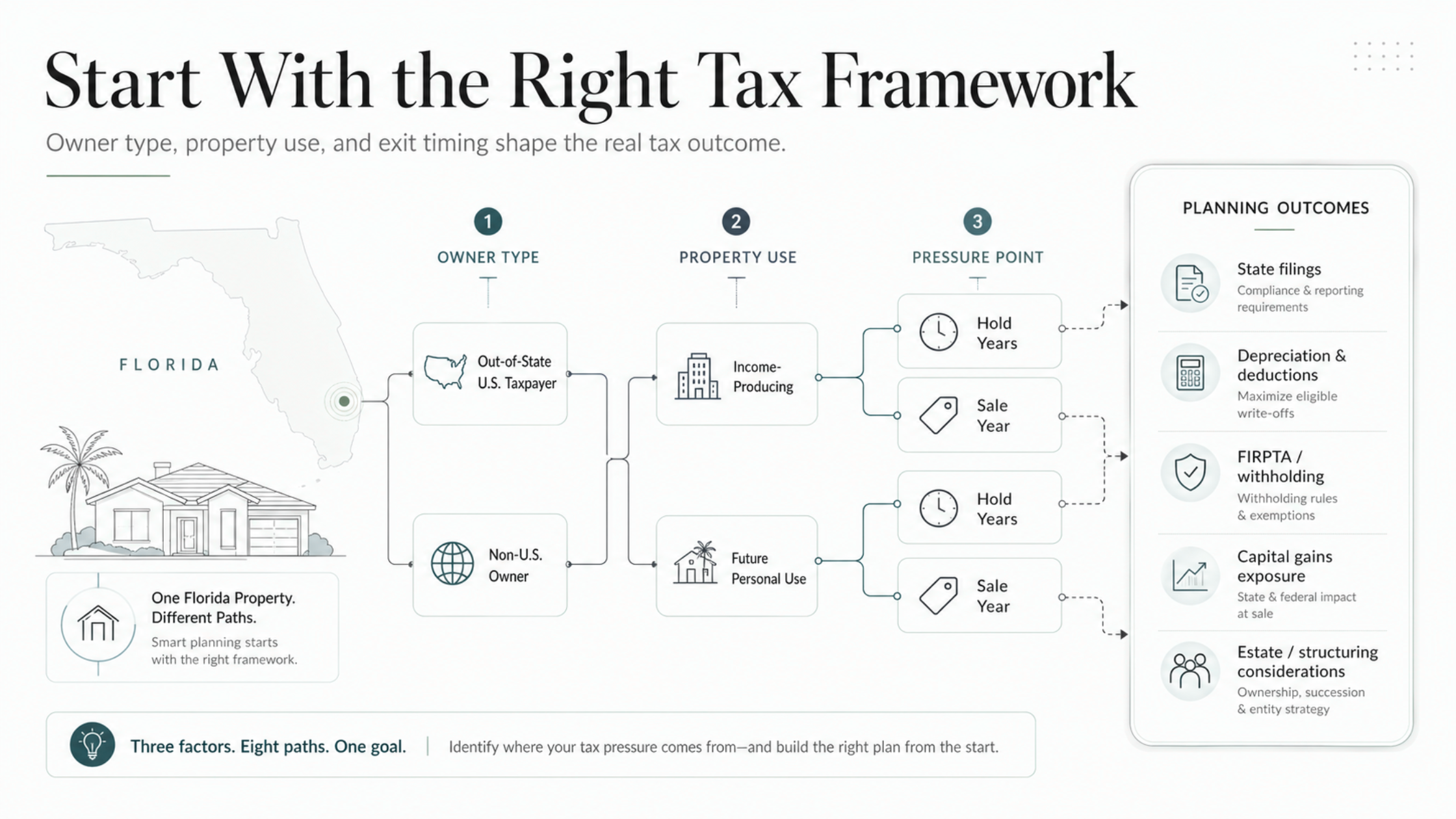
Florida Real Estate Taxes: Non-Resident Guide
Florida real estate tax planning for non-residents is rarely just a property-tax question. This guide helps high-income owners think through classification, structure, hold years, and exit-year pressure with more precision.

Using 1031 Exchanges as Part of a Portfolio Evolution Strategy
A 1031 exchange can defer gain, but the better question is whether it improves the next portfolio. We examine concentration, NIIT, operating fit, and exit-year pressure for sophisticated Florida investors.
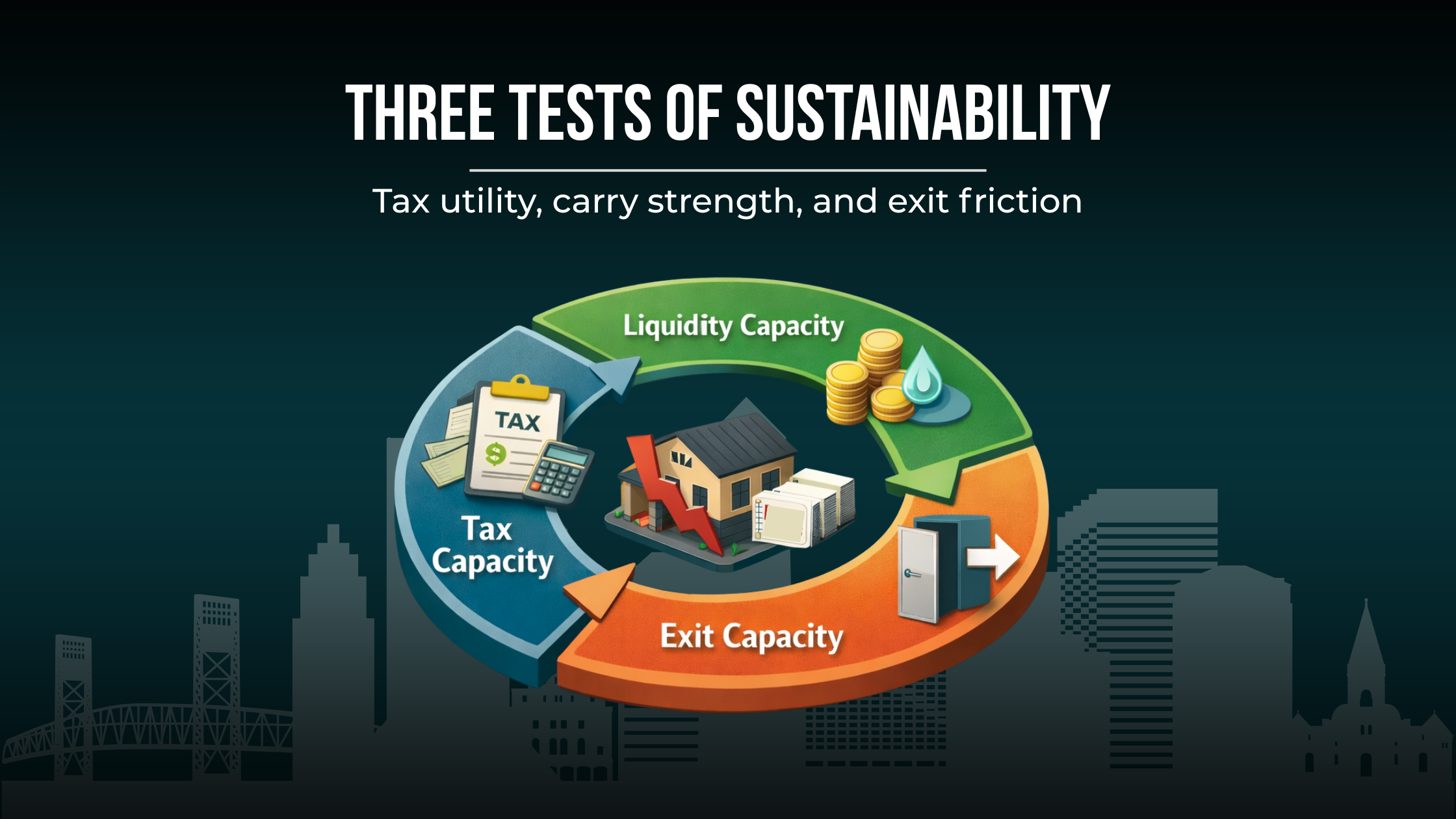
Evaluating the Sustainability of Loss-Generating Assets Over Time
For Florida investors, a loss-generating asset is only as useful as the losses you can actually use, the cash demands you can carry, and the exit you can unwind cleanly. This article shows how classification, NIIT, and hold economics shape the real result over time.
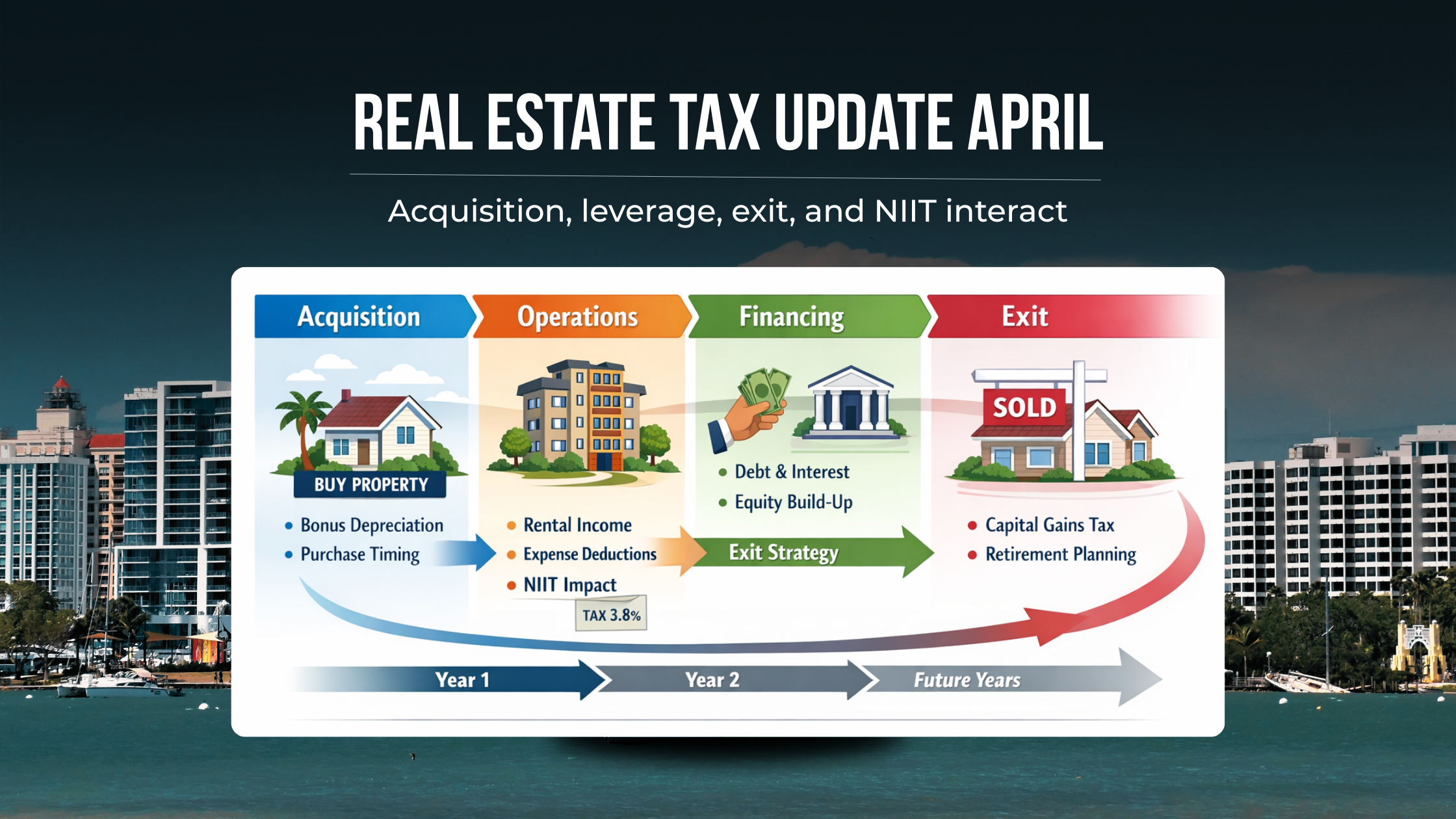
April 2026 Real Estate Tax Changes You Need to Know
A strategic look at how 2026 federal real estate tax rules shape acquisition, leverage, NIIT, and exit planning for high-income Florida investors. The focus is on sequencing, structure, and multi-year outcomes.
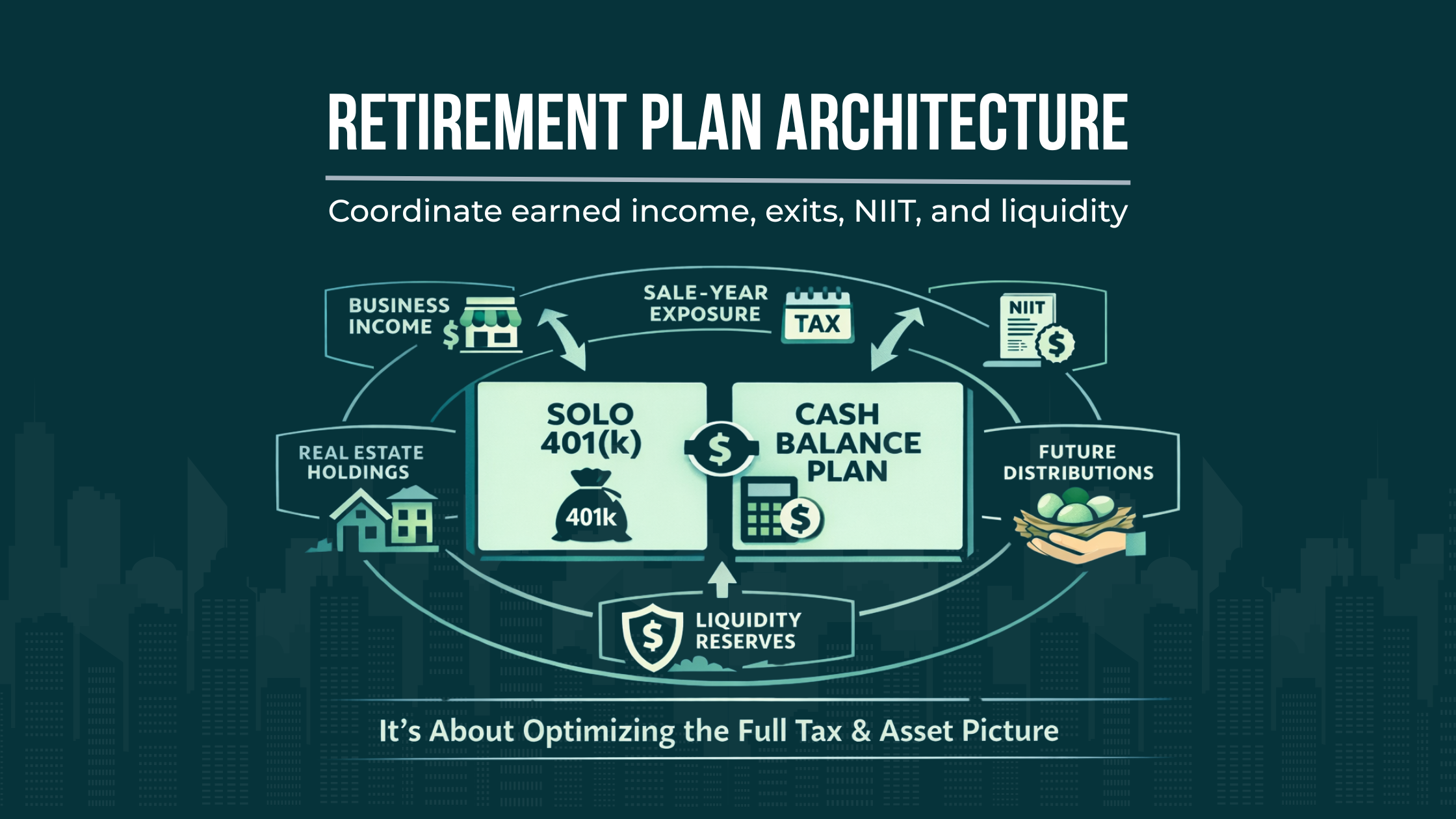
When Solo 401(k)s and Cash Balance Plans Work Together and When They Don’t
For high-income Florida investors and business owners, the real decision is not contribution size alone. It is whether the plan pairing improves multi-year outcomes once NIIT, entity structure, recapture, and liquidity are considered together.
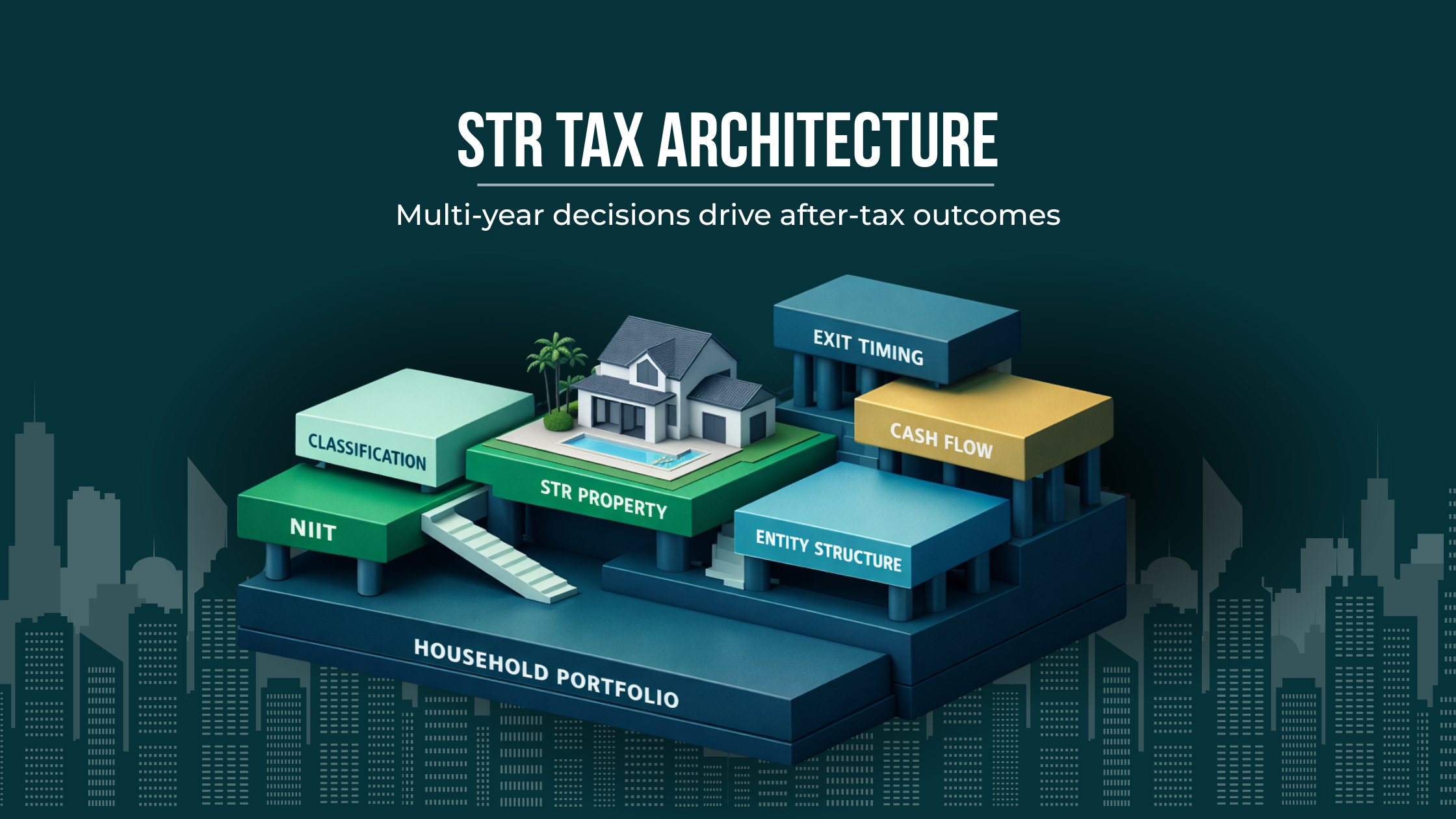
Short-Term Rental Tax Florida Orlando: An Investor-Focused Guide
A strategic guide for high-income Florida investors evaluating Orlando short-term rentals across acquisition, operating years, and exit. It focuses on sequencing, NIIT, ownership structure, and long-term tax tradeoffs.

Shifting Income and Deductions Without Triggering Recharacterization Issues
A strategic guide for high-income Florida taxpayers evaluating how to shift income and deductions without weakening the long-term outcome. The focus is on sequencing, NIIT, entity structure, recapture, and exit-year trade-offs.
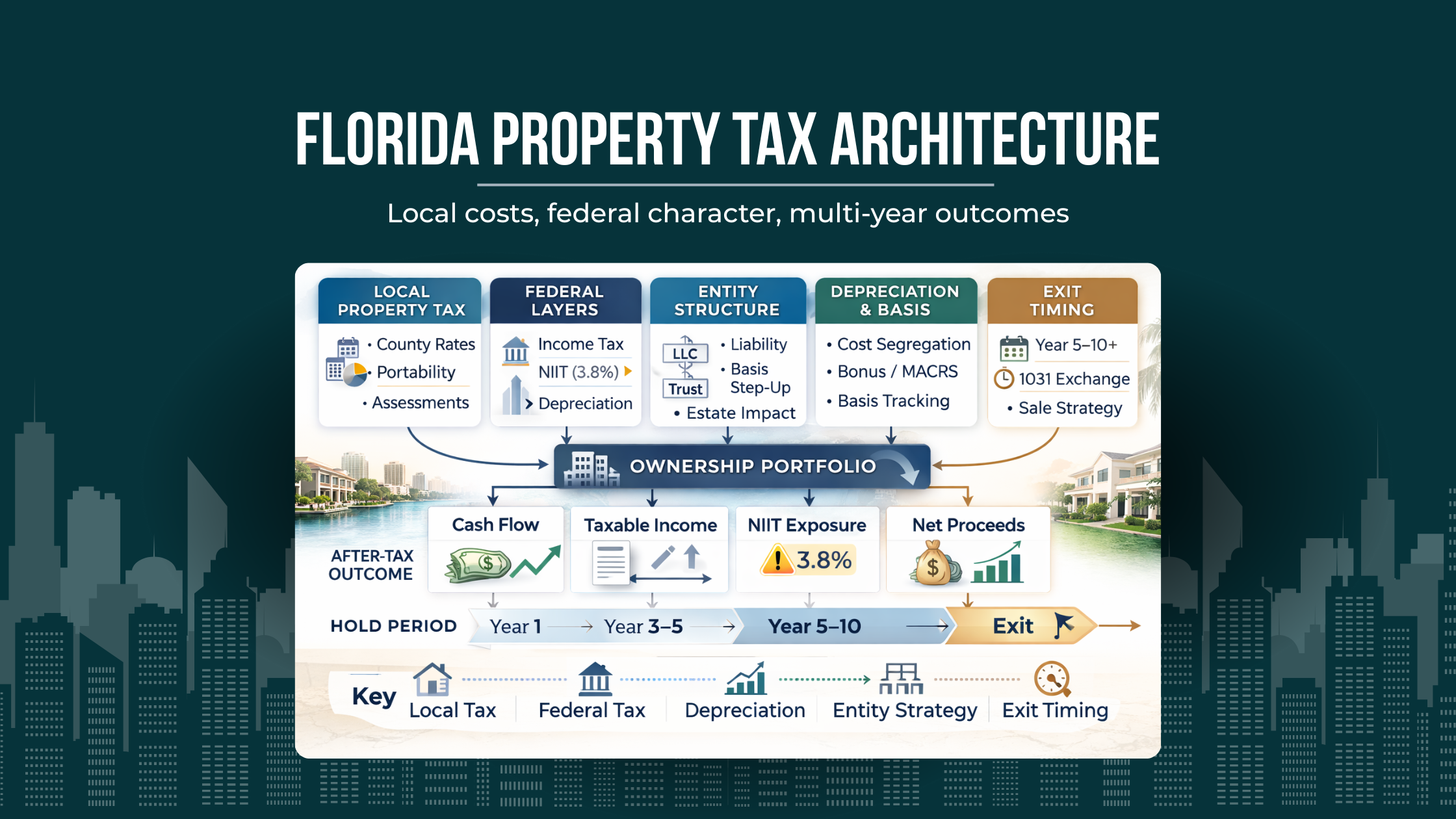
Florida No Property Tax Bill? What High-Income Owners Need to Plan for Instead
Florida’s no-state-income-tax environment does not remove the real planning issues for high-income owners. This article explains how sequencing, NIIT, recapture, and ownership structure shape long-term real estate outcomes.

Contact us
Talk to our Tax Advisor
Running your operations is demanding—your taxes shouldn’t add to the stress. Whether you need strategic tax planning or ongoing support, we’re here to help.